
CANBERRA seems to be awash with film festivals, but the oldest one of them, the Canberra International Film Festival, is determined to stake out its territory as the one that truly looks at what cinema is.
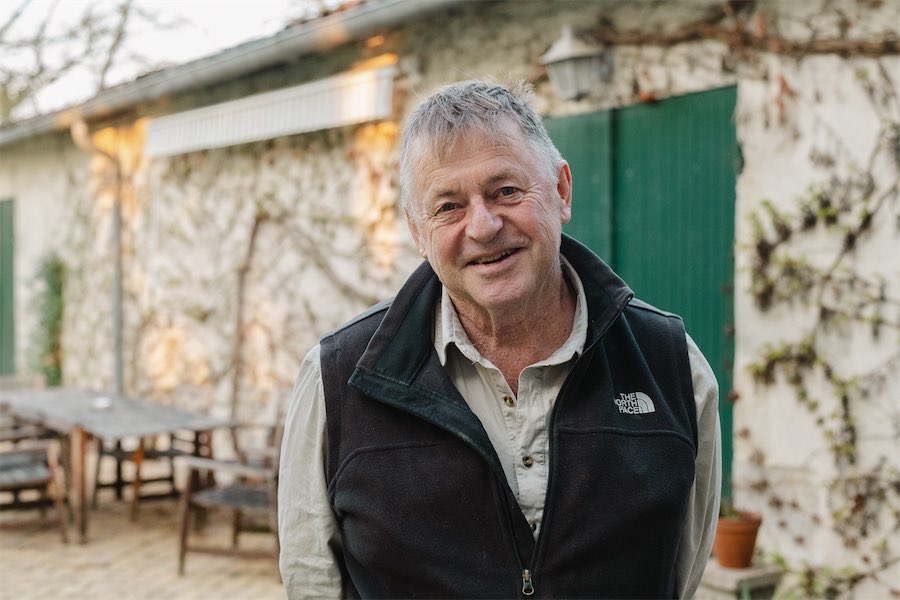
I catch up with veteran producer and festival director Andrew Pike as he prepares for an intense three-day event that will focus on the dark, brooding “noir” movement in film, one that can be traced back much further than the popular Scandi movies running on SBS.
This year Pike and his team of dedicated film lovers, film buffs Isabelle Faure, Gino Moliterno and Russell Smith, are looking primarily at outstanding Australian talents who made it overseas.
“Most of our festivals have themes and this year one of our themes is a celebration of Judith Anderson as an Oscar-nominated Australian in Hollywood with a powerful career in the ’40s and ’50s, so we are opening with ‘Rebecca’,” Pike says.
I confess to Pike that 1940 Hitchcock film also starring Laurence Olivier and Joan Fontaine is my all-time favourite movie.
Judith (Dame Judith) Anderson plays the terrifying housekeeper, Mrs Danvers, a role to which she added sexual overtones, horrifying the prudish Hollywood censors of the time but ensuring her legendary status among LGBTQI filmgoers.
Although the Adelaide-born actress was already famous on stage, the role of Danvers gave Anderson a chance to stride the international film screens. She went on to win two Emmy Awards and, for playing the title role of Euripides’ “Medea”, a Tony.
Later in the festival, Anderson also surfaces alongside Robert Mitchum in Raoul Walsh’s 1947 film, “Pursued”, where she plays the matriarch on a rural estate trying to keep a functional family in order to Mitchum’s vulnerable character, haunted by childhood trauma.
Pike says Australian sociologist and historian, Prof Desley Deacon, author of “Judith Anderson – Australian Star, First Lady of the American Stage”, will introduce the two films in which Anderson appears and will do a Q&A about her, too.

Four sessions in the Canberra International Film Festival will celebrate the work of another Australian, the director of some 50 Hollywood films yet long-forgotten, unless you count the fact that he fathered Mia Farrow.
John Farrow, Oscar-winning master of the noir, is celebrated in the festival through the documentary “John Farrow: Hollywood’s Man in the Shadows”, a title with a double meaning, since, as master of noir, he used shadows and darkness as his cinematic tools.
“His specialty was film noir so we decided to settle on three of the very best noir film classics,” Pike says – “The Big Clock”, “Alias Nick Beal” and “Where Danger Lives”.
Though one of the greatest cinematographers of all time, he left Australia very early, Pike says, so many people don’t even realise he was one of us.
If it sounds like an overload of noir, the team has programmed Ernst Lubitsch’s 1946 American romantic comedy, “Trouble In Paradise”, once described by “The Village Voice” as “insouciantly amoral”, along with Lubitsch’s “Cluny Brown”, where Jennifer Jones plays a plumber.
Unlike the new Capital Film Festival, the Canberra International Film Festival is aiming at a demography of 45 and over, Pike says, but he is definite that they would like to increase interest among younger filmmakers who could, he feels sure, benefit from the program.
For one thing, most young filmmakers have no idea about films made before digital effects came in, understanding little about the potential of darkness and shadows used so masterfully by people such as Farrow.
“Apart from the Hitchcock, everything else in the festival is low budget, made very economically but looking spectacular on the big screen,” Pike says. “You don’t need big budgets or digital technology.
“I worry that for many people, cinema is an art form that has no past, because the critical domain is obsessed with the present.”
And he bets none of these films will be on Netflix. I checked, and he’s quite right.
Canberra International Film Festival, Arc Cinema, NFSA, Acton, August 26-28.
News all day, every day at CityNews.com.au.
Who can be trusted?
In a world of spin and confusion, there’s never been a more important time to support independent journalism in Canberra.
If you trust our work online and want to enforce the power of independent voices, I invite you to make a small contribution.
Every dollar of support is invested back into our journalism to help keep citynews.com.au strong and free.
Thank you,
Ian Meikle, editor




Leave a Reply