News location:

Wednesday, October 7, 2026 | Digital Edition | Crossword & Sudoku

‘Rush to conclusions’: calls for calm on house prices

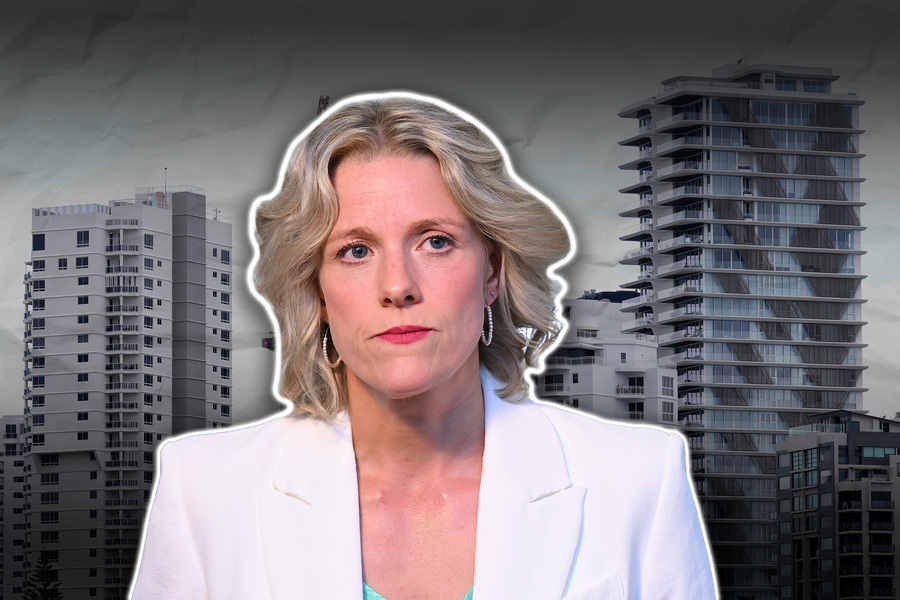
Housing Minister Clare O’Neil describes Australia’s housing market as “inherently cyclical”. Susie Dodds/AAP PHOTOS

By Noah Secomb in Canberra

Concerns of misleading or faulty modelling in the budget have been shot down by the treasurer as short-term forecasts show house prices could fall by nine per cent in coming months.

Tens of thousands of dollars could be slashed from home values in all capital cities, according to Commonwealth Bank’s latest housing market update.

It has reported a “faster and broader” downturn than expected, flagging a national drop of more than 10 per cent in Sydney and Melbourne through to April 2027.

Treasurer Jim Chalmers clarified the Treasury modelling showed house prices would continue to grow at a rate two per cent lower with the tax changes in mind over a number of years.

“It’s appropriate to look at developments in the housing market in the same way that Australians do, which is not month to month, or week to week, or day to day,” he told reporters in Canberra on Wednesday.

“Housing is a long-term investment.

“People are in a rush to reach conclusions about a Treasury assumption, which is to play out over the next couple of years, not the first couple of months.”

Housing prices have slipped after Labor announced in the May budget it would remove some tax advantages for property investors.

National home values are 3.6 per cent below the market peak posted in March, according to the latest figures from Cotality.

Adding pressure on the housing market, the nation’s four big lenders are forecasting another interest rate hike from the Reserve Bank before the end of 2026, after recent inflation figures came in hotter than expected.

But the treasurer maintains house prices were falling before the tax changes were announced, driven by interest rate movements and broader movements in the economy.

“There is more than one thing playing out in the housing market,” he said.

Shadow treasurer Tim Wilson said the forecast goes against modelling outlined in the May budget.

“It’s clear that increasingly, what they said was going to happen is not what is going to happen,” he told News24.

Housing Minister Claire O’Neil downplayed concerns earlier on Wednesday, pointing to previous dips in the market.

House prices have increased by 300 per cent since the turn of the century, and Ms O’Neil said if such gains continued they would shatter aspirations for future generations.

Opposition housing spokesman Andrew Bragg isn’t convinced changing the tax settings for property investments has helped first-home buyers.

“No one wants to see affordability pursued through more taxes,” he told the ABC.

“Anyone who wants to dress up these terrible tax grabs as having helped anyone, I think needs a new brain.”

Senator Bragg has again called for boosted housing supply to address affordability concerns.

The Commonwealth Bank report predicts house prices will begin to increase again by the start of 2028, regardless of a rate cut.

News all day, every day at CityNews.com.au.

Who can be trusted?

In a world of spin and confusion, there’s never been a more important time to support independent journalism in Canberra.

If you trust our work online and want to enforce the power of independent voices, I invite you to make a small contribution.

Every dollar of support is invested back into our journalism to help keep citynews.com.au strong and free.

Become a supporter

Thank you,

Ian Meikle, editor

Australian Associated Press

Australian Associated Press

Share this

2 Responses to ‘Rush to conclusions’: calls for calm on house prices

Harry says: 2 September 2026 at 4:03 pm

With all the incorrect statements by the PM and other Ministers, how can anyone trust any statements made the Federal Labor government.

Reply
David says: 3 September 2026 at 2:43 pm

Let’s not forget what the actual problem was. It was housing affordability plus the need to fix the increasing number of average wage earners people now being locked out of home ownership. Somehow this got translated into the only fix being new housing supply. This is only a fix if we can build new houses for entrants into home ownership that are affordable. It wasn’t the case before the budget and still isn’t. What the budget has highlighted is the new housing market was driven by the tax payer with tax payer money being funneled through the housing market into property investors pockets. This came with the side effect of pushing house prices up as more people cashed in on the tax payer fueled frenzy including everyone involved in the building and selling cycle. You want to find a leak them start turning taps off until something changes. We just had to withdraw tax payer funding and suddenly the housing market is all doom and gloom. There’s your cause. The houses haven’t actually changed, i.e. Albo did demand everyone demolishes a few bedrooms, he just cut tax payer funding to property investors who were locking out home ownership. Builders were going broke before and they still are. Now it’s more obvious the tax payer was propping them up. It is not sustainable and something had to change. Many ways to achieve the changes but I guess the intellectually challenged find it easier to attack Albo than get involved in the debate of what we need to do, and, if they have a better option, putting it forward.

This brings us back to the housing affordability issue. It doesn’t have to be solved by building new houses. We’re still hiding behind that. If it really was just a new housing shortage and they could be built affordably then Albos change should make little difference as all those people wanting to get out of renting and into houses would be driving the building. They’re not so ask yourself why. Why isn’t the demand keeping new build streaming along and building companies having no problems finding new customers and affordable costings? New houses cost too much so to fix the housing affordability problem, and, start giving all those average wage earners a chance, we need to start looking at all the wasted housing sitting empty or poorly utilized. Until recently you could make money out of housing by just owning the property and not renting it. The 400% increase in value over 20 years and CGT minimization schemes means an empty house was still got to make a nice amount of money without having to deal with the hassle of renters etc etc. Only poor property investors had to rent, especially if they needed to dip into tax payer funds (negative gearing). They had to deal with the inconvenience of someone causing wear and tear to their nice investment property.

So, instead of taking the low intellect path of just having a go at Albo because you have no actual useful input, start asking yourself if you think they’ve actually done enough to start fixing the housing affordability issue. Keeping in mind, especially if you care about anyone else, making housing more affordable has many good side effects including reducing the pressures that lead to things like DV. A desire to reduce DV should be enough to remove any tax payer support for property investment in the residential sector plus heavy taxes on anyone owning empty properties. The impact of a marital breakdown with the need to find separate living arrangements and split whatever capital exists in the family home is much more devasting in a housing affordability crisis. Brought to you by all those property investors who withdraw the equity in their portfolio to by a luxury car with minimal input from the taxman.

Reply

Leave a Reply

Your email address will not be published. Required fields are marked *

*

*

Related Posts

Follow us on Instagram @canberracitynews