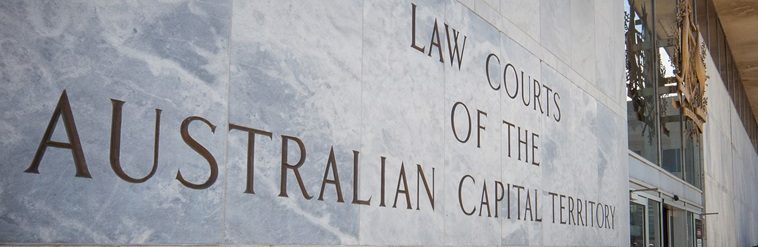
“A director of public prosecutions is expected to understand the ins and outs of relationships with other key bodies, including keeping out of the media, negotiating deftly and being seen in court but not heard in public,” writes columnist HUGH SELBY.
THE Higgins-Lehrmann saga is a gift that keeps on giving in terms of exposing vile bodies.
Those appointments are to positions that are made under the statute that sets up the body (be it a tribunal or a board). These lucrative positions are usually for fixed terms of up to seven years.
For the most part the ACT respects selection processes, so that the relevant Minister in the Barr Government makes appointments following informed recommendations as to the capacity of an appointee to likely do the job well.
But it’s not the only story of its kind in town. The Morrison government made blatant political statutory office appointments to the Commonwealth Administrative Appeals Tribunal (AAT) shortly before the recent election
But how are these appointees held to account while having that position? In the case of AAT members there is the theoretical option of appealing their decisions. It’s theoretical because the loser may be out of funds, or the members of the appeal bench may owe their appointments to the same political bucket and so too be inadequate.
Our DPP is not accountable at all. DPP decisions to prosecute or not prosecute are not open to review. No reasons are given beyond, “There are, or are not, reasonable prospects of success’”. That statement may or may not be coupled with, “It is, or it is not, in the public interest to go to trial”.
However, a DPP, like the head of a tribunal or a chief justice, is expected to understand the ins and outs of relationships with other key bodies, such as government, the police, and the legal profession. This includes keeping out of the media, negotiating deftly and being seen in court but not heard in public.
Recent publicised errors of judgement by our DPP include the following: his late 2019 decision to go to retrial following a Supreme Court judge’s admonition not to do so (the accused was subsequently acquitted); his decision to prosecute Lehrmann notwithstanding the poor prospects of conviction, his [providential] decision to allow Higgins to give her evidence from the witness box – meaning she’d have to give evidence again for a retrial; his becoming a mouthpiece for Higgins when the retrial was abandoned; and, as we now know, attacking the police in writing – all of which suggests an entrenched inability to learn from mistakes.
This raises the question, “Can a government get rid of statutory office holders?” It can, simply by legislation that states that the holder/s of specified office/s hold no office.
This has been the law since the ’30s. Such a dismissal can be rushed through the Assembly or federal parliament in a few hours. It was done to magistrates in NSW, to a deputy president of a federal industrial commission, and to the head of a body that investigated complaints against police in Victoria.
Does the government have to pay compensation? Not one cent, but it can be generous.
Should this technique be used? Yes.
Why? Because some appointments don’t work out, and there are now too many highly paid, meritless statutory appointments. Most of them are “under the radar”; ie, we citizens are unaware of what they are, and how appointments are made of camp followers.
It’s now a stinking swamp and it needs to be drained.
How can the cleansing be done?
The Albanese government should tell all those appointed without a merit based selection process to the AAT and elsewhere that their jobs will be re-advertised. They are welcome to apply. They should submit their resignations by a given date. In return for that they ought to be given an ex-gratia payment, say of three months salary. Those who fail to resign should be subject to legislated loss of office on a given date. They get nothing.
The Barr government should do the same with the current DPP, despite his being appointed after a selection process. He has not succeeded. There has to be a change of culture in our Prosecutions office. Resign and we’ll give you an ex-gratia of six months (because his job had been advertised). Don’t resign and we’ll pass legislation that leaves you with no job and no payment. During the period that the government looks for a replacement DPP they should appoint an interim director, probably from the senior ranks of the NSW or Victorian offices of their DPP.
And what of the future? We need to take off our blinkers to the political reality of too many “jobs for the well connected, but far from the most suitable” in Australia.
We can’t stop politicians using our taxpayer money to make their mates rich; however, we can establish a clear practice that if your mates appoint you, then when they are voted out on Saturday night then you are out of a job come Monday morning.
Hugh Selby is a recently retired barrister who enjoyed appearing in criminal jury trials and teaching about them.
News all day, every day at CityNews.com.au.
Who can be trusted?
In a world of spin and confusion, there’s never been a more important time to support independent journalism in Canberra.
If you trust our work online and want to enforce the power of independent voices, I invite you to make a small contribution.
Every dollar of support is invested back into our journalism to help keep citynews.com.au strong and free.
Thank you,
Ian Meikle, editor





Leave a Reply