By Andrew Brown and Tess Ikonomou in Canberra
A larger-than-expected budget surplus hasn’t come at the expense of household budgets, the treasurer insists, while touting government cost-of-living relief measures.
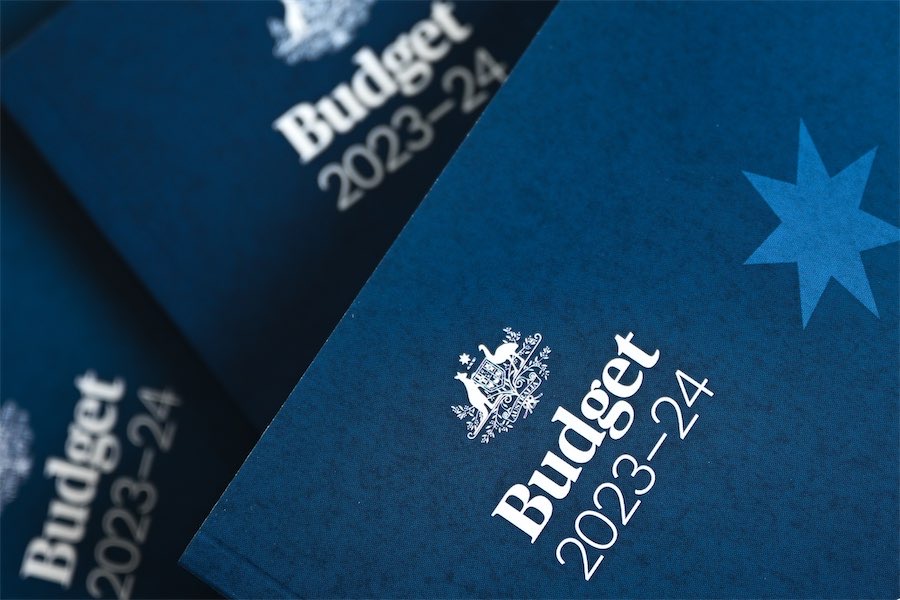
The federal government recorded a $15.8 billion surplus for the 2023/24 financial year, a $6.4 billion improvement on the forecast in the May budget, data released on Monday showed.
It’s the first time a government has handed down consecutive surpluses since 2007/08.
Treasurer Jim Chalmers attributed the budget turnaround to lower government spending.
“It’s not about higher commodity prices, it’s not about more taxes – it’s about the less spending,” he said.
He denied suggestions the economic achievement meant less support for people struggling financially.
“We don’t see a surplus as an end in itself … we’ve deliberately ensured that we have found room for that cost-of-living relief so that we can help people doing it tough,” he told reporters in Canberra.
“We haven’t chosen between cost-of-living relief or budget surpluses. We’ve been able to do both and that’s because of the responsible approach that we’ve taken.”
While the results for the federal budget are better than expected, the run of surpluses isn’t set to continue.
A $28.3 billion deficit in 2024/25 is predicted, with a revised forecast on the bottom line expected at the mid-year budget update in December.
The treasurer says it’s unlikely there will be a hat-trick of surpluses.
“Clearly, a $28 billion deficit is hard to get rid of in one whack but we will continue to make the right decisions for the right reasons and manage the budget and the economy in the most responsible way,” Dr Chalmers said.
“We have got that deficit much smaller than what we inherited. We’re not complacent about the fiscal challenges that we confront.”
The government returned 87 per cent of revenue upgrades to the budget last financial year since the pre-election economic and fiscal outlook.
Payments as a share of gross domestic product in 2023-24 were 25.2 per cent, lower than the 27.1 per cent previously forecast.
The surplus is expected to make up 0.6 per cent of the nation’s total economic output.
Higher commodity prices were also a factor for the larger surplus.
Opposition finance spokeswoman Jane Hume said higher deficits were on the way and the extent of the surplus was exaggerated.
“It looks like those surpluses that Jim Chalmers has delivered have been delivered not by his hard work but by (taxpayers’) hard work,” she told Sky News.
“Jim Chalmers inherited a strong economy with low levels of unemployment and, in fact, we’ve seen a deteriorating position since then.”
While the government has been talking up the surplus, Tasmanian senator Jacqui Lambie said the improved budget bottom line didn’t mean much for people dealing with the increased cost of living.
“People are doing it hard out there. Nobody’s talking about a surplus,” she told Nine’s Today program.
“If they were, and they truly understood that, well how about you put some of that surplus out to us so we can put bread and milk on the table for our kids and do that without raising inflation.”
It came as data showed productivity growth had returned to levels experienced before the COVID-19 pandemic.
While labour productivity grew 0.5 per cent in the year to June, the rates fell 0.8 per cent in the most recent quarter, data from the Productivity Commission shows.
The drop in the June quarter came after a 1.1 per cent growth in the number of hours worked, compared to just a 0.2 per cent increase in output.
The commission’s deputy chair Alex Robson said productivity trends had returned to the rate seen in the five years before the start of COVID-19.
“During the pandemic, aggregate productivity rose but then fell as restrictions were eased,” Dr Robson said.
“This bubble has now well and truly burst and our productivity levels remain at about its 2015-2019 average.”
News all day, every day at CityNews.com.au.
Who can be trusted?
In a world of spin and confusion, there’s never been a more important time to support independent journalism in Canberra.
If you trust our work online and want to enforce the power of independent voices, I invite you to make a small contribution.
Every dollar of support is invested back into our journalism to help keep citynews.com.au strong and free.
Thank you,
Ian Meikle, editor



Leave a Reply