News location:

Wednesday, September 23, 2026 | Digital Edition | Crossword & Sudoku

Nuclear ‘most expensive’ for replacing coal-fired power

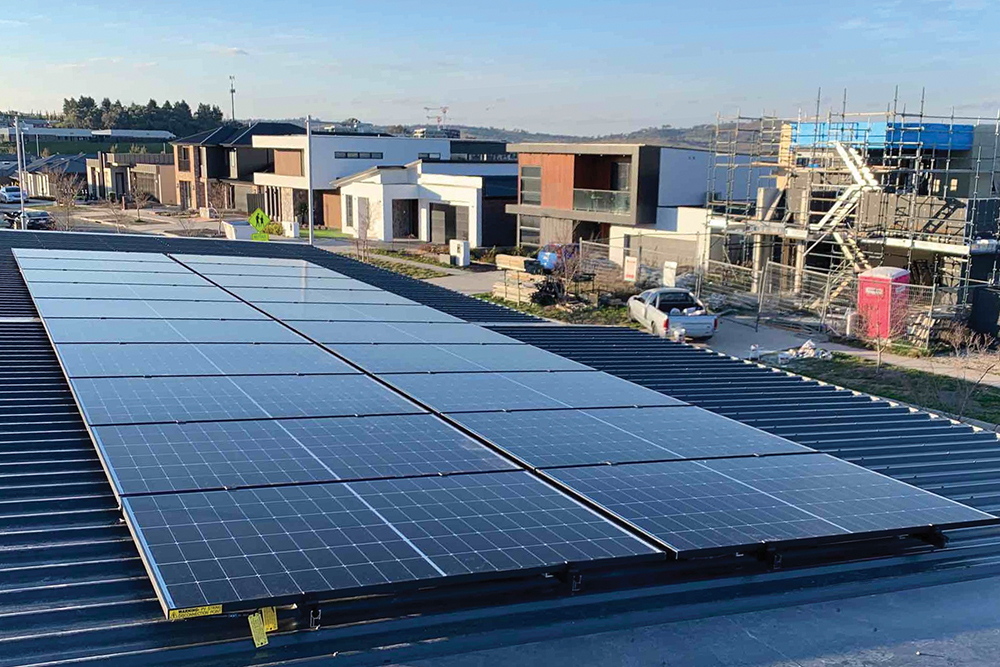
Experts say solar and big batteries remain the cheapest way to power homes and businesses.

By Marion Rae in Canberra

Respected scientists, energy experts and industry players have backed in the latest official data that shows nuclear energy does not stack up for Australia.

Power planners warn taxpayers will need deep pockets to develop nuclear energy, in the annual generation cost update released on Monday that was slammed by Opposition Leader Peter Dutton as he prepares to release nuclear costings.

Emeritus Professor Ken Baldwin from the Australian National University said solar and wind remained the cheapest form of electricity generation, even when taking into account the additional cost of firming with storage, and the additional transmission costs.

“This cost advantage over nuclear is projected to widen over the coming decades – especially by the earliest date that nuclear could foreseeably be expected to operate in Australia in the late 2030s, given the projected lead time of around 15 years,” he said.

For the seventh straight year, renewables were the lowest-cost of any new-build electricity-generating technology, the GenCost 2024-25 Report found.

The cost of batteries recorded the largest annual reduction, with capital costs down by one-fifth. Rooftop solar costs are also coming down.

Opposition Leader Peter Dutton, eyeing sites in seven regional centres, pledges to have reactors built in 10 years if elected in 2025.

GenCost’s “assumptions and the methodology have been disputed before”, Mr Dutton told reporters in Melbourne.

Mr Bowen was “wrecking the energy system and that’s wrecking the economy, and that’s why families are facing food inflation and higher prices when they go to the supermarket,” he said.

Nuclear energy generation would be 1.5 to two times more expensive than large-scale solar, according to the analysis by the national science agency CSIRO and the Australian Energy Market Operator.

A one-gigawatt nuclear plant has a price tag of roughly $9 billion, but the bill would double to $18 billion as the first of its kind.

Operational, fuel, and waste costs would also be higher for nuclear, according to Senior Research Fellow Thomas Longden at Western Sydney University.

Clean Energy Council chief executive Kane Thornton warned nuclear power would also mean more solar gets switched off.

“You can’t argue with facts … nuclear is the most expensive pathway to replacing coal generation as it closes, which would directly impact Aussie hip pockets, driving energy bills up even higher,” he said.

Energy Minister Chris Bowen said the nation would need even more electricity, as well as making it more renewable and emissions-free, with solar clearly the “most popular”.

“We all have more work to do on social licence in the regions to ensure real consultation and real community benefit,” he told reporters in Sydney.

Advocates have demanded greater recognition of the potential cost advantages of nuclear’s long operating life compared to solar panels and wind turbines, but CSIRO chief energy economist and GenCost lead author Paul Graham said he found none.

“Similar cost savings can be achieved with shorter-lived technologies including renewables, even when accounting for the need to build them twice,” Mr Graham said.

Nuclear’s capacity factor – referring to how much of a year a reactor could operate at full tilt – remains unaltered at 53-89 per cent based on verifiable data and consideration of Australia’s unique electricity generation needs.

Nor would the often-touted United Arab Emirates example of a relatively quick 12-year nuclear construction time-frame be achievable here, the report found, because Australians require consultation.

“The facts are laid out very clearly in the GenCost report, and our government respects the work of CSIRO scientists and researchers and listens to that advice,” Industry and Science Minister Ed Husic said.

Australian Conservation Foundation nuclear policy analyst Dave Sweeney said four million households with rooftop solar had already voted with their feet and wallets.

News all day, every day at CityNews.com.au.

Who can be trusted?

In a world of spin and confusion, there’s never been a more important time to support independent journalism in Canberra.

If you trust our work online and want to enforce the power of independent voices, I invite you to make a small contribution.

Every dollar of support is invested back into our journalism to help keep citynews.com.au strong and free.

Become a supporter

Thank you,

Ian Meikle, editor

Australian Associated Press

Australian Associated Press

Share this

4 Responses to Nuclear ‘most expensive’ for replacing coal-fired power

David says: 9 December 2024 at 11:09 am

Well, the CSIRO has unfortunately ruled itself as incompetent to comment in this area. Add to that statement like “renewables were the lowest-cost of any new-build electricity-generating technology” which is just non-sense. A primary school student wouldn’t make such a silly comment. It’s even worse than comparing apples with oranges. It’s comparing boats with cars in a population spread across islands. Nuclear is being touted as the solution for generating electricity when renewables energy cannot. i.e. no wind or sun. Renewable generation only comes into that argument as a side note because the comparison is actually between storage and nuclear generation.

We already know a significant amount solar power goes to waste and it is still not cost effective to store it. Lets say you have a battery that can store 5kwh and it charges during the day. If the difference in price between your feed in and feed out tariff is say 40c/kWh then during a day you store 5*0.40, which is $2 a day. So the battery saves you $2/day. If the battery costs $5000 then that is 2500 days to break even (6.85 years). Assuming no technology issues requiring services etc. The reality is not everyday will deliver $2 and there will be ongoing costs plus the loss of income on the $5000 dollars you could have invested elsewhere. i.e. let’s say 7.5years. It really needs to be half that to be viable giving the recent history of the reliability of this technology. Do some internet searching.

Anyway, the argument about home batteries is somewhat pointless as the Australian Energy Market Operator does not want it to be part of the solution and everything is setup to keep it this way. Remember the old days of home water tanks being illegal, well this is exactly the same. No industry is going to push a solution which loses them customers so the home battery market, including V2G is being kept, nicely helped by the government, at price point where it is not viable for the majority. It is good business sense and the result of Australia privatising it’s energy infrastructure.

This leads mass scale storage for the solution which is yet to be achieved anywhere in the world, particularly for a country as sparsely populated as Australia, with some intense population regions. Comparing Nuclear against that is like comparing a McLaren to Marty’s DeLorean.

The discussion about blending hydrogen and then converting to fully green hydrogen is still in the DeLorean territory. You need a lot of Hydrogen and the interim blending stages may be more polluting only to find the power plant wont actually be stable at 100% hydrogen.

Finally, everything costs more and is more difficult to do in Australia. So to believe we would be able to roll out something that the rest of the world isn’t, because they know it’s not there yet, over proven technologies the rest of the world is relying on for zero emissions, is just fantasy or dishonesty. Unless of course we’re aiming to have the most expensive, least reliable and highest green house gas polluting energy grid in the western world. (Maybe do some research on how many businesses have gone bust throwing their weight behind some promised technology that is quite there yet.)

If you honestly believe anything coming from the government and their backers (CSIRO et al) then ask yourself why they haven’t put a stop to the current waste of solar generated power across the grid. This is no surprise and the government could easily address by getting home battery costs down to a viable level. This includes catching up to the rest of the world on V2G and has to include installation costs. The answer is it’s not about generation and its’ cost. It’s about who stores it and the private players, supported by our Labor government, want that to remain in the hands of private players. Nuclear would be a step towards public ownership, to important to leave in private hands, and we cannot have that.

I don’t like the idea of nuclear but I also dislike questionable people using cost as an argument against it when they don’t actually have something proven to compare it against. This is about saving the planet and reducing our ability to drive climate change. Why hasn’t the government mandated that every house that can have solar panels should have solar panels and at least a 5kWh battery ? Especially as it is apparently so cheap.

Reply
Occasionally Interested says: 9 December 2024 at 5:06 pm

“…said solar and wind remained the cheapest form of electricity generation,..”
Yep and the most unreliable.
For manufacturing (not just a bunch of panels on a residential house), Australia will never be competitive again if we don’t have cheap, reliable energy for industry.
Yes ‘cheap and reliable’ is a key part when you look at energy for the manufacturing industry – and nuclear ticks that box.
I am not scared of a bill for nuclear – you get what you pay for.

But most manufacturing for global trade is now gone in Australia anyway – we don’t have affordable energy, lack infrastructure and supply chains and we don’t have a competitive advantage with labour costs.
Germany lost their cheap energy from Russia – now look at VW, BOSCH, BASF, Thyssenkrupp etc… Wind and solar isn’t going to save their economy.
So great to hear “…four million households with rooftop solar had already voted with their feet and wallets.” completely ignoring industry, but if the Australian people vote for it – so be it, I won’t lose any sleep.

Reply
Mike Dinn says: 9 December 2024 at 6:39 pm

So, briefly, comparing panels, windmills and batteries with continuous generation such as nuclear, is completely ridiculous.

Reply
David says: 9 December 2024 at 10:18 pm

The sad, comical, ridiculous thing about all this is no mention of AEMO pushing for emergency power to shutoff household solar in all states. Yes, get back on your seat, AEMO wants the ability to shutoff household solar because we have too much. Just indicates how nonsensical the statement “…said solar and wind remained the cheapest form of electricity generation,..” is. On one hand we’re being told it’s the answer because it’s so cheap and on the other we’re told its causing problems and we have to shut if off?! Yes I do understand the finer details but if the CSIRO can make childish statements playing with the facts then so can I.

Rather than turning the solar panels off shouldn’t the solution be the government funds getting all those potentially problematic houses off the grid by subsidising batteries on all the houses (10kWh) and setting it up so the users cannot feed into the grid. When they need etc power they buy it at a small premium. Removes the feed in load, increases the countrywide total battery storage, helps meet our green house emissions target etc etc. Positives all round so why wouldn’t the government back this. Wouldn’t have anything to do with protecting the privatised power companies would it?

A new meaning to the term nuclear option. If you have no idea what you doing and are actively working against what you’re promoting then point to the other side and say, they want nuclear, and hope people are distracted enough to not be able to see what you really stand for.

How can anybody support a government that thinks letting renewable generated power go to waste is a good idea when it has so many options to stop it happening? How can any journalist write an article that makes what the government is doing in this area look remotely justifiable? Journalism should be about reporting the full story.

Reply

Leave a Reply

Your email address will not be published. Required fields are marked *

*

*

Related Posts

Police

Liberals push for stronger policing in Molonglo

Canberra Liberals Ed Cocks and Deborah Morris are calling for more police patrols in Molonglo and a delivery plan for a promised police station, saying residents have raised concerns about home invasions, and police response times.

Health

Parton pushes for home palliative care funding

Canberra Liberals Leader Mark Parton will move a motion in the Legislative Assembly today calling for continued funding of non-clinical, home-based palliative care support after funding changes affecting Community Options.

Follow us on Instagram @canberracitynews