
“The government’s arrogant and paternalistic approach (we know what’s best for you) often ignores or dismisses community concerns and is oblivious to its policy deficiencies,” writes planning columnist MIKE QUIRK.
The Barr government’s transport and land use planning is in disarray.
The disarray echoes the environment of neglect and disorganisation of post-war Canberra described in the 1955 Senate Select Committee Report.
Peter Harrison, advising the committee, described the dilemma of Canberra: it was a city moving into the second half of the 20th century with a plan prepared in 1911.
A major part of the response was the establishment of the National Capital Development Commission to plan, develop and construct Canberra as the national capital.
In 1970 the commission released, after extensive analysis, its polycentric city strategy with growth to be accommodated by the development of new towns. The plan was widely recognised as best practice city development.
In the early 1990s, in response to social and economic changes, a greater awareness of the environmental impacts of development and a reduced ability to influence employment location, the strategy was adjusted with the emphasis changing to increasing housing in areas with employment, facilities and services and along major transport corridors.
The “compact city” policy was seen as widening housing choice and reducing travel, car use, infrastructure expenditure and the environmental impacts of development.
The themes in its latest iteration, the 2018 Planning Strategy, are a city that is compact, efficient, diverse, sustainable, resilient, liveable and accessible.
But have the benefits from the implementation of these themes been substantial?
The policy has contributed to substantially increased housing (and associated benefits) in areas of high accessibility, particularly inner Canberra and in and adjacent town centres.
However, the strategy has not been translated into effective policy as reflected in the reduced supply of social housing, ongoing high car use, inadequate public transport services, the construction of light rail, poor quality redevelopment and infrastructure shortfalls in new and established areas.
Policy superficiality is apparent in the decision to increase the consolidation share of housing supply to more than 70 per cent. The decision failed to consider housing preferences, especially the strong demand for detached dwellings.
Some households desire a short commute from work; others place a high value on being close to public transport; still others care more about a bigger or nicer home or the reputation of the local school.
The inadequate understanding has also limited the provision of higher-density dwellings that meet the needs of occupants, especially those with lower incomes.
Consequences have included a far higher increase in the relative price of detached houses and an undersupply of social housing. The environmental benefits of a compact city are being offset by increased car-dependent development in surrounding NSW and reduced environmental amenity in established areas.
Similarly, the ACT transport strategy floundered on an inadequate understanding of the factors determining mode choice.
The strategy targeted an increase in the use of public transport, walking and cycling on the journey to work from 15 per cent in 2006 to 30 per cent by 2026. In 2021, 13 per cent of work trips were made by these modes. In 2022, some 75 per cent of all trips in Canberra were by car, reflecting the advantages cars offer in providing access to many urban activities.
The decision to extend light rail from Civic to Woden was not informed by an assessment of potentially more effective alternatives.
Its claimed sustainability benefits could be overstated as it has considerable CO2 emissions in its construction with improving electric bus technology possibly eliminating any environmental advantage.
Furthermore, the high cost of light rail diverts funds from health, education and social housing making it less socially and financially sustainable than alternatives.
Increased working from home and the likely introduction of autonomous vehicles could indicate the city is moving from the polycentric paradigm to a city where jobs and activities are more widely spread.
Such a city could require greatly modified transport infrastructure, with high-cost projects, such as light rail, becoming an extreme financial risk.
Infrastructure projects need to be evaluated to establish they deliver the benefits claimed and include consideration of alternative ways to address an identified need.
The government has failed to inform the community of the relative trade-offs involved with decisions about how the city should grow. Its arrogant and paternalistic approach (we know what’s best for you) often ignores or dismisses community concerns and is oblivious to its policy deficiencies.
It continually fails to base policy on evidence, which is resulting in a far-from-optimal use of funds.
Is the government’s obfuscation and poor decision-making a result of it not being subject to sufficient scrutiny, an inadequate resourcing of agencies or a product of a predetermined ideological view of how the city should grow?
The Legislative Assembly needs to pressure the government to undertake an independent review of its planning and transport strategies to ensure the city is being planned for the mid-21st century not the late 20th century.
A strategy needs to demonstrate how challenges, including population growth and change, rapid technological transformation, climate change, declining biodiversity, reduced affordability and changes in the nature and location of work, will be addressed and have the flexibility and adaptability to respond to unforeseen changes.
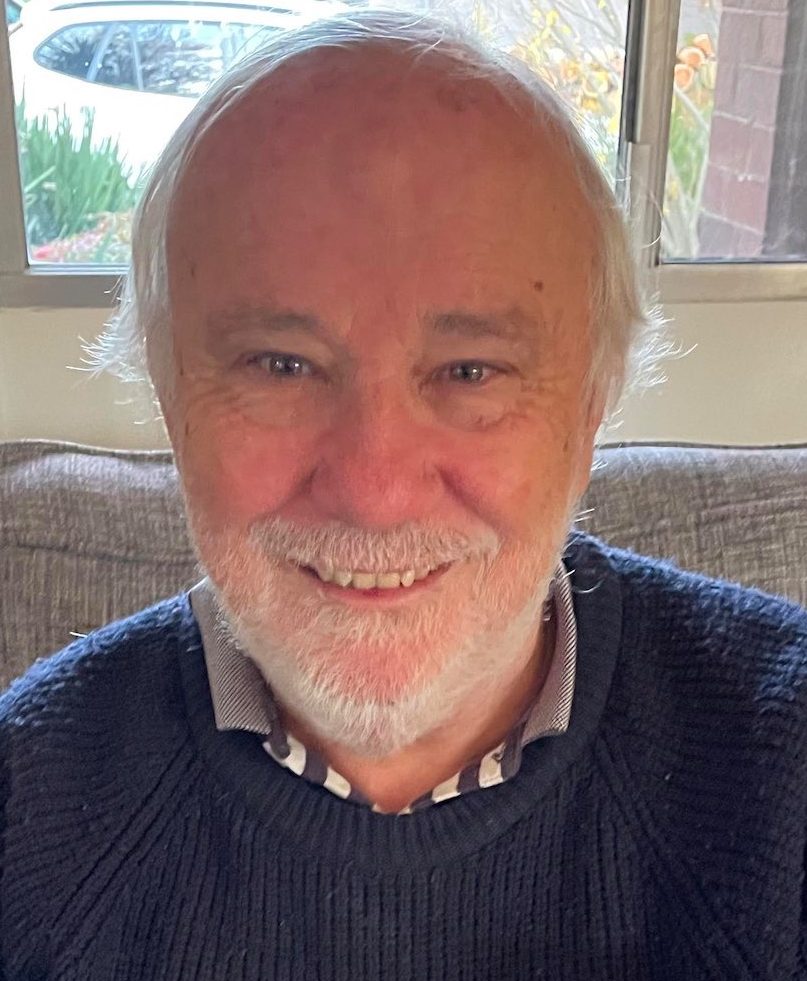
Mike Quirk is a former NCDC and ACT government planner.
News all day, every day at CityNews.com.au.
Who can be trusted?
In a world of spin and confusion, there’s never been a more important time to support independent journalism in Canberra.
If you trust our work online and want to enforce the power of independent voices, I invite you to make a small contribution.
Every dollar of support is invested back into our journalism to help keep citynews.com.au strong and free.
Thank you,
Ian Meikle, editor


Leave a Reply