By Jacob Shteyman in Canberra
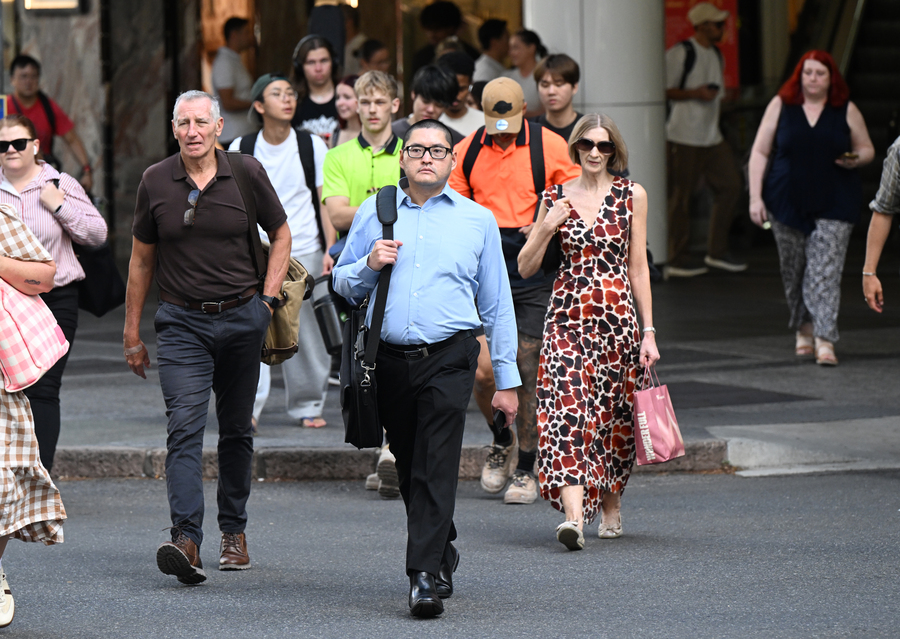
Australia’s unemployment rate has climbed to its highest level in almost five years, as the nation’s labour market continues to ease gradually.
But the unexpected rise in the jobless rate to 4.6 per cent in August is unlikely to dissuade the Reserve Bank from raising interest rates for a fourth time at its upcoming board meeting.
An extra 39,500 people were in a job in August while 28,200 more Australians were unemployed, the Australian Bureau of Statistics reported on Thursday.
Forecasters were off to the upside and the downside.
Consensus expectations were for the unemployment rate to hold steady at 4.5 per cent, while a more modest employment gain of 20,000 jobs was pencilled in, following a fall of 15,000 jobs in July.
The mixed result was due to growth in the size of the labour force, which pushed up participation 0.2 percentage points to a near-record high 67.1 per cent, ABS head of labour statistics Sean Crick said.
“This August we recorded a higher proportion of people who were previously not in the labour force moving to being unemployed, compared to recent years,” he said.
While joblessness remains relatively low, the rise in Australians entering the labour market showed households were feeling the pinch as the Middle East conflict continued to drive up prices.
“This suggests households are scrambling to find more income to help cover their rising day-to-day expenses and future increases in mortgage payments,” said KPMG chief economist Brendan Rynne.
The labour market has softened since the start of the year, when the unemployment rate was 4.1 per cent.
The last time the jobless rate was above 4.5 per cent was in November 2021.
But RBA governor Michele Bullock told a Committee for Economic Development of Australia event on Tuesday the labour market was still “a bit tight” and an unemployment rate between 4.5 per cent and 5 per cent would be needed to ease pressure on inflation.
Her comments further cemented market expectations that the RBA board would hike interest rates next week.
Money markets were all-but fully priced in for a September 29 rate hike ahead of the labour force release, but traders pulled back their expectations slightly in its wake.
“With unemployment still at the bottom of the band Bullock outlined, we expect the RBA to hike rates at its meeting next week,” said Oscar Guth, an economist at Oxford Economics Australia.
The rise in employment was entirely driven by part-time jobs, which grew by about 46,000.
“For two months now we’ve seen employment growth come exclusively from part-time work. Full-time work fell by 6300 in August,” Mr Guth said.
“However, hours worked rose by 0.7 per cent and underemployment edged down to 6.2 per cent, suggesting that the shift to part-time work does not signal a broad weakening in labour demand.”
Dr Rynne cautioned that the rise in part-time jobs will also incorporate some 30,000 part-time workers hired by the ABS to conduct the 2026 census, which is likely to correct in September.
While the result won’t derail a September hike, it could stave off more rate rises down the track, said AMP economist My Bui.
“The current uptrend in unemployment shows that rate hikes are working, albeit very slowly, and thus a November rate hike is not locked in given data will likely deteriorate in the next few months, despite markets pricing in almost three more hikes from here,” she said.
Employment Minister Amanda Rishworth said the labour market remained resilient, despite global economic uncertainty, with the participation rate near a record high.
“This shows more Australians are working or looking for work,” she said in a statement.
“We know some Australians are still doing it tough, and we’re focused on supporting them.”
News all day, every day at CityNews.com.au.
Who can be trusted?
In a world of spin and confusion, there’s never been a more important time to support independent journalism in Canberra.
If you trust our work online and want to enforce the power of independent voices, I invite you to make a small contribution.
Every dollar of support is invested back into our journalism to help keep citynews.com.au strong and free.
Thank you,
Ian Meikle, editor




Leave a Reply