The bank vault is empty, but Labor’s still spending
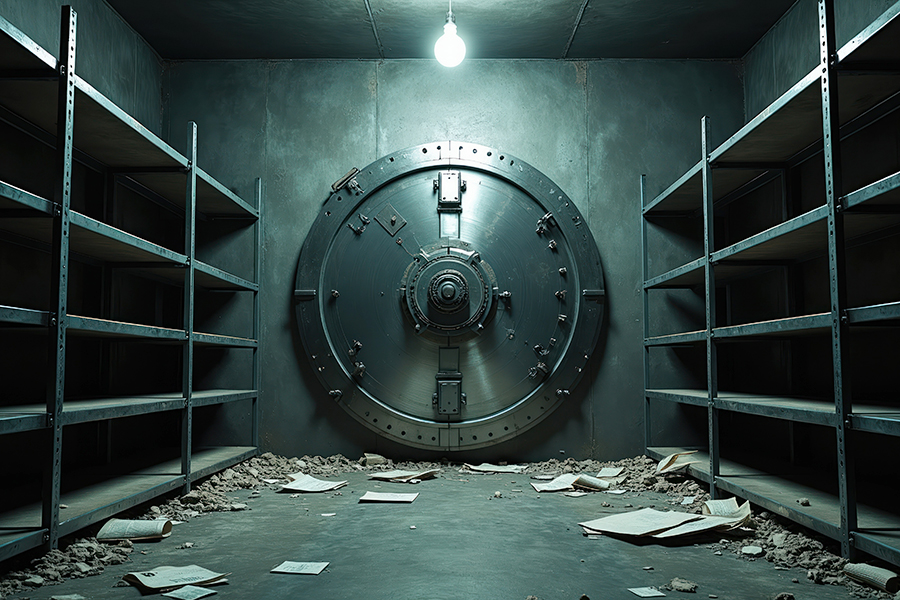
How was the ACT vault – once full – emptied? Photo: AI stock
“The ACT bank account is not just empty, but in the red to the tune of tens of billions of dollars because of bad policy choices and reckless spending. Concerningly, there is no sense the government has considered changing its modus operandi.” JON STANHOPE & KHALID AHMED shake their heads.
Following a recent Legislative Assembly inquiry, it is indisputable that the ACT Government’s finances are in an unsustainable position because of its policy decisions and choices.
The conclusions in economist Saul Eslake’s recent report are unambiguous and uncontested, even by the government.
Unfortunately, what has been overlooked in the Eslake analysis is the parlous state of ACT government services and the policy choices that have precipitated a dramatic and parlous degradation in essential services, such as health, education and public housing – services that play a key role in ensuring a measure of equity in our community.
Eslake has, as a consequence, suggested targeting some of those service areas to achieve savings and hopefully return the budget to balance.
We do not agree with that proposal, or a number of others, for several reasons.
Firstly, it is based on a superficial comparison of cost metrics without any apparent understanding of the specific circumstances of Canberra. For example, for some of the impacted services the territory is in fact compensated financially through federal transfers.
While the ACT Government is surely aware of those factors, it has nevertheless inflicted brutal cuts to health and education.
Independent economist Saul Eslake… the deficit is due to the ACT Government’s policy decisions, he confirms.
Eslake’s other budget “solution” is to pursue greater compensation for cross-border services. It is ironic, however, that the substantial increase in the cross-border consumption of services in, for example, health and education has occurred as a consequence of deliberate decisions taken by the ACT Government to freeze the release of land for affordable houses and thus deprive existing and potential Canberrans of affordable housing choices, other than apartment living in sub-quality buildings with poor amenity.
It is indisputable that the ACT Government has stimulated urban sprawl across the border into NSW, in order apparently to minimise urban sprawl within Canberra.
Cross-border travel for work and access to services such as health and education have more than doubled over the past 15 years.
The government has consequently foregone hundreds of millions in GST distributions and tax collection – a benefit to NSW – a fraction of which it now seeks to recoup for service delivery to those one-time Canberrans, now living in NSW, on whom we turned our back and waved goodbye.
Declining student achievements in the territory’s public school system have been reported for well over a decade. A trend decline in enrolments in the public system has ensued as parents lost confidence, and those who could afford it, moved their children to private schools.
The public system today has less peer group diversity and is more residualised. It is also under-resourced for the proportionately higher number of students with learning difficulties and special needs.
Minister makes cuts to least-advantaged schools
The teachers’ union has been at pains to stress that its recent industrial action is not merely about a pay rise, but more concerned with the conditions in our public schools. Stories abound, as indeed confirmed by firsthand accounts from teachers, of classes without teachers or teachers’ supports.
While the previous long-serving minister, Yvette Berry, did nothing of substance to improve the public school system, the new Minister Rachel Stephen-Smith’s most significant response has been to make cuts to frontline staff in the least-advantaged schools, thus exacerbating the very problem teachers are fighting to see addressed.
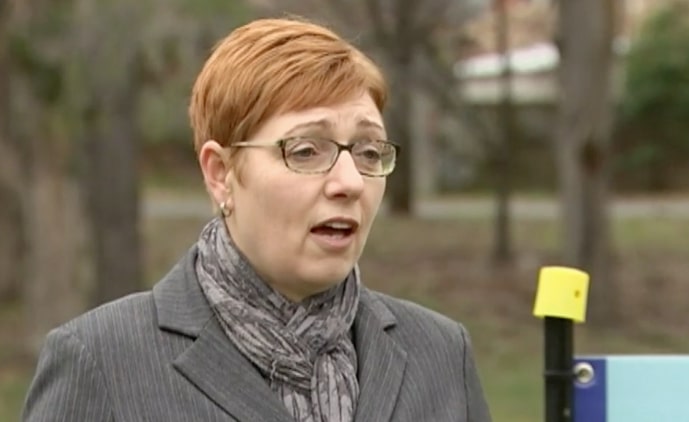
Minister Rachel Stephen-Smith… “there is no money in the bank”.
The minister brings form to public education from her other portfolio of health where she has, in the space of a few short years, overseen the decline of an above-average hospital system to one of the worst performing in the country.
That deterioration was no accident, rather it culminated through deliberate policy choices to redirect critical investment in hospital capacity as well as real term cuts to recurrent funding. Almost concurrently, cuts to the health budget have been announced.
Cutting funding for already underfunded and dilapidated universal access public services makes no logical sense. That is, unless there is no choice or a higher priority.
Minister Stephen-Smith reported, inter alia, that “there is no money in the bank”. That begged many questions that the mainstream media has been either unable to answer or disinclined to pursue.
To continue with the Minister’s idiom, how was the vault – once full – emptied?
Katy Gallagher… three surpluses (even during the GFC) and negative net debt, when handing the reins to Andrew Barr.
We recall that Katy Gallagher handed three surpluses (even during the GFC) and negative net debt, when handing the reins to Andrew Barr.
The ACT bank account is currently not just empty but in the red to the tune of tens of billions of dollars because of (bad) policy choices, as Eslake has pointed out, and reckless spending. Concerningly, there is no sense that the government has considered changing its modus operandi.
Among the reporting on cuts to education and health, there has not been a mention of the proverbial elephant – light rail – which remains untouchable. Rather, the media has been tacit in its approval of cuts and more focused on promoting projects from developers to occupy public parks and spaces to make the project “viable”.
The question of whose interests the government is serving or whose interests take priority has not been asked. Is it children in public schools with special needs and/or sick Canberrans unable to afford private health insurance or developers seeking windfall profits?
Steel claims budget on track for surplus
Over the last nine months, especially while delivering the 2026-27 budget, Treasurer Chris Steel has been claiming that the budget was on track to return to surplus. It is not clear whether these funding cuts are necessary to achieve the expenditure forecasts published in the budget. In other words, was the budget premised on cuts to education and health? Or, has the budget just passed, deteriorated?
In our view, it’s both. The 2026-27 budget estimates were unrealistic, and short of even a CPI increase. It was beyond doubt that there were either implicit cuts to spending or that the deficit would inevitably blow out. The territory’s finances have massively deteriorated because – you guessed it – of the rising interest costs of debt.
Market borrowings (ie, gross debt) reached $15.4 billion in June 2026. Of that debt, $8.42 billion (ie, 55 per cent) will mature over the budget and forward estimates period.
Treasurer Chris Steel… has he learned by now that cheap debt, if you keep borrowing, eventually becomes costly?
The government will need to refinance these loans because it is already borrowing to pay interest on its debt. In addition, the budget forecast is for new borrowings of $4.68 billion over the next four years.
Since the budget was handed down, debt servicing costs have increased due to an increase in the bond yields. The amount of the increase in interest costs on the $13.1 billion in refinancing and new debt will depend on the specific instruments, but is likely to be in the order of $150 million. The deficit will persist and/or more funding cuts will inevitably follow.
It can be said with certainty that these cuts would be unnecessary, in fact the budget would be in solid surplus if the government had stabilised debt. One hopes that Steel has by now learned that cheap debt, if you keep borrowing, eventually becomes costly.
However, we can expect the conflict in West Asia to be blamed for the inevitable raid, by the ACT Government, on the health and education budgets.
Meaningful questions from The Greens unlikely
We acknowledge that it would be unlikely for the ACT Greens to ask meaningful questions about the state of the budget or its priorities and choices in the past and for the future, having been part of the government for three terms and being heavily involved in priority settings.
We hope, however, that the independent cross-bench and the opposition can hold the government to account.
As for Canberrans: those who have private health insurance and no children, or children enrolled in private schools, there is nothing to worry about. For those who send their children to public schools and wait years for a hospital procedure or dream of owning their own home things will inevitably continue to deteriorate.
But then again, the current ACT Labor Government does appear to have adopted the mantra, as famously first espoused by one time Liberal Party Minister Joe Hockey, that if working-class battlers want to own their own house, be able to afford private health insurance and send their children to private schools, “they should get a better job”.
Jon Stanhope is a former chief minister of the ACT and Dr Khalid Ahmed a former senior ACT Treasury official.
"The 40 per cent of ACT voters who put David Pocock as their first preference at the last election should be feeling very proud of his performance," writes political columnist MICHAEL MOORE.
Greens leader David Shoebridge faces a growing party crisis after Jordon Steele-John publicly disputed claims he had agreed to take leave amid an investigation into allegations against him, writes political columnist MICHELLE GRATTAN.
"Given the Coalition’s relationship with big business has soured in recent years, AI could be a valuable opportunity to collaborate on big policy design and re-build mutual trust," writes political columnist ROBERT McMAHON.







Leave a Reply