Give the little guys a better go at building houses
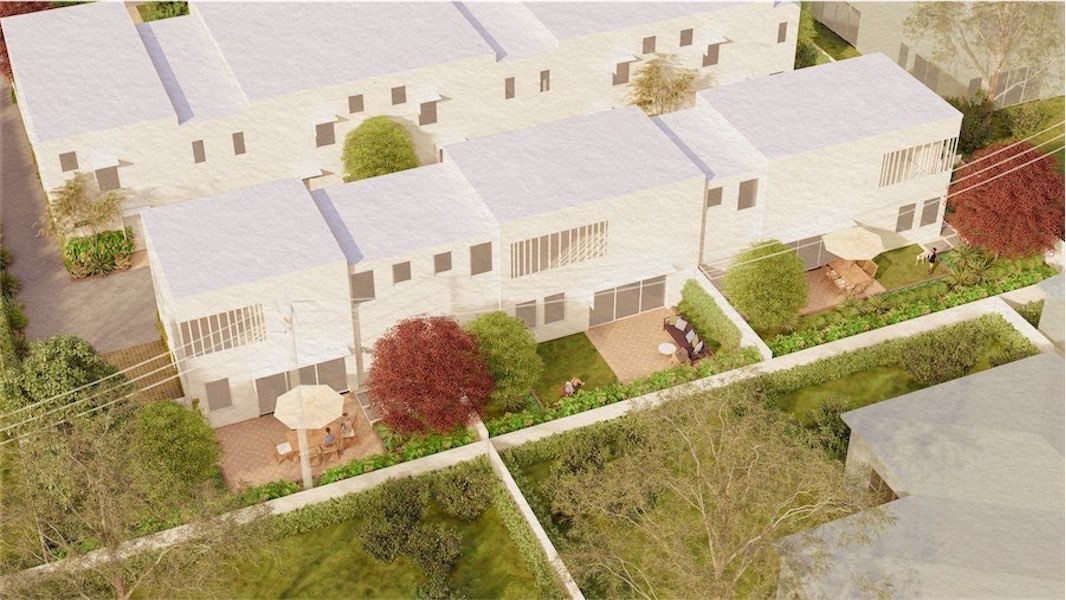
Government “bumbling has a real cost. Investment goes elsewhere and homes that might have been built remain drawings on a page,” says Mark Parton. Photo: conceptual image of the Missing Middle Housing Reform program
Canberra needs more homes and a government that stops getting in the way, says Canberra Liberals Leader MARK PARTON.
The three biggest ways to address the housing affordability crisis in Canberra, or anywhere for that matter, are supply, supply and supply.
Canberra Liberals leader Mark Parton.
The biggest single reason for the housing crises in so many Western world markets around the globe is a slowdown in building new homes.
Here in Canberra, I reckon it’s a fair expectation that the ACT Government’s housing policies should work in harmony to achieve escalated supply… but they simply don’t.
Instead, we have a government that opens the door to more housing with one policy, then puts another obstacle in the doorway with the next. I’m referring specifically to the government’s missing-middle reforms and its new developer licensing scheme.
From October 1, developer licensing became mandatory for relevant development and building approvals involving three or more dwellings. As of October 14, the public register listed just 12 licensed entities. These 12 licensed entities are the only ones who can submit a DA for a development of three dwellings or more.
The names on the register include major established large developers such as Geocon, JWL and Village Building.
These businesses have the scale, organisational capacity and development pipelines to absorb another licensing regime. But a three-townhouse project on a suburban block is generally not in their wheelhouse.
The government’s missing-middle ambitions depend on a much broader market of smaller builders, local developers and landowners working with experienced professionals.
The number of developer licence holders will presumably grow. But the question is whether the people most likely to deliver three, four or six homes in an established suburb can justify entering the system at all.
Missing-middle housing gives people options between a detached house and an apartment in a large complex. It allows retirees to downsize without leaving their neighbourhood and young families to find homes near grandparents, schools and established services.
Delivering those homes requires someone willing to take on a modest project with modest returns.
Large developers generally need projects of sufficient scale to justify their overheads and capital commitments. Smaller suburban developments depend on participants who may undertake only a handful of projects, or just one.
Those are the people this government should be encouraging. Instead, it has imposed another barrier.
There is a familiar pattern here. Ministers announce an ambitious goal, fail to think through how their policies interact, and leave households and businesses to deal with the consequences.
In housing, that bumbling has a real cost. Investment goes elsewhere and homes that might have been built remain drawings on a page. And that’s before you factor in the LVC and Tree Charge obstacles to missing middle developments.
To be clear, building quality matters. Too many Canberrans have experienced the financial and personal consequences of defective homes. They deserve effective protection and meaningful accountability.
Builders and building certifiers already operate under licensing arrangements. The government already has a responsibility to enforce those arrangements. And if this extreme government push to clamp down on so-called “dodgy developers” results in a drastic reduction in the number of homes delivered, nobody wins.
Before adding another licensing regime, ministers should explain why the existing system failed to prevent or adequately address poor work.
My concern is that developer licensing has become the government’s response to its own failure to enforce the licensing arrangements already in place.
Meanwhile, the new requirements affect whether homes get built. An established developer can spread assessment costs, administration and continuing compliance across a pipeline of projects. A landowner considering three townhouses must justify that burden against one development.
They can simply decide not to proceed, and it looks as though that’s the case. The government risks tilting the market towards larger, established operators while discouraging the smaller participants its own housing policy depends upon.
There is a practical adjustment available.
For low-rise missing-middle developments in RZ1 and RZ2, I believe developer licensing should begin at seven dwellings. Projects of up to six dwellings should be exempt from that additional requirement.
Building standards, approvals and accountability for defective work should remain. The exemption should prevent larger projects being artificially divided to avoid licensing.
The government should then concentrate on enforcing standards and acting against those responsible for poor work.
Planning permission means little if the people expected to deliver the homes cannot justify proceeding.
Making room for missing-middle housing while deterring the people who would build it is a fundamental failure to connect regulation with the reality of how missing-middle homes are built.
Letter writer and new Mawson resident DAVID ROBERTSON has written three times to his local MP David Smith after being "badly burned by the housing market’s budget reaction". But to no replies from the Member for Bean.
"Those who want to froth about the inadequacy of this sentence would do well to note that there is no rehabilitation in our ACT prison system. That is the fault of the current ACT Government," writes legal affairs columnist HUGH SELBY.
"Jim asks his acolytes to swap their livery for Nick Cave T-shirts and their rung on the ladder to be shared by those with fewer opportunities." writes Kindness columnist ANTONIO DI DIO.






Leave a Reply