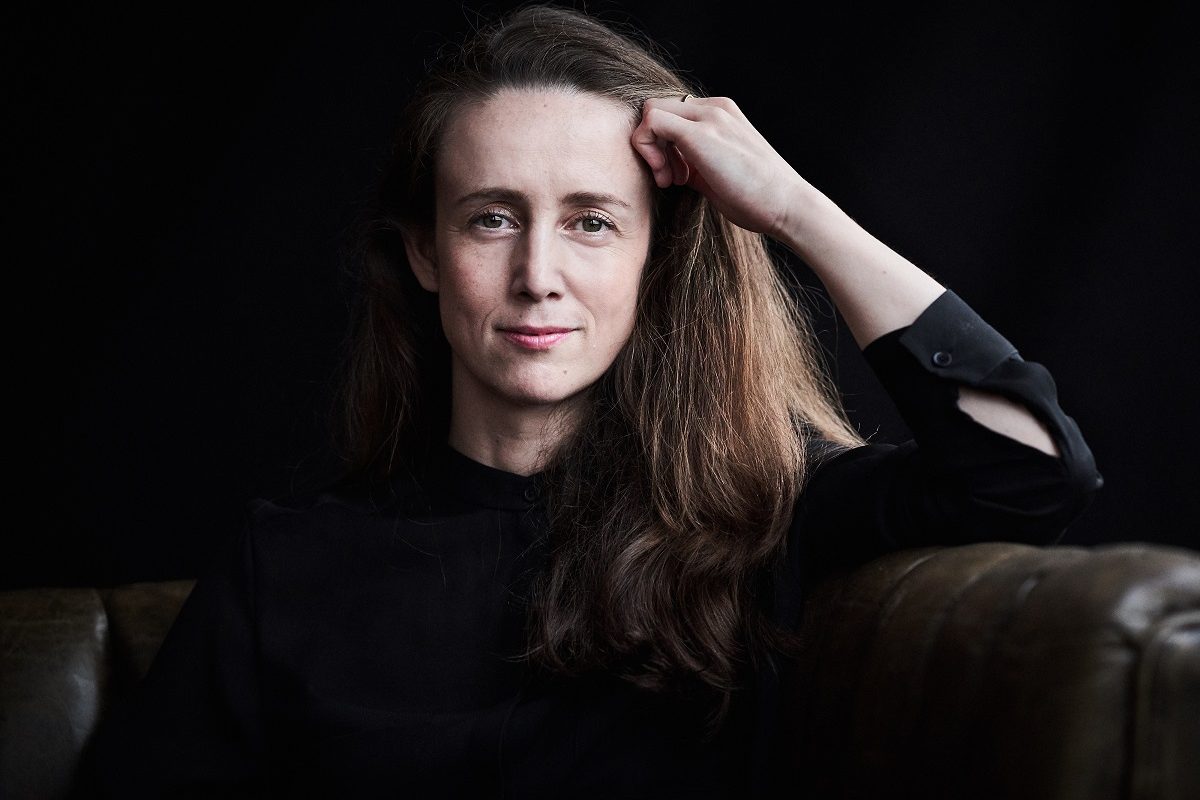
“CHROMA” is the Greek word for colour, and that’s the choice of Canberra Symphony Orchestra’s conductor-in-chief and artistic director Jessica Cottis for the title of the 2023 season.
The works chosen have been powerfully influenced by her personal sense of colour and she defines “Chroma” as “the intensity or saturation of a colour… these programs are my musings on the vitality of the world we see and feel around us… or me, colour is given sound by music.”
Cottis lives happily with a form of synaesthesia, which means a heightened sense of the relationship of colour to taste, smell sound – in her own case, to music.
“I’ve had it from an early age and was probably born with it, so I can only speak from my own experience,” she tells me by phone from London, adding that she believes that some other syntesthetes, as they are known, have it with numbers.
In her view, we probably have Aristotle to blame for the limited idea that there are just five senses, for as she observes: “There are so many more, but with synaesthesia, it’s a case of the joining of two senses.”
Mightily influenced by “Chroma: A Book of Colour,” by British filmmaker Derek Jarman, a book she read 20 years ago when she first arrived in London from Canberra, she set about turning her musical meditation on colour into a season of works.
“Initially I didn’t know where I was going, but I kept getting images of landscapes full of gradations of colour,” she says.
“This idea continued to percolate through my brain as I remembered Derek Jarman’s book… I was moved by the way he put colour and music together, drawing on the work of colour theorists, there was something about the vibrancy of it that appealed, and the way he described colours was glorious. I was blown away– and it was a quality that could be associated with both very old and very contemporary music.”
In the end, Cottis used the book as a kind of guide, so that each chapter looks at a different colour.
“From then on, everything built quickly,” she says, “so I devised a program centring on composers who had a deep affinity with colour or who use incredible colour.”
In March, for instance, as part of the Chamber Classics series is “Watercolours”, which features no fewer than three compositions by Debussy, “a composer who had an extraordinary colour palette”, she says. That also allows her to make use of rising vocal star Chloe Lankshear, who will perform Debussy’s “Ariettes Oubliées” (Forgotten Songs).
Cottis really loves blue and green.
The second Llewellyn Series concert of the year during April, which she will conduct herself, is titled “Electric Blue”. In it, she focuses on the works of Scriabin and Rimsky-Korsakov, both either syntesthetes or strongly influenced by ideas about colour and music – Scriabin was famous for mapping his own colour charts.
“I must confess that ‘Electric Blue’ is my favourite concert,” she says, explaining that in that one, brilliant young pianist Sine Winther (the daughter of former School of Music director, the late John Winther) will perform “Scriabin’s Piano Concerto in F-sharp minor, op. 20”, written in what the composer believed was a mystical “blue” key.
The same concert will also feature a new CSO commission from composer Miriama Young and Rimsky-Korsakov’s “Scheherazade” Op 35, well-known to have been inspired by the blueness of the sea.
“He saw a dark blue sea and heard it in E major, and that is the key in which the work is written,” Cottis says.
The “Living Green” concert features two works by one of Cottis’s favourite composers, Sibelius, whose deep contact with nature speaks to, but this program also features Dvořák’s “In Nature’s Realm, op. 91, B. 168”, a new CSO commission from trumpeter-turned composer Louisa Trewartha and, personally thrilling to Cottis, soprano Eleanor Lyons performing Richard Strauss’s “Four Last Songs”.

In “Red Desert Sand,” William Barton will perform his own work “Square Circles Beneath the Red Desert Sand”, which was inspired by Sculthorpe’s “String Quartet No. 7: Red landscape,” alongside works by Ros Bandt, Katy Abbott and a CSO commission from Aaron Wyatt.
Lest it be thought that the 2023 program is a glorified music colour chart, Cottis is keen to stress the other aspects of the season which, she notes, will feature 18 works by Australian composers, including world premieres from Trewartha, Wyatt and Miriama Young, previously performed works by Andrew Ford, Abbott, Barton, Nardi Simpson, Lisa Illean and Simon James Phillips, who studied at the old Canberra School of Music. Canberra-trained composers such as composers Sally Greenaway and Kate Moore are also represented.
Brisbane composer and recent Tait Trust Scholar at the Royal College of Music, Connor D’Netto, comes on board as the CSO’s first “Composer-in-Connection” – he’ll have a commissioned world premiere in March.
Cottis will return from her home in London to conduct three of the concerts, but will hand over to conductors Alexander Briger and Dane Lam at other times.
“We never forget that how much we are rooted in the historical wonders of classical music,” Cottis affirms, “but the new works are going to be great for the orchestra,” especially since some of the chosen composers, such as D’Netto, Phillips and Annie Hui-Hsin Hsieh are known for experimenting.
“If we don’t take in new influences, we are not part of the story… It’s incredibly nourishing to interact with sound.”
At a glance:
- March 5, Albert Hall, Chamber Classics, “Watercolours”;
- March 22-23, Llewellyn Hall, Llewellyn One, “Fire & Shadow”;
- April 26-27, Llewellyn Hall, Llewellyn Two”;
- May 21, Albert Hall, Chamber Classics, “Darkness to Light”;
- June 22, National Museum, Australian Series, “Red Desert Sand”;
- July 27, National Museum, Australian Series, “Close to Air”;
- August 16 -17, Llewellyn Hall, Llewellyn Three, “Winter Dreams”;
- August 27, Albert Hall, Chamber Classics, “Night Visions”;
- September 21¸ National Museum, Australian Series, “Play of Light”;
- October 29, Albert Hall, Chamber Classics, “All That Glitters”;
- November 22 -23, Llewellyn Hall, Llewellyn Four, “Living Green”;
- December 2, Government House CSO Summer Prom.
News all day, every day at CityNews.com.au.
Who can be trusted?
In a world of spin and confusion, there’s never been a more important time to support independent journalism in Canberra.
If you trust our work online and want to enforce the power of independent voices, I invite you to make a small contribution.
Every dollar of support is invested back into our journalism to help keep citynews.com.au strong and free.
Thank you,
Ian Meikle, editor




Leave a Reply