
IT’S United Nations Day today – that’s why you can see UN flags flying on both bridges Lake Burley Griffin – but it’s a very different organisation from the one officially declared on October 24, 1945.
For while at its inception, peace may have been the main focus, there are now other mighty challenges like climate-change, child abuse, gender-equity and in this year’s thematic focus, fake news, so that for the UN month, buses and light rail in Canberra will be adorned with posters alerting the public to fake information like, “Astronomers admit a picture of Moon is a toasted tortilla wrap.”
Here in Canberra, UN Day has already been marked by celebrations at Narrabundah College and there are all also events today for Australian peacekeepers and a reception at Government House, but most prominent will be the campaign in buses.
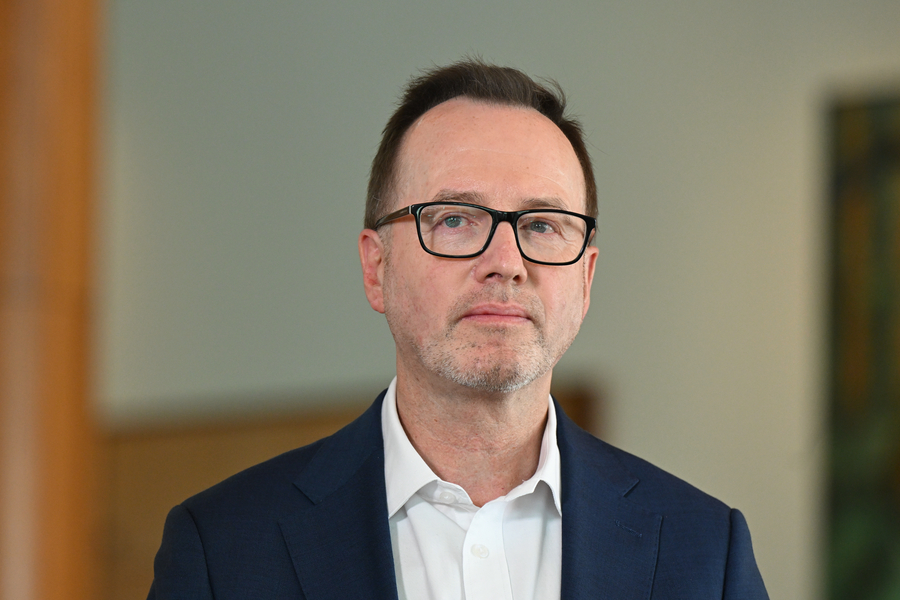
Veteran UN representative Damian Cardona Onses, who before coming to Canberra has served in Columbia, Bosnia and Herzegovina, Mali and Democratic Republic of the Congo, Senegal and Haiti, Damian Cardona Onses has been director of the United Nations Information Centre in Canberra since April this year, and, to him, these new issues are front and centre to the UN’s concerns.
“Our ‘Verified’ campaign against misinformation is central,” Cardona says. “The UN, which began looking at peace and security, now has a number of specialised agencies, but in the past 19 to 20 years issues never thought of have surfaced – in 1945, nobody worried about the threat of climate change, but now the UN must be seen as the only multi-government body that can attack these questions.”
“The UN has many observance days like World Oceans Day, Mother Language Day and Holocaust Day, but UN Day is a day for everybody, as it takes in all these things.”
As for fake news, he says, that began worrying scholars several years ago, but during the covid pandemic it became clear that fake news could do a lot of damage – especially in Africa.

While serving in Dakar, Senegal, a consignment of vaccines arrived, but because of misinformation, only 10,000 people put their hands up for it, so they lowered the age of eligibility then made it available to foreigners.
Of equal concern is hate speech, which is directly linked to misinformation and Cardona notes that in 1994, 1 million people were killed after a radio station in Rwanda spread hate speech – “but that was just radio. Imagine how it would be now with social media.”
The Human Rights Declaration was declared in 1948, since which year Australia has had an office, first in Sydney and then Canberra.
Most people know Article One – “all human beings are born free and equal and dignity and rights,” but and others to are well known too – “no one shall be subjected to torture, or to cruel inhumane, or degrading, treatment, or punishment,” or “everyone has the right to rest and leisure.” or “everyone has the right to freedom of peaceful assembly in association.”
But in Cardona’s opinion, there should be one more – “the right to truth”.
“In countries like Australia, there are reputable fact-checking organisations,” he says, but elsewhere, misinformation is rife, seen in recent PNG elections for instance.
“Election campaigns used to be public rallies but nowadays you just tweet something,” he notes.
The “Verified” initiative is designed to cut through the noise on social media and is part of the UN’s “Pause” campaign, where the simple act of pausing to question the origin, credibility, relevance and accuracy of any information before sharing it on phones, computers and social media platforms, can significantly reduce the sharing of misinformation.
So, before sharing material, people should ask: who made it? what is the source? where did it come from? why are you sharing this? and when was it published?
“It’s easy to get negative but the message of hope is important,” Cardona says, and the campaign underway does, he believes, bring hope.
News all day, every day at CityNews.com.au.
Who can be trusted?
In a world of spin and confusion, there’s never been a more important time to support independent journalism in Canberra.
If you trust our work online and want to enforce the power of independent voices, I invite you to make a small contribution.
Every dollar of support is invested back into our journalism to help keep citynews.com.au strong and free.
Thank you,
Ian Meikle, editor

Leave a Reply