News location:

Monday, September 21, 2026 | Digital Edition | Crossword & Sudoku

Multi-billion dollar price tag revealed to go nuclear

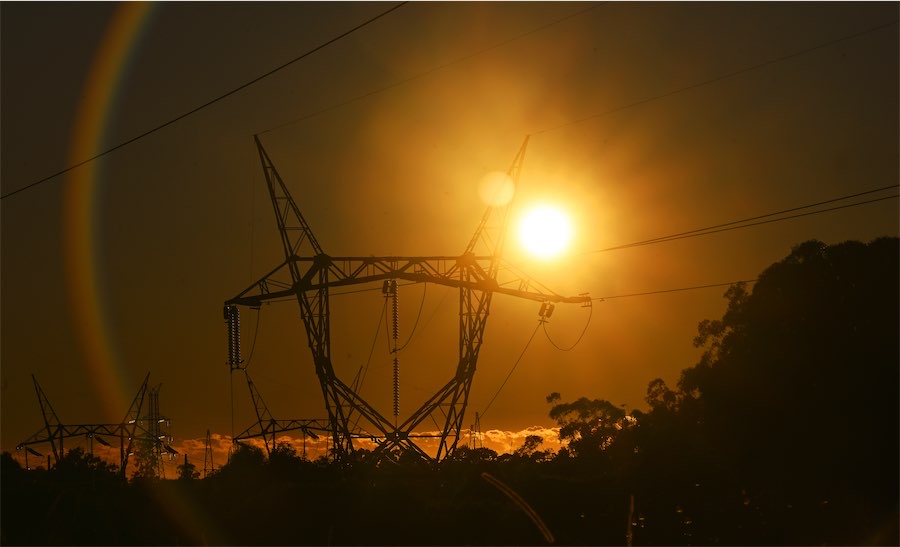
The political battle over Australia’s energy future is expected to heat up on Friday. (Dave Hunt/AAP PHOTOS)

By Dominic Giannini in Canberra

Taxpayers would be slugged more than $24,000 each to fund the coalition’s pledge to set up nuclear energy in Australia.

While the federal opposition has claimed its nuclear energy plan, worth $330 billion or almost 12 per cent of Australia’s GDP, would lead to less expensive electricity, uncertainty remains on how much immediate bill relief would be in store for customers.

“This will make electricity reliable … it will make it cheaper for Australians,” Opposition Leader Peter Dutton said during a 40-minute press conference on Friday to announce the policy’s price tag that didn’t once mention the total cost.

Wind and solar will make up 49 per cent of Australia’s power grid by 2050, nuclear 38 per cent, and hydro and pumped hydro nine per cent under the opposition blueprint modelled by private sector consultancy Frontier Economics.

The price tag to set up seven nuclear reactors across five states would cost each of Australia’s 13.6 million taxpayers more than $24,200, or would be worth roughly the entire net wealth of Facebook founder Mark Zuckerberg.

The nuclear policy is almost as much as the federal government will spend on procuring nuclear submarines under the AUKUS agreement, which would cost up to $368 billion.

The announcement of the nuclear policy has set the stage for an election battleground with Labor, the Greens and teal independents criticising the coalition’s scaling down of renewable energy investment as walking away from climate change action.

Mr Dutton promised cheaper power long term but didn’t outline a near-term plan after saying bringing down prices was a priority.

There was no price modelling for power bills.

Modelling bills is politically fraught after Labor pledged to lower electricity bills by $275 by 2025 in opposition, which the coalition seized on as bills went up.

Labor’s plan is to have the grid firmed by just over 80 per cent renewable energy by 2030 and gas is being used as a backup during the rollout.

Mr Dutton has branded a largely renewables-backed energy grid as zealous, saying it had resulted in higher energy prices as the coalition seizes on a cost-of-living crisis to attack the government.

To recover the cost of nuclear, bills would go up by $665 a year for a typical households and $972 for a four-person household, the Institute for Energy Economics and Financial Analysis predicted.

Nuclear energy generation would be up to twice as expensive as large-scale solar, according to the analysis by the national science agency CSIRO and the Australian Energy Market Operator (AEMO).

Coal and gas-fired power plants will stay open longer under the plan, a move criticised as bad for Australia’s carbon emissions and unreliable for the energy grid.

Coal stations couldn’t shut down prematurely if Australia wanted to keep the lights on, opposition energy spokesman Ted O’Brien said, outlining a plan to replace the plants with nuclear ones as they came offline.

The first of the seven publicly owned nuclear plants would come into operation by the mid-2030s, Mr Dutton said, but this timeline has been rubbished by some experts.

Ageing coal-fired plants are already facing daily outages and extending them would be “a recipe for blackouts”, Energy Minister Chris Bowen said, criticising Mr Dutton for expecting coal plants would be more reliable as they got older.

Australia’s coal power would decrease by 90 per cent by the mid-2030s and all plants would be shut by 2038, according to AEMO.

Mr Bowen further criticised the nuclear modelling for reducing the number of energy transmission lines needed to be built and for operating on an assumption Australians would use less energy in 2050 than predicted by AEMO

“Transmission lines are full and need to be duplicated, regardless of whether the power comes from renewables or nuclear,” he said.

Frontier Economics modelled Labor’s transition around $600 billion while the energy grid operator put it at $122 billion.

News all day, every day at CityNews.com.au.

Who can be trusted?

In a world of spin and confusion, there’s never been a more important time to support independent journalism in Canberra.

If you trust our work online and want to enforce the power of independent voices, I invite you to make a small contribution.

Every dollar of support is invested back into our journalism to help keep citynews.com.au strong and free.

Become a supporter

Thank you,

Ian Meikle, editor

Australian Associated Press

Australian Associated Press

Share this

5 Responses to Multi-billion dollar price tag revealed to go nuclear

David says: 13 December 2024 at 5:00 pm

“The coalition’s plan would slow the rollout of low-cost renewable energy”. I’m sorry, how is their plan going to do any worse than the situation we already have where renewable energy is already wasted during the day and AEMO want’s the ability to turn it off it all states. It is being slowed down because there isn’t a low cost solution to storage. (Many would argue there isn’t even a high cost solution). It’s doesn’t exist or we and everybody else would already have it. We are ready for it now, abundant renewable energy going to waste, where is it Labor, what’s the delay? It clearly isn’t the opposition or anything they are proposing. Why aren’t they rolling out batteries on all homes with solar power so that wonderful renewable energy isn’t wasted ? What is the delay ? Beyond solar panels there is no lost cost renewable energy and it’s already well ahead in its rollout. AEMO wants to slow it down.

Arguing with someone who supports the government on this is like arguing with a village idiot who is standing on a railway track with a train coming. “You need to move or you’ll get hit by a train”. “Sorry can’t do, I’m trying to work out if one plus one equals three”.

Reply
David says: 14 December 2024 at 8:25 am

Wow, you’ve edited the original article. The quote I cut and paste at the top of my comment is now no longer in the article. Isn’t that a bit dishonest ? The least you could do is make a note beside my comment to say the author has removed the part of the article the comment relates to.

The problem isn’t the rollout of renewable energy, it’s the rollout of storage, which can store anything, not necessarily renewable energy. The required storage doesn’t exist on the scale, price and in the form the AEMO and the private companies want to roll it out. i.e something they can control and make money out of. They are slowing down as best they can what does exist, batteries on houses (including V2G) to maximise their profits by keeping as many people on the grid as they can. The problem is, it may never exist in a form that will be cheaper than nuclear and the path may well mean more expensive and more unreliable power.

Imagine a solution where we get as many people off the grid as possible. Rollout out as much renewable energy and storage as we can wherever we can. For those who cannot take advantage of that then have a government owned power grid that tax payers subsidize to keep the power at a reasonable price. Those off the grid contribute through tax. Maximum use of renewables and cheaper power not influenced by the profit needs of privatization. All this with zero emissions.

Reply
Ian Meikle says: 14 December 2024 at 8:37 am

There was no “dishonesty” David. It was a moving news story and AAP updated it continuously during the day.
Ian Meikle, editor

Reply
David says: 14 December 2024 at 11:22 am

Ok. Thanks Ian. If the article is going to change then when it is changed would be nice to add a footnote to readers to say something like. “Please note this article has been edited since initial publication so some comments may refer to details that have since been removed”. Even better would be to allow users to see the edits so they getting a better understanding on how it has changed. A lot can be learned from that.

This is a very important topic and if we don’t get it right then we may face years on high prices for an unreliable supply which then needs to be backed with nuclear and becoming even more expensive. As an analogy maybe think about it like water, the private companies are looking for a solution to build a great big cheap dam and they don’t currently have it. They don’t want the people who can install their own tanks installing them (i.e losing people to pay for the big dam) and they don’t want people forcing water back into the pipes which is not setup for the amount over water people want to force back in. The opposition has proposed building something that competes with this idealistic dam that will work with and will complement what renewable technology exists today. The trouble is, it would be government controlled and could actually deliver lower prices. Think of it as delivering energy subsidies in a different way while maximizing the use of renewables at minimum cost.

Reply
Ian Meikle says: 14 December 2024 at 12:21 pm

David, it is clearly labelled “Updated” and with each update the story moves forward to the top of the newsfeed. That’s the best we can do, I’m afraid.

Leave a Reply

Your email address will not be published. Required fields are marked *

*

*

Related Posts

Follow us on Instagram @canberracitynews