
“If the staff of our medical institutions were not filled by migrants they couldn’t function.” After a heart attack, NOEL BEDDOE went looking for answers.
I had a heart attack on St Valentine’s Day; please, no unseemly humour. The treatment I received, impressive as it was, raised a couple of questions for me and inspired me to do some research.
Firstly, very good news for Canberrans – if you have a heart attack and seek help you’ll be in excellent hands.
I had chest pain and saw my GP. My blood pressure, normally very good, was through the roof. “Am I having a heart attack?” I asked. “Probably” was his response.
I was sent to the public hospital in Bruce. In the emergency department, I was triaged to the top of the pops, attended by half a dozen staff members, connected to a couple of machines and given the news – yes, it was a heart attack all right.
Three ambulances waited outside; I was placed in one, hitched up with pads to be shaken back to life if my heart failed completely, and carried across the outskirts of Canberra to the public hospital in Garran.
There I was wheeled from the ambulance bay to an operating theatre where a team of three awaited me; a camera was inserted in my arteries so that I could watch the performance of my heart pictured on a screen; when stents were inserted I could watch them open and blood flow be reinstated.
I was then booked into the hospital cardiac unit, where I remained for three nights.
My pain had begun at 8am; by 2pm I was wheeled out of the operating theatre having had life-continuing surgery. When I was checked out after three days of intense treatment this was the bill – not one red cent.
In the cardiac unit I was treated by a vast array of impressive, expensive-looking machines; I was attended night and day by an array of staff – a lot of people – and very few of them were of Anglo-Celt ethnic origin.
Most in the very skilful, very committed, very professionally-competent medical team that gave me such remarkable attention had come to Australia, this generation or maybe the one before, from Africa, India, various countries in south-east Asia and the Pacific islands.
Two young ladies who carried out apparently-sophisticated testing in the middle of the night wore the Islamic hijab. They were committed, competent and kind.
Released from hospital, I was moved to do some research from the Australian Bureau of Statistics. This is what I learned:
About a lifetime ago, in 1950 – the average Australian family had 3.5 children. The figure to-day (rocked me a bit) is 1.48; today, one in five Australian women aged 35 is childless.
Simply put, this means that Australians are not producing enough people to replace those retiring from the workforce.
If the staff of our medical institutions were not filled by migrants they couldn’t function. Eight per cent of our population in 1950 was aged over 60 and the median age of death was 66; today 22 per cent of our people are aged over 60 and the median age of death is 82.
And, of course, we are not alone with the resulting problems; for example, both Japan and China are facing crises whereby they do not have enough people to service the economic needs of masses of people who own a lot of assets but are past the years of being able to hold jobs.
We should be clear about this: Australia faces continuing, massive competition for the most valuable asset in the world – people.
We have our current enviable standard of living because we have continued to attract new Australians who have migrated here from overseas.
I recently read a report in The Sydney Morning Herald that said recent comments and behaviour by politicians and others have made Australia less attractive to potential migrants to our country.
If that’s true, those being unwelcoming to migrants are the enemies of our future security and prosperity. And, of course, migrants will bring with them attitudes, beliefs and habits that will have their impact on Australian way of life and character.
I’ve read that there are those who believe the essential Australian way of life should remain forever as it was 70 years ago. The proponents of that view can forget it; if we want to survive, that game was over decades ago.
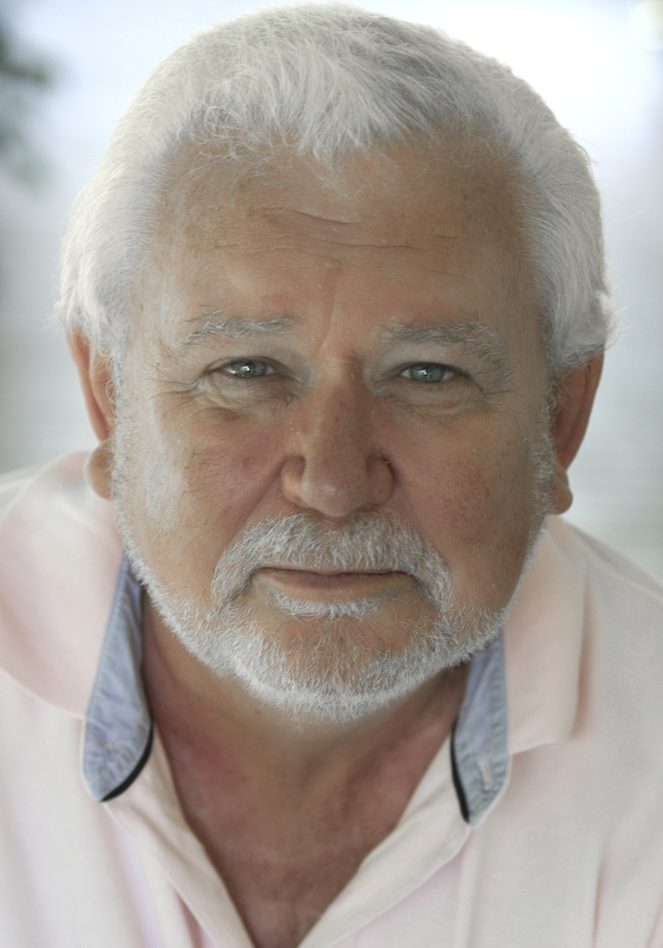
Noel Beddoe is a Canberra novelist.
News all day, every day at CityNews.com.au.
Who can be trusted?
In a world of spin and confusion, there’s never been a more important time to support independent journalism in Canberra.
If you trust our work online and want to enforce the power of independent voices, I invite you to make a small contribution.
Every dollar of support is invested back into our journalism to help keep citynews.com.au strong and free.
Thank you,
Ian Meikle, editor



Leave a Reply