By Helen Musa
In many years of covering the arts in Canberra, I have rarely met anyone as impressive as the late sculptor, Rosalie Gascoigne.
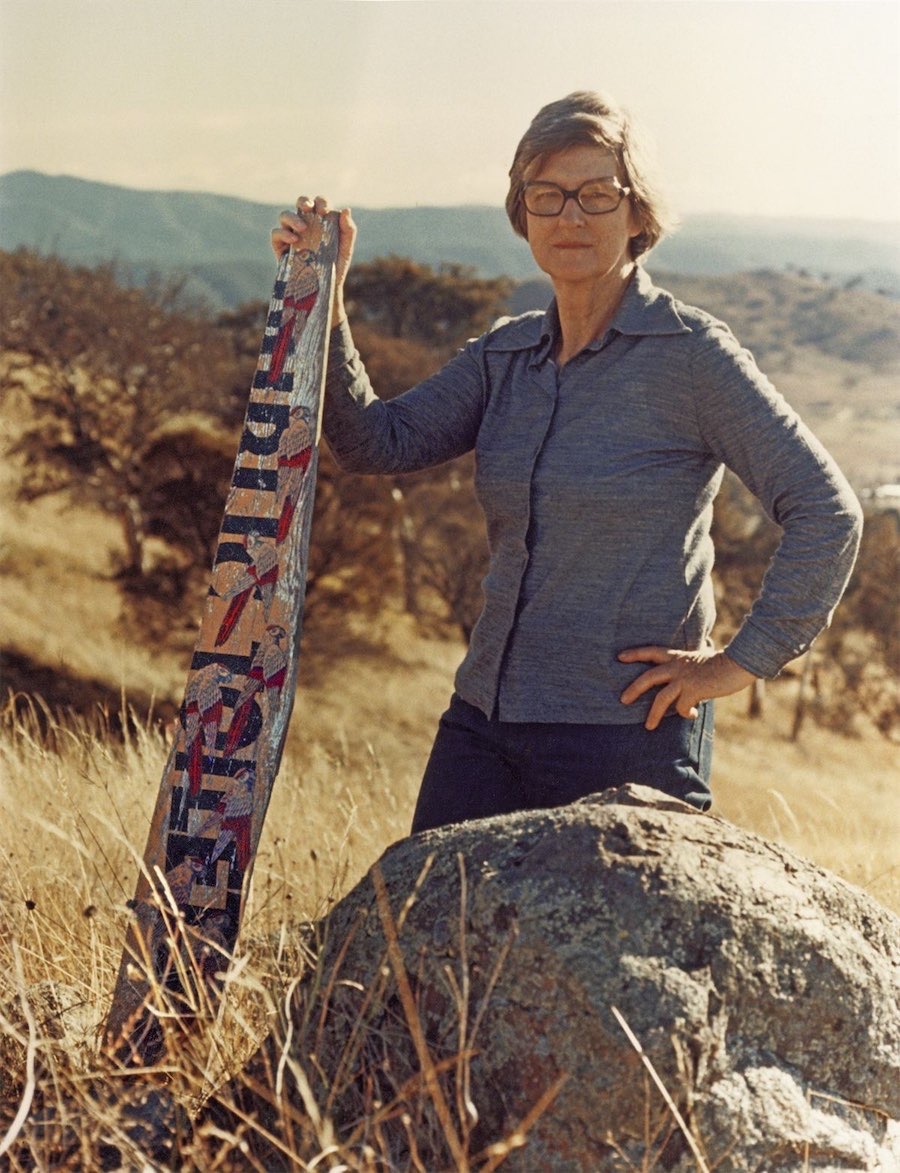
The first Australian woman to represent the country at the Venice Biennale, she lived and worked in Canberra until her death here in 1999.
It was my privilege to walk contemplatively through several exhibitions with her and it is undeniable that her work has continued to exert a powerful influence, with major collections holding her art.
Now Deborah Hart, head curator of Australian art at the National Gallery, has curated a new, free exhibition titled simply, Rosalie Gascoigne.
Having known both Rosalie and her husband, Ben, personally before she came to Canberra, Hart recalls the excitement of seeing her art flourish through the ’80s and ’90s, saying: “In a process akin to alchemy, she transmuted everyday detritus into works of great clarity and beauty.”
Born Rosalie Norah King Walker in Auckland in 1917, she came to Canberra in 1943 to marry astronomer Ben Gascoigne, making her home and raising a family at Mount Stromlo.
The isolated scientific community and the vast, dry landscape around Canberra, Hart says, “was immensely generative for her art practice and sustained her sense of wellbeing”.
Gascoigne did not begin her artistic career as a sculptor. She and Ben were engaged with the Sydney art world from the ’40s and by the ’60s she was regularly visiting exhibitions.
In 1967 she saw a contemporary performance by the grand master of the Sogetsu tradition, Sōfū Teshigahara, at the Art Gallery of NSW and became deeply involved in the art of Sogetsu Ikebana, but by the late ’60s she had become dissatisfied with its limitations.
She began experimenting with scrap iron and then with wooden assemblages, gathering materials from the countryside and from what might otherwise have been regarded as rubbish or discarded domestic and industrial objects.
Her career, Hart believes, is remarkable considering that she had no formal art training, didn’t start exhibiting until the age of 57 and didn’t have a studio of her own until she was 66, in 1983.
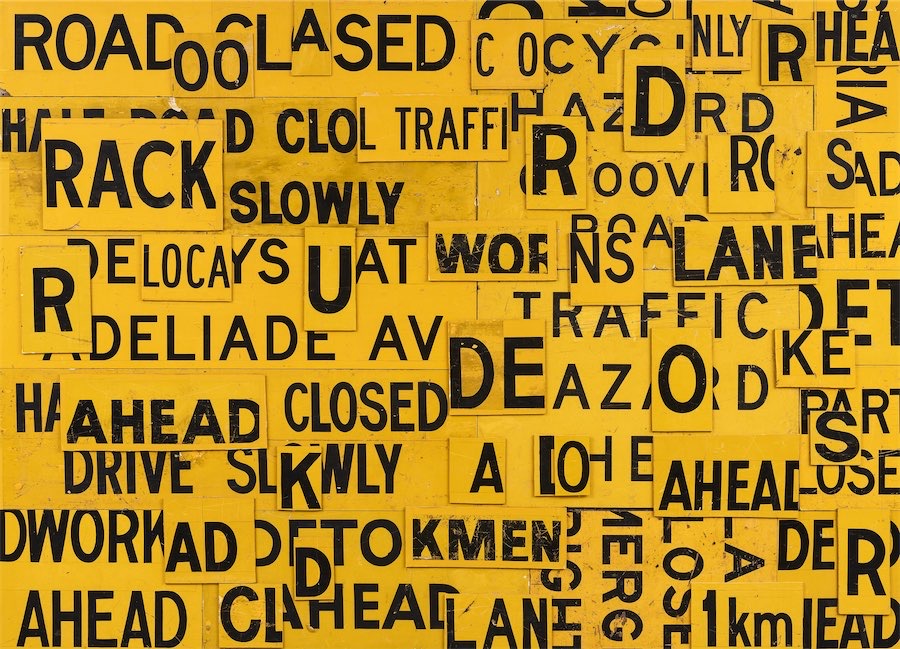
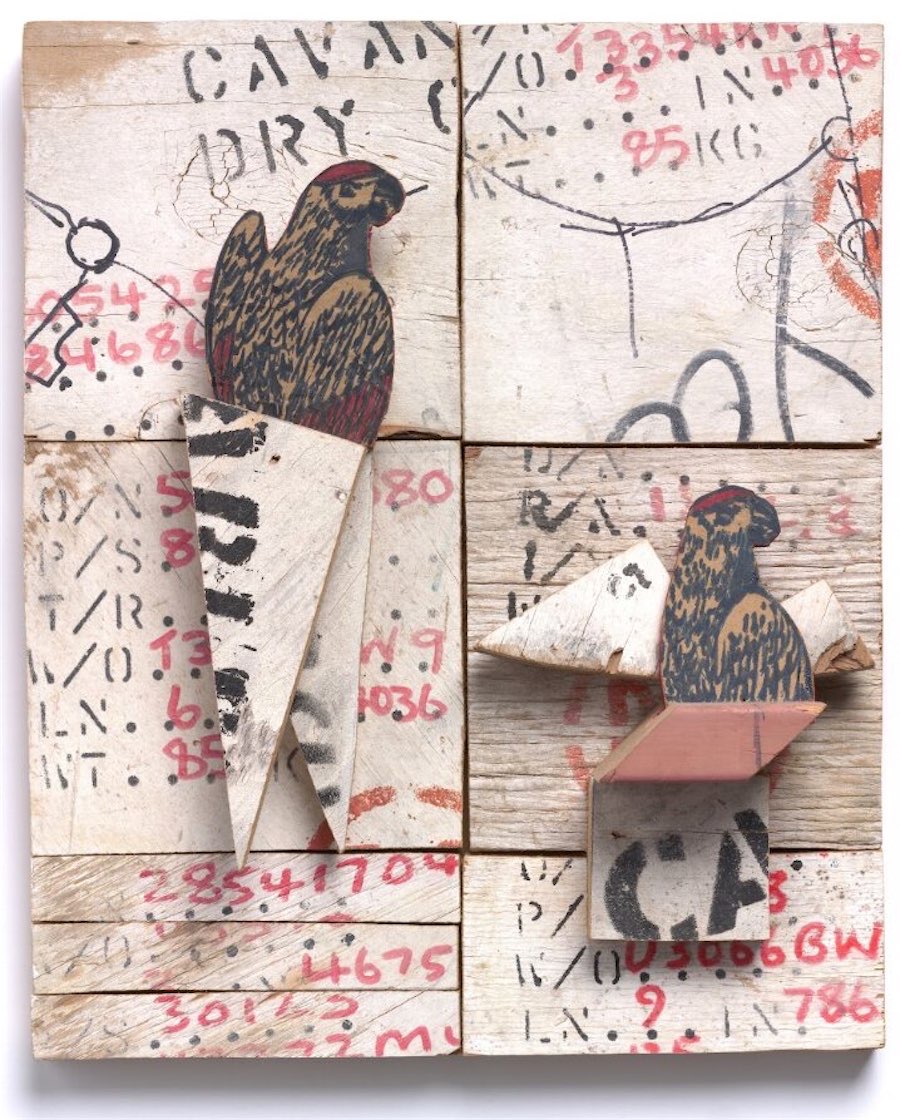
Weathered timber, corrugated iron, cardboard from Arnott’s biscuit packaging, Masonite, wire, feathers, old lino, enamelware, drink crates and pieces of retro-reflective road signs all found their way into her work as Gascoigne used these discarded materials to evoke the Australian landscape, transforming the traces of everyday life into abstract compositions.
Gascoigne’s close association with inaugural NGA director James Mollison, introduced to her by her son Martin, meant that the first half of the ’70s was a heady time, as there was now support for diverse ways of working in the visual arts.
An avid reader of Wordsworth, Peter Porter and Sylvia Plath and a walking companion of Canberra poet Rosemary Dobson, who found Gascoigne’s company exhilarating, she began cutting up and rearranged lettering from old signs and packaging, creating grids, fragments and wordplay that could suggest landscape or memory.
These became hallmark images of Gascoigne but by no means totally define her work, which was closely associated with the openness and solitude of the country around Canberra.
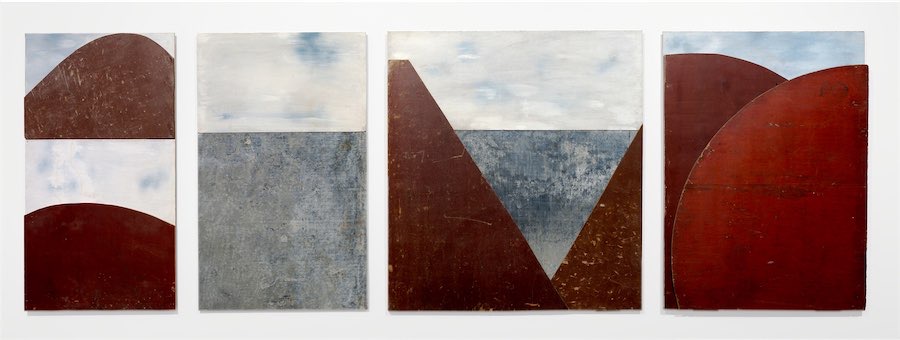
Working into her 80s, she developed an increasingly pared-back visual language, her early strong colours and fragments of text giving way to quieter compositions in white, grey and earthy tones, seen in the minimalist yet totally recognisable Suddenly the Lake, 1995, given by her to the NGA in memory of the late curator Michael Lloyd.
Gascoigne enjoyed the rare privilege of being recognised in her own lifetime. She represented Australia at the Venice Biennale in 1982 and was also appointed a Member of the Order of Australia in 1994 for her services to art, particularly sculpture.
In the end, it was Canberra that remained her greatest inspiration.
“I remember as soon as I got home here it was winter, and we had one of those very fine, clear winter days… It’s all here; something so marvellous, fresh and pristine… very spare,” she said of her adopted home.
Rosalie Gascoigne, National Gallery of Australia, October 24-February 14. Free admission.
News all day, every day at CityNews.com.au.
Who can be trusted?
In a world of spin and confusion, there’s never been a more important time to support independent journalism in Canberra.
If you trust our work online and want to enforce the power of independent voices, I invite you to make a small contribution.
Every dollar of support is invested back into our journalism to help keep citynews.com.au strong and free.
Thank you,
Ian Meikle, editor

Leave a Reply