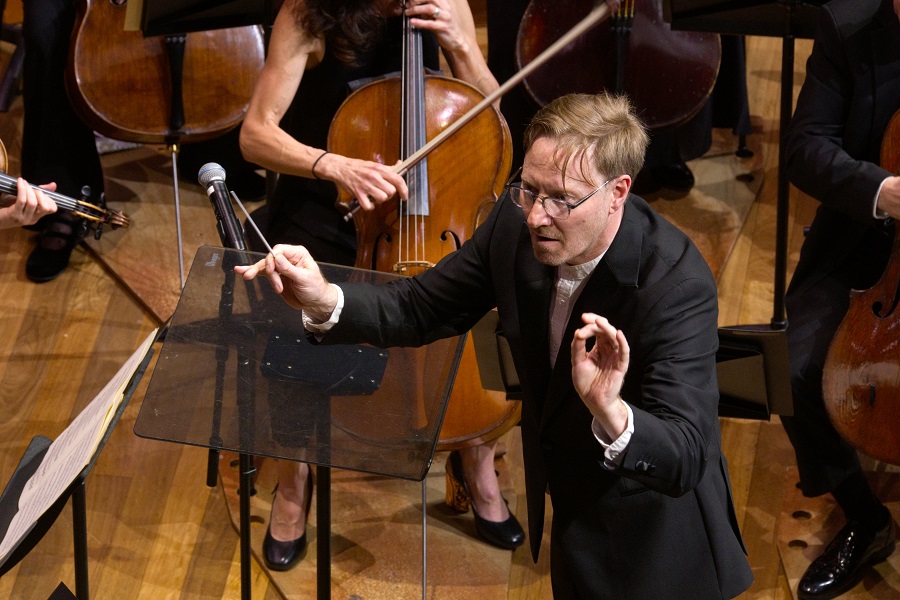
Music / Music That Moves You, Sydney Symphony Orchestra. At Snow Concert Hall, September 25. Reviewed by DAVID WHITBREAD.
The rapturous applause from a capacity audience in Snow Concert Hall hailed the Sydney Symphony Orchestra with well-deserved praise.
In the beginning, a solo cello quietly opens Kodaly’s Dances of Galanta with a fine filigree of shimmering strings creating a soundscape for various solos – horn, oboe, leading to a sinuous glorious clarinet solo from SSO’s Justin Wong.
The Dances are episodic and, while there are nominally five movements, they weave in and out, fiery fast and clockwork toy like, spinning dresses and exciting footwork… their Hungarian folk song base evident but all enticing exotic melodies and Eastern richness in harmonies.
And then suddenly a moment of silence before solo flute passes the sinuous line back to the clarinet with an echo of the opening before a sudden spirited sprint to the close.
As genial conductor Benjamin Northey said, what a way “to ease into” a concert! His style is economical but absolutely clear, with subtle interpretive cues and distinct tempo control, from stillness to frenzy.
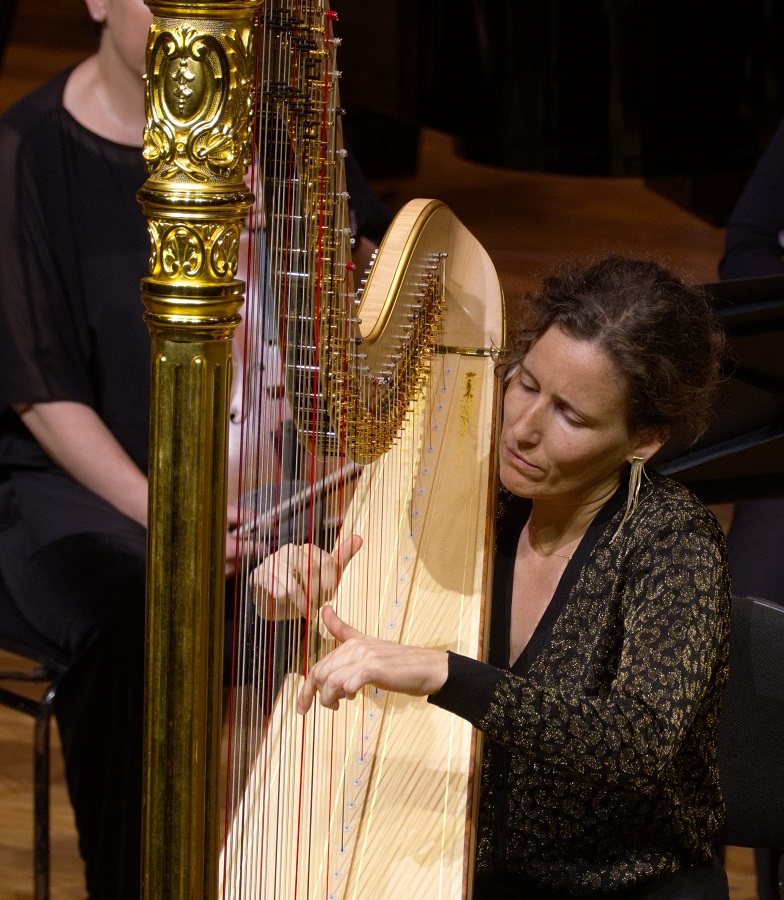
SSO harpist Louisic Dulbecco played Debussy’s Dances for Harp and String Orchestra. There are two: sacred and profane.
The excellence of the SSO strings was on full display in their very tender accompanying here. Debussy uses lots of pizzicato but then contrasts the plucking of the harp soloist with sustained soft lines, using mutes on occasion to further colour their support.
Dulbecco’s glowing golden harp had a matching glowing golden sound. Her dynamic richness and accurate arpeggios, rich low notes and beautiful delineation of the melodies shaped a wonderful performance. The music swirled and surged.
Her lovely solo encore was Debussy’s Arabesque No 1 perfectly realised, closing out the first half with ethereal bliss.
Sydney-based composer Holly Harrison’s Hi-Vis was the spectacular opener for the second half. Her enlarged orchestra augmented by doubling instruments and quirky percussion score.
This is a contemporary cityscape, jazz idioms with a persistent samba rhythm, chaotic colours, squealing brass. It’s cartoony and episodic. During Covid, the composer was inspired by the sounds outside her apartment, roadworks and traffic.
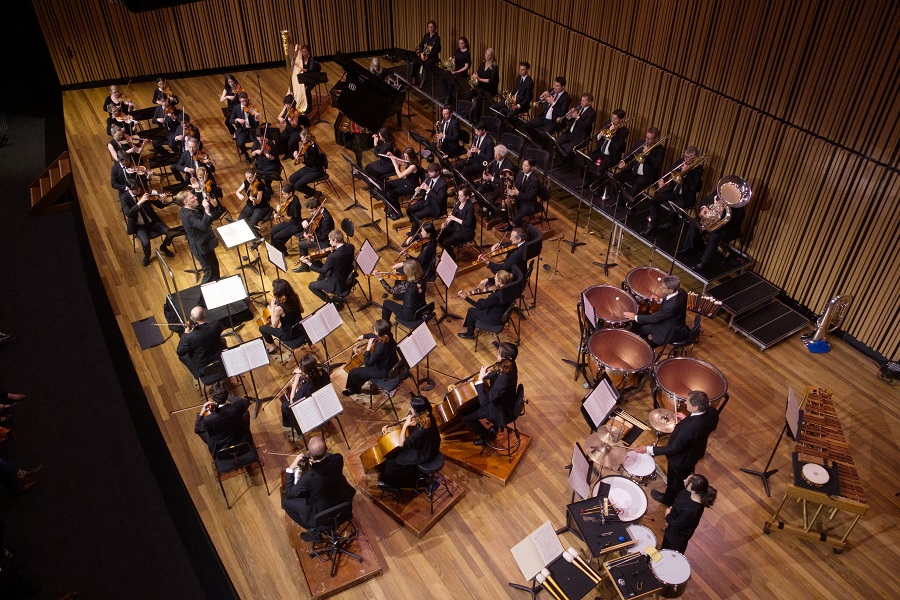
A showpiece for full orchestra, each section featured imaginatively. Growly horns and bass trombone, exhausting strings, punctuating piccolo, swooping trombones, crackling contrabassoon and bass clarinet with woodblocks, wild and distinctive clarinet solos, trumpet and trombone with a funky Batman style … fun, you know?
Stravinsky’s Firebird Suite of 1919 was the major work. What a wonder. From the incredibly soft silky cello, bass and viola opening, you knew there was magic to do. These beautiful still moments allowed lovely solos from across the instrumentation.
But there are flourishes, trills and darting about. Insistent rhythms. Weird and delightful stereo effects between the horns and lower brass. Bombastic moments. A xylophone scampering. A plaintive bassoon solo in a desolate yet measured stillness. A romantic horn solo building towards the carillon-like chorale tolling. Tympani and bass drum interruptions. Exhilarating.
Northey who had conducted Stravinsky without a score, delighted the audience with an encore. Rossini’s William Tell Overture fair rollicked along, with the inclusion of a Leroy Anderson trumpet whinney in the last bar. Oh, we loved it!
News all day, every day at CityNews.com.au.
Who can be trusted?
In a world of spin and confusion, there’s never been a more important time to support independent journalism in Canberra.
If you trust our work online and want to enforce the power of independent voices, I invite you to make a small contribution.
Every dollar of support is invested back into our journalism to help keep citynews.com.au strong and free.
Thank you,
Ian Meikle, editor


Leave a Reply