News location:

Thursday, October 15, 2026 | Digital Edition | Crossword & Sudoku

Time to end the farce of a wrongful conviction

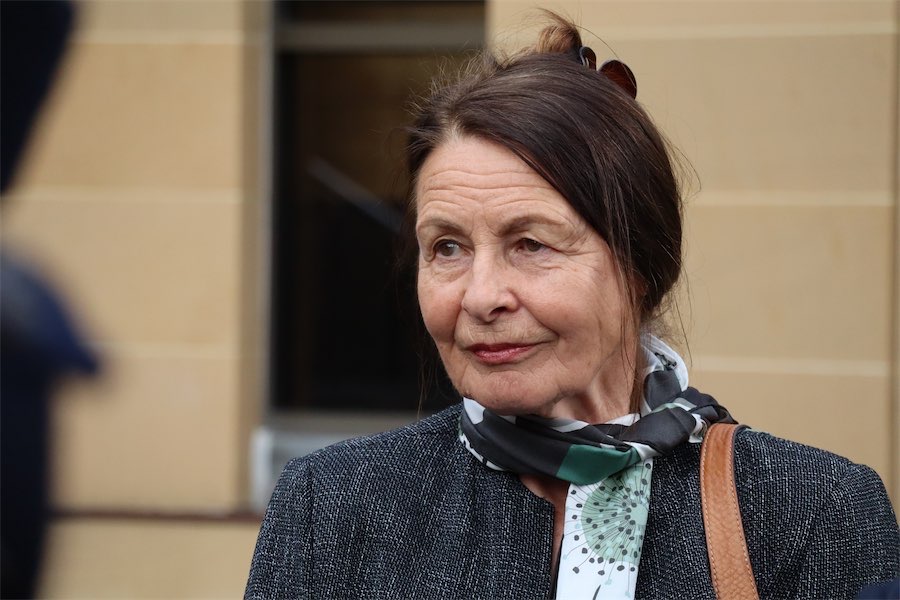
Susan Neill-Fraser outside the Supreme Court of Tasmania, Hobart on Tuesday. Photo: Ethan James/AAP

“In Tasmania the game of ‘cover up’ is played with more intensity than in Canberra – publishers get phone calls threatening ruinous defamation proceedings unless articles are taken down and journalists get fed error-ridden press releases,” writes legal columnist HUGH SELBY.

Imagine that you run a business. You receive a report that lays out how some of your trusted staff have been working together for years to rip off customers.

Hugh Selby.

It shows how a customer was set up, falsely accused, reputation destroyed – all of that by your trusted staff.

You have always believed that that customer was guilty.

Now the facts laid out before you demonstrate that those trusted stuff were intent on hiding their mistakes.

Do you want to know which is right: that the customer was, or was not, falsely accused, that your trusted staff deserve that trust?

What should you do?

Do you put the report, unread, in the bin?

If you do that, would others be right in thinking that you are unfit to lead, that you are a coward?

Or, do you read the report, check it out, so that you can make the right decisions for your business – its growth, its reputation, and its customers?

We all know the right answer, the answer we are entitled to expect from those we elect and pay to serve our interests.

It’s easier to do nothing

Which makes it so sad that both Liberals and Labor in Tasmania pretend that there’s nothing to see, nothing to do about years of incompetence and lies by “trusted” officials.

Only some independent members in both State Houses, along with federal members Jacqui Lambie and Andrew Wilkie, have had the guts these past few years to keep asking questions.

Not that their efforts have been fruitful. No matter what is uncovered nothing happens.

In that respect it mirrors how megadebtor Barr and his team respond to every issue: ignore it, deny it if that proves necessary, bury it in inertia, let the news cycle move on.

It’s a strategy that works. Think about the red tram costs, elective surgery waiting lists, underpaid school teachers, planning decisions that benefit only developers, prison malpractice (both adult and youth), year by year budget mismanagement – all of these exposed time and time again, all ignored with impunity.

This week the Greens have decided that it’s not good for them to be too close to Andrew: there is, at last, hope.

In Tasmania the game of “cover up” is played with more intensity than here in Canberra. 

Publishers get phone calls threatening ruinous defamation proceedings unless articles are taken down. 

Journalists get fed error-ridden press releases.

Influence is used to ensure that Auntie doesn’t cover embarrassing news: a scheduled interview is cancelled moments before it is due to go to air.

The Parole Board imposes a gag that prohibits claims of innocence. Who put them up to it?

All of that to keep the lid on the farce that is the wrongful conviction of Sue Neill-Fraser for the murder of her partner on their yacht on Australia Day 2009.

What the evidence now shows

Here’s the real position about her case, the reality that the major parties, the police, the prosecutions office and the Parole Board are determined to keep from the public, both in Tasmania and elsewhere:

  1. The new science puts Ms Meaghan Vass on the yacht. Ms Vass’s recanting of her admission no longer matters.
  2. There is no evidence that Neill-Fraser was on the yacht when her partner disappeared.
  3. There is strong evidence that known others were with Ms Vass: they went aboard to steal.
  4. All the courts in this saga have been conned by: rubbish science; false equipment reconstruction; prosecution/police failure to disclose the changing DNA science; police investigative shortcomings; and, mere speculation about DNA deposits being presented as reliable prosecution evidence. 
  5. The police have used every possible excuse these past few years to refuse to release relevant documents about DNA issues and failure to follow up obvious lines of inquiry. What are they hiding? We can assume that it helps Neill-Fraser.
  6. The new science plus the non-disclosure shows Neill-Fraser’s conviction to be unsafe. She deserves an acquittal.
  7. Those on the yacht with Ms Vass may have committed murder, or it might have been an accident. It’s time the police and the prosecutors did their job.
  8. Why haven’t they done it? Because the embarrassment to the police and the prosecutors is much more than that of the Parole Board this week over its AI-generated submissions to keep Neill-Fraser quiet.

For all the disgraceful detail is here. 

You should ask: “If I or someone I care about is falsely accused and convicted in Tasmania, what will the major party politicians, police, prosecutors and parole people do about it?”

The answer is that they will go out to lunch at taxpayer expense.

Maybe, but faintly, after the recent AI screw up at the Parole Board, the attorney-general will appoint an independent senior barrister to go to the Supreme Court and help Sue Neill-Fraser to make a fresh appeal to clear her name.

But it won’t happen unless the Tasmanian State Government is forced by public pressure to do the right thing.

Don’t hold your breath.

Former barrister Hugh Selby is the CityNews legal affairs columnist.


News all day, every day at CityNews.com.au.

Who can be trusted?

In a world of spin and confusion, there’s never been a more important time to support independent journalism in Canberra.

If you trust our work online and want to enforce the power of independent voices, I invite you to make a small contribution.

Every dollar of support is invested back into our journalism to help keep citynews.com.au strong and free.

Become a supporter

Thank you,

Ian Meikle, editor

Hugh Selby

Hugh Selby

Share this

9 Responses to Time to end the farce of a wrongful conviction

Dr Peter Lozo says: 18 September 2026 at 7:13 pm

It would be very beneficial to the reader if Mr Selby were to write a couple of paragraphs explaining what he considers to be the most significant and relevant scientific evidence, and why. Otherwise, the reader is left wondering whether Mr Selby genuinely understands the scientific evidence on which he appears to be relying.

I have the benefit of being a physics-educated scientist who has analysed the experimental data cited in the 2025 report by Etter & Selby. Based on my understanding of the relevant DNA evidence in the Neill-Fraser case, together with the latest experimental literature on the decay of DNA in biological substances such as blood and saliva, I do not think the science supports Mr Selby’s claim.

His sentence, “The new science puts Ms Meaghan Vass on the yacht,” is a nonsensical fiction because he does not understand the difference between the environmental conditions to which Location 11 on Four Winds was exposed and those to which the various biological samples examined in the published scientific literature relied upon by Etter and Selby were exposed.

Reply
Dr Peter Lozo says: 19 September 2026 at 12:04 am

Regarding Mr Selby’s sentence:

“You should ask: “If I or someone I care about is falsely accused and convicted in Tasmania, what will the major party politicians, police, prosecutors and parole people do about it?””

I think that Mr Selby’s question assumes the very thing that remains to be demonstrated.

Of course, if I or someone I cared about were falsely accused and wrongfully convicted, I would want politicians, police, prosecutors and the justice system to take credible evidence of that wrongful conviction extremely seriously.

But the important question in the Neill-Fraser case is whether she was, in fact, wrongfully convicted. Describing her conviction as a “wrongful conviction” does not establish that proposition.

I would therefore phrase the question differently:

If I or someone I care about is convicted of a serious crime, and later claim that the conviction was wrongful, what mechanisms are available in Tasmania to examine credible new evidence, and are those mechanisms adequate and genuinely independent?

That question does not presuppose either Susan Neill-Fraser’s guilt or innocence. It addresses the important systemic issue that I think Mr Selby is trying to raise without first assuming the conclusion that remains in dispute.

As Mr Selby is fully aware, Tasmania does have a specific mechanism for dealing with new evidence after ordinary appeal rights have been exhausted. In 2015 Parliament introduced s 402A of the Criminal Code, allowing a second or subsequent appeal where there is fresh and compelling evidence capable of establishing a substantial miscarriage of justice. Ms Neill-Fraser has already used that mechanism: she obtained leave to bring a second appeal, her claimed fresh evidence was examined by the Court of Criminal Appeal, and her appeal was dismissed by a 2–1 majority in 2021. Nor does that necessarily close the door: if genuinely new evidence now emerges that satisfies the statutory requirements, s 402A permits an application for a subsequent appeal.

The relevant question, therefore, is not what authorities would do if we simply assume someone has been wrongfully convicted, but what fresh and compelling evidence exists today that has not already been judicially considered.

Reply
Hugh Selby says: 19 September 2026 at 9:15 pm

For the benefit of readers who come across comments here or elsewhere by P. Lozo about the conviction of Sue Neill-Fraser please note:
1. The multiple problems with the police investigation in 2009/2010, the conduct of the trial and the most recent appeal, and the conduct of police post trial, are set out, with detailed referencing, in the two sets of Etter/Selby papers tabled in the Tasmanian Legislative Council in 2021 and 2025. The link to the 2025 papers is given in the article above. Here is the link to the August 2021 paper https://www.parliament.tas.gov.au/legislative-council/tabled-papers/2021-50th-parliament/LCTP14_31_08_2021.pdf ;
2. The content of these papers when compared with P. Lozo’s comments reveals that he has a tendency to make comments that mislead. Why he does so is a matter for him.
3. The legal framework for asserting that a conviction should be overturned as unsafe ( ie. a wrongful conviction) is discussed at the start of the 2025 paper. It is essential to grasp that convictions must be based upon evidence at the level of beyond reasonable doubt. Where there is a reasonable alternative hypothesis then that level of proof cannot be reached. This is a framework that P. Lozo disregards. It is not clear if that disregard is inadvertent or not. That too is a matter for him.

Reply
Dr Peter Lozo says: 21 September 2026 at 3:11 pm

I fully agree with the statement, “Where there is a reasonable alternative hypothesis, then that level of proof cannot be reached.” However, my focus over the years has been on analysing the various pieces of evidence and then examining people’s opinions and interpretations of that evidence.

I have read both Etter & Selby reports and have analysed virtually everything they cover. BTW, nowhere in those two reports did Etter & Selby note the apparent conflict between the time Vass reportedly left Mara House (3:50 pm) and the time Conde reportedly saw a grey dinghy (3:55 pm) at portside of Four Winds. If those times are accurate, Vass could not possibly have been on Four Winds at 3:55 pm, given that Mara House is approximately 6 km from Short Beach at Sandy Bay. Why did Etter & Selby not address this observation? Is there any reason why the grey dinghy Conde saw could not have been the same dinghy reportedly seen at about 5 pm by the anonymous witness P36?

In my view, Etter & Selby’s argument concerning the grey dinghy makes little sense. This is a critical piece of information because it potentially provides an alternative interpretation of the dinghy evidence (as proposed by the prosecution at the trial (and since)), and raises questions about whether the Etter & Selby reports present the case evidence completely and objectively.

Similarly, if Mr Selby cannot summarise in a paragraph or two what he considers to be the most significant and relevant published scientific evidence—and explain why it is significant—then I wonder what conclusion he expects the ordinary reader to draw from a lengthy 79-page report.

Most importantly, did Etter & Selby relate the published experimental literature to the actual environmental conditions to which Location 11 on the walkway of Four Winds was exposed? For example, did they adequately consider the potential effect of direct sunlight on 27 January, when the UV Index was reportedly in the very high range, around 8–10? That comparison is fundamental when assessing whether experimental studies of DNA degradation are applicable to the Vass DNA sample at Location 11.If these matters were not properly considered, that is a serious weakness in the analysis.

Reply
Dr Peter Lozo says: 22 September 2026 at 5:49 pm

The interesting paradoxical problem for Etter & Selby to address can be stated as follows:

Given the known timing conflicts, if Vass could not have been aboard Four Winds at the time a grey dinghy was first spotted alongside the port side of Four Winds, does this mean that someone else was there in a grey dinghy—and that whoever was there subsequently returned to shore to pick up Vass and transport her across a very choppy river? Or was the dinghy actually Sue’s dinghy, but perceived from a distance and across the water as being a shade of grey?

Given that Conde and his two passengers provided significantly different descriptions of the same dinghy, is it more appropriate to consider their descriptions collectively, including the inconsistencies between them, or to place particular weight on the description given by one individual over those of the other two?

Reply
Dr Peter Lozo says: 22 September 2026 at 6:48 pm

Here are the steps that I took during the period 2019–2025 in relation to understanding the degradation of DNA:

1. Look at various photographs and live video footage of Four Winds from 27 January (and thereafter, where available).

2. Note where Location 11 is situated on Four Winds.

3. Determine whether Location 11 was exposed to direct sunlight for most of the daylight hours on 27 January (and/or on subsequent days).

3. Conduct online research into the effects of solar ultraviolet radiation on degradation of DNA in blood or saliva.

4. Contact someone in Hobart to go to a council library and examine the newspapers for 26, 27, 28 and 29 January for the purpose of determining the UV Index on each of those days.

5. Conduct online research into published experiments on the degradation of DNA in blood or saliva, with particular emphasis on experimental data involving direct exposure of the biological substance to sunlight when the UV Index was within the relevant range.

None of the experimental data that I am aware of, up to the present day, can substantiate Etter & Selby’s claim that Vass’s DNA (in saliva) was deposited on the night of Bob’s disappearance.

Based on some of the experimental data that I examined, it is my opinion that, had Vass’s saliva been deposited on the night of Bob’s disappearance, some of the high-molecular-weight DNA markers would have fallen below the levels observed in Sample 20 (i.e. below RFU 300) by the end of the daylight hours on 27 January, and that some of those markers would have dropped out altogether by the end of the daylight hours on 29 January. That assessment does not factor in any other environmental influences or foot traffic across Location 11 on 27 January and thereafter.

I also note that foot traffic across a saliva deposit will reduce the thickness of the deposit. This could potentially allow solar UV radiation to penetrate the remaining biological material more effectively and thereby accelerate DNA degradation.

Thus, my substantial study of DNA degradation agrees with the opinion of the defence expert forensic scientist (Maxwell Jones) that the DNA was deposited a day or two before it was sampled (ie at least a day after the night of Bob’s murder).

I encourage Etter & Selby to show this summary to a forensic scientist for their opinion on my approach and conclusion.

Reply
Dr Peter Lozo says: 23 September 2026 at 2:25 am

The 2025 Etter & Selby report contains the following paragraph on page 36:

“An adequate investigation would have shown each of the ‘dinghy observers’ an array of such boats, including the yacht’s Zodiac (rubber) dinghy. Each observer would then have been asked which, if any, met their recollections. That didn’t happen.”

It is not obvious to me whether Etter & Selby are suggesting that the observers should have been shown an array of dinghies in real life and at close range (a few metres away) or whether the dinghies should have been viewed under conditions similar to those in which the “dinghy observers” originally saw them. For example, Paul Conde said that he observed the dinghy from about 50 yards away.

Etter & Selby appear not to appreciate that it is not only the distance from the observer to the dinghy that matters. The viewing geometry, particularly the position of the sun relative to the observer, the dinghy and the water, can also matter considerably. Under one viewing geometry, a white dinghy will appear to be white to the majority of observers. Under a different viewing geometry, the same white dinghy will appear to be a shade of grey to the majority of the observers. This depends on factors including the relative amount of light reaching the observer’s eyes from the dinghy and from the surrounding water. In other words, the position of the sun relative to the direction in which the observer is looking will substantially affect the perceived appearance of the dinghy because that will determine the amount of light reflected from the water towards the observer. See my comment about the grey dinghy on  28 March 2026 at 12:26 pm : https://citynews.com.au/2026/rotten-to-its-core-no-saying-sorry-in-tasmanian-justice/

Had Etter & Selby taken note of what the prosecution had been saying, what Peter Powell had been saying, and what I have been saying since 2015, they could have gone to their local beach and tested this proposition for themselves.

I conducted my own simple test some years ago. I went to my local beach and observed a white boat. I then walked along the beach until I was viewing the same boat from a sufficiently different geometrical perspective. From that position, the boat appeared grey. I took a photograph from each viewing position. I should point out that the effect recorded by my camera is significantly more pronounced than what is perceived by the human visual system, so photographs should not necessarily be treated as exact representations of human visual perception. The two photos are shown on my FB

FB https://www.facebook.com/share/p/1VuxCqvtVb/

Neill-Fraser’s supporters, including Etter and Selby, could therefore conduct a simple test for themselves to answer the question: can a white dinghy appear grey when viewed from approximately 50 metres away across a body of water under the relevant viewing geometry and lighting conditions?

I will finish with one further point. Since a white dinghy will appear to a human observer to be grey under the relevant viewing conditions, then blue stripes on that dinghy will appear as a darker shade of grey than the rest of the dinghy. From approximately 50 metres away, an observer might therefore perceive a predominantly grey dinghy with darker markings and potentially describe it as “scruffy-looking”.

Reply
Dr Peter Lozo says: 23 September 2026 at 11:10 am

Regarding the inappropriate photograph shown to Paul Conde:

During the trial, Paul Conde was shown a close-range photograph of Sue Neill-Fraser’s white dinghy with blue stripes and was asked whether it was the dinghy he had seen near Four Winds on the afternoon of Australia Day.

When I first read this in the trial transcript in 2015, I laughed at what struck me as the silliness of the exercise. I later found the photograph online.

I found it difficult to understand how, in the 21st century, when there is a substantial and readily accessible body of scientific literature on visual perception and eyewitness identification, lawyers could regard such a procedure as a meaningful test of what Conde had observed from a considerable distance across water.

I also found it surprising that Eve Ash, a prominent long-term supporter of Neill-Fraser who has a degree in psychology and produced two documentaries about the case, did not appear to recognise the visual-perception problems with such a comparison.

A close-range photograph provides very different visual information from that available to a witness viewing a dinghy at a substantial distance under the actual viewing conditions.

Reply

Leave a Reply

Your email address will not be published. Required fields are marked *

*

*

Related Posts

Opinion

KEEPING UP THE ACT

Here's a new episode of KEEPING UP THE ACT's travel show Getting Away With It. This time your favourite host reports from his latest junket to the UK...

Follow us on Instagram @canberracitynews