“Something basic is amiss when a national newspaper runs an error-ridden, unsubstantiated opinion piece that is intent on undermining community confidence in our judiciary,” writes HUGH SELBY.
Judges and journalists working ethically, honestly and fairly are essential to a justice system that is respected and understood.

This article is about the recent damage to all of us when some lose their way.
Judges being human make errors. If they make that error in a decision then, oftentimes, it can be corrected on an appeal.
But not always.
Where a judge includes in a judgment material that should not be there then there may be no appeal.
Two examples illustrate the point. In a judge-alone criminal trial if the accused is acquitted then they have nothing to appeal about, even when the judge gratuitously includes offensive and/or speculative comments about the accused for which there was no evidence.
A second example, using a civil case, is when the judge includes in their decision commentary that is quite unnecessary to the decision and it is there for another purpose, such as making a controversial point under the cover of judicial immunity.
If a judge abuses their office, even if they do that for what they see as a laudable motive, then there is damage to all the judiciary because such abuse undercuts the reputation of the whole.
Similarly, if journalists use their positions to report legal system issues inaccurately, or dress up unfounded opinions as reliable, then all reputable journalists are tarnished.
Background
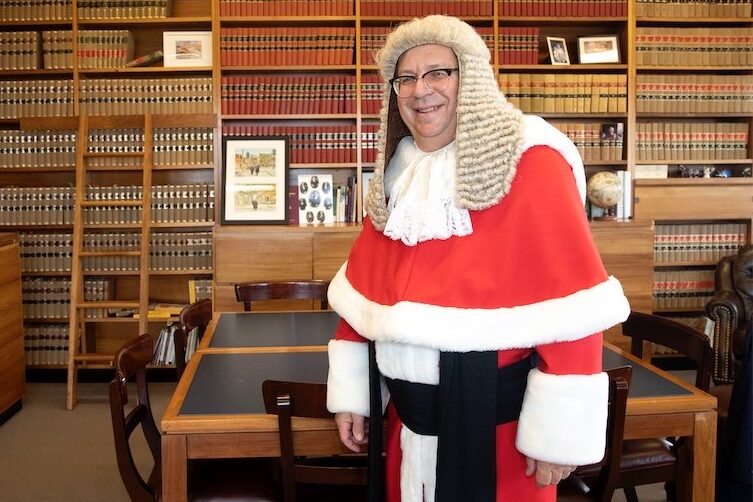
Last month the NSW Chief Justice Andrew Bell delivered a paper at the Judicial Roundtable on the Future of Justice in Kyoto. It is here.
The title of the session within which the paper was delivered was, “The Judiciary under Siege – Addressing Threats to Judicial Authority”.
Last week Janet Albrechtsen wrote an opinion article in the Australian newspaper, titled, “What happens when the legal club closes its ranks?”
I have shared with you these two documents, allowing you to check and make up your own mind about what is responsible and what is not.
I found the chief justice’s speech within the same few seconds that it would have taken Ms Albrechtsen. It’s on the NSW Supreme Court website, available to all.
Ms Albrechtsen tells her readers that the chief’s speech was 64 pages, but she doesn’t give the link. I wonder why not.
In the interests of space, your time and our common interest in being adequately informed, I am digesting some of the messages from those 64 pages of judicial reflection. Thereafter I will turn to Ms Albrechtsen’s views.
What the chief justice spoke about
The chief justice’s paper (it’s an easy-to-follow read) lists the various threats to judicial authority that stem from community ignorance, media excess, AI, obsessed people, government shortcomings, and – last – from within the judiciary where discord is sown (para 15).
The chief justice then discusses and gives examples of each of these threats.
It takes him until paragraph 71 before he expands upon the threats from within.
He cites examples of poor judicial behaviour, including, “the making of inappropriate statements both on or off the Bench of a sexist or even racist or partisan political kind, or using a judgment (and the protection of judicial immunity) to make… attacks on particular individuals without notice or due process” (para 73).
Bear that last comment in mind.
That’s an unobjectionable, easy-to-follow bit of good advice. I find it sad that some people can’t grasp it at all.
Only at paragraph 81 does he mention, without names, the recent “naming and shaming” by one judge of other past and present judges for long delays in handing down their decisions”.
The chief justice gently pointed out that there is a time and a place for identifying and addressing problems, but this recent incident, and its reporting, was inappropriate and divisive. See, too, paragraph 112, which expands the point.
Much less gently he states: “Examples of egregious delay should attract strong criticism from public commentators and, where appropriate, a head of jurisdiction” (para 86).
I wrote about that incident in mid-June
For the most part it’s not difficult for a humble judicial officer to know where to draw the line on extra-judicial activities and utterances. There’s an Australia-wide Guide to Judicial Conduct. The relevant guidance can be found in his paper at paragraph 108.
Within the last few years there have been attempts by certain groups that characterise themselves as “right thinking” and the rest of us as deluded, to arrogate to themselves the meaning and application of “The Rule of Law”.
The chief justice usefully goes back to the origins and the long accepted content of the rule of law (from paragraph 122 and following).
Ms Albrechtsen’s opinion
Turning to the opinion piece; having read the speech of the chief justice, I cannot find the bases for her outrage.
She writes of “an extraordinary war of words”, of “the judiciary being a club whose members owe their first duty to each other”, of the chief justice sending a “notorious email” (about the judge’s naming and shaming), of the chief justice’s conduct being “weird, bizarre (twice)”, of the chief justice wading into the political arena.
None of that is accurate. All of it is polemical exaggeration. Check out the chief’s speech.
She drifts into fantasy when she alleges, “politicisation of the judiciary”.
She claims that he is acting with the aim to be the next chief justice of the High Court, but provides no evidence.
She takes issue with the chief justice’s pragmatic approach that it is for the heads of jurisdiction/chief judges/chief justices to speak on behalf of a court and its members.
Despite her vehement criticism there’s nothing unusual in clarifying who speaks or writes on behalf of an organisation.
For the life of me I can’t imagine that Rupert, or his son, or his senior editors would give her free rein to claim her views as being theirs.
Doubling down
More troubling is her supportive reporting of a judge’s reluctance to learn the etiquette of their position, even after receiving sound advice.
This past week said judge gave reasons in Rosenlund Constructions v Certain Underwriters of Lloyd’s of London. It can be found on Austlii.edu.au, under Federal Court of Australia, at [2026] FCA 1442.
The reasons were given “ex tempore”, meaning without taking any time (be that overnight, a couple of days, a week or two) to reflect and reconsider what was relevant and what was not to the dispute between the parties.
His honour noted, “in passing”. With respect, I think not. Allowing that the ability to give an “off-the-cuff” judgment is rare (to watch Gleeson as Chief Justice of NSW do so was to watch a breathtaking performance), and that this judge, too, has abilities beyond most of us, the language and the multipart argument has the hallmarks of careful preparation.
Yet again, he has singled out fellow judges by name.
But worse, this time, unlike the last time when he gave a speech, he chose to clothe his remarks within the judicial immunity that comes from putting them inside a judgment.
Please recall both my opening remarks and those that I noted from the chief justice’s Kyoto speech.
I do agree with him on one point (his paragraph 23 (a)) that the standards one walks past are the standards one accepts.
It is for that reason that I think all of us should pay heed to the old, rough adage, “Don’t shit in your own nest”. It has stood the test of much time. It is a standard that I and many others accept.
The implications
Something basic is amiss when a national newspaper runs an error-ridden, unsubstantiated opinion piece that is intent on undermining community confidence in our judiciary.
The problem of some judges taking much too long to deliver their decisions is not new, nor is it limited to just one or two courts. Their tardiness, whatever the reasons, adversely affects the waiting parties, their judicial colleagues, and public perception. But a one-size-fits-all solution has not been found.
We set up imperfect institutions and expect them to be perfect. Real problems are identified – by outside observers and those inside the tent – which have no ready solution.
Those inside, being part of the team, must abide by the sensible rule that offering useful critique is admirable, but descending to naming and shaming is inexcusable.
This is not a matter of imagining a judicial club serving the interests of some of its members as Ms Albrechtsen does. It is what we expect of any member of a team.
For an apt, current analogy, revisit the inspiring conduct of the Swans as a club and as a team as they dealt with the fallout from whatever happened in the wee hours in that Melbourne hotel.
Loyalty matters. Working constructively leads to solutions. Working to mislead, to distort, to misinform helps none of us.
Former barrister Hugh Selby is the CityNews legal columnist.
News all day, every day at CityNews.com.au.
Who can be trusted?
In a world of spin and confusion, there’s never been a more important time to support independent journalism in Canberra.
If you trust our work online and want to enforce the power of independent voices, I invite you to make a small contribution.
Every dollar of support is invested back into our journalism to help keep citynews.com.au strong and free.
Thank you,
Ian Meikle, editor





Leave a Reply