“As elsewhere in Canberra, there is criticism that the government’s planning approach in Woden and Weston Creek favours developers. The poor design and construction quality of many higher-density dwellings is seen as a consequence,” wites planning columnist MIKE QUIRK.
The quality of the Woden and Weston Creek living environment is a legacy of past planning. However, it is facing challenges, especially from the pressure to maximise residential density.
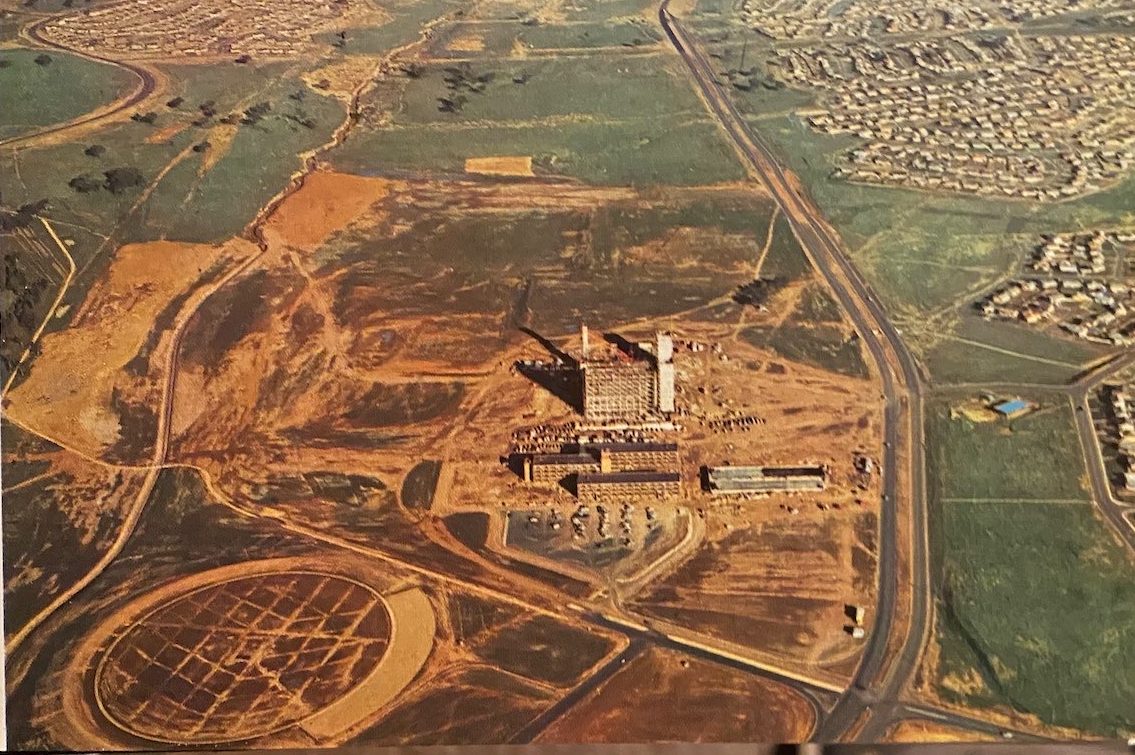
Firstly, the planning legacy. Woden-Weston Creek was the first “newtown”, started in 1963 under the strategy of accommodating Canberra’s growth by the development of new settlement areas.
Activities were located in the context of a centres hierarchy. Major office employment and higher-order services and facilities (eg comparison retailing, swimming pools, libraries) were to be located at the town centre. Group centres at Curtin, Mawson and Weston were to be the locations of shops, services and facilities serving a group of suburbs.
Facilities and services meeting day-to-day needs of the community were delivered through the development of neighbourhoods. Each neighbourhood would have a primary school, a pre-school, a shopping centre and neighbourhood park or playing field linked by pedestrian ways providing convenient walking and cycle access to the activities.
Its estimated population, at a Canberra population of 500,000, was 87,000.
Substantial social, economic and demographic changes resulted in the population not reaching anticipated levels.
Between 1976 and 1981 the population fell from 63,700 to 59,000 with the population of Weston Creek falling from 27,700 to 20,500. The decline was primarily due to an ageing of population as the children of initial settlers left home and the lower fertility of new households coming to the new town.
A consequence was the closure of Stirling College, Holder high and primary schools in Holder, Fisher and Curtin. Economic change led to a decline of trade at local centres, including the closure of most service stations and the major hardware store in the district.
By 2024 the population had increased to 65,200, primarily from development at the town centre where the population had increased from 2176 in 2011 to 6478.
The town centre continues as a major node for Commonwealth offices. Westfield, anchored by department/discount department stores and major supermarkets, offers well-utilised retail and business services.

The Hellenic and Southern Cross clubs are major recreational, community and entertainment hubs. The recently opened CIT, Woden Library, Health, senior citizens and youth centres provide essential services. The Phillip services area provides a diverse range of services and facilities including restaurants, automotive and business services.
The group and local centres continue to provide convenient facilities and services to their surrounding populations. Several need improvements to the public realm including pedestrian and cycle connections.
Challenges at the town centre include improving the public realm, particularly in the town square and Eddison Park; facilitating the mobility of the aged; managing traffic and parking issues, including light rail; “opening up” the shopping mall and how to best respond to development pressures of the Phillip services area.
A major concern expressed by the Woden Community Council and others is the failure of the government to consider the need for community and recreation facilities. The last decade has seen the loss of the indoor basketball stadium and a pitch-and-putt golf course. The loss of the 50-metre pool and ice skating rink is likely.
The auditor-general is reviewing the process whereby the government changed the Territory Plan in 2022 to remove the requirement of a 50-metre pool, replacing it with a requirement for a 25-metre pool, just before the developer, Geocon, bought the lease. The developer is proposing 696 apartments. Independent MLA Fiona Carrick argues the decision seems to be based on cherry picked data and did not consider the current and future needs of the Woden and Weston Creek communities.

As the late David Wright observed (CN, November 3, 2022) the challenge for the government is how to strike a balance between recreation and housing needs.
He argued the government needed to stop land speculation in the city’s recreation facilities. Developments are put forward for purposes that have nothing to do with their role as sporting clubs and nothing to do with the purposes the leases were granted.
As elsewhere in Canberra, there is criticism that the government’s planning approach favours developers. The poor design and construction quality of many higher-density dwellings is seen as a consequence.
Another criticism is the opaqueness of the government’s decision making. It continually fails to inform the community of the trade offs in decisions about how the city should grow. The decision to build and extend light rail to Woden is a clear example. Why were other, potentially cheaper and more effective options, not evaluated?
Woden-Weston Creek, given its attributes, will continue as an attractive residential and employment location. The 2025 Population Projections project a 2045 population in Woden of 58,000 and 30,000 in Weston Creek. Major opportunities in Woden include the town centre/town centre north, the Phillip services area/Athllon Drive/Mawson group centre corridor, and the North Curtin/Curtin group centre. Redevelopment is the main source of growth in Weston Creek.
Can the government improve its management and increase the quality of development and transparently undertake comprehensive assessments of community needs and the economic, environmental and social benefits and costs of future developments/redevelopments?
Mike Quirk is a former NCDC and ACT government planner.
News all day, every day at CityNews.com.au.
Who can be trusted?
In a world of spin and confusion, there’s never been a more important time to support independent journalism in Canberra.
If you trust our work online and want to enforce the power of independent voices, I invite you to make a small contribution.
Every dollar of support is invested back into our journalism to help keep citynews.com.au strong and free.
Thank you,
Ian Meikle, editor





Leave a Reply