News location:

Wednesday, October 7, 2026 | Digital Edition | Crossword & Sudoku

‘Rotten to its core’: No saying sorry in Tasmanian justice

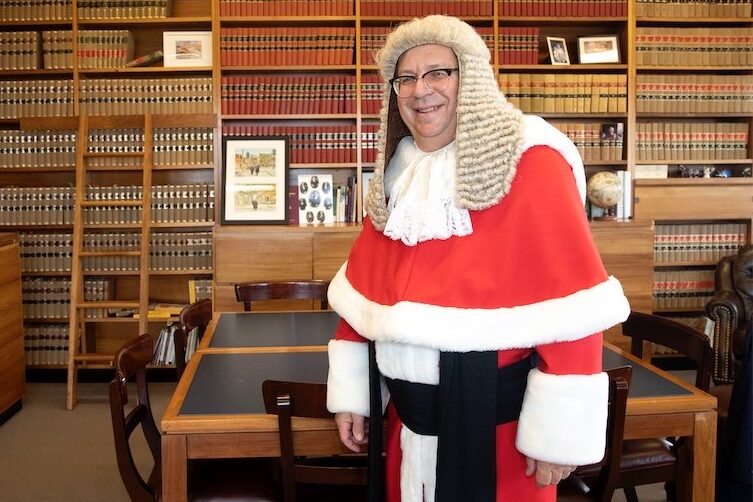
Sue Neill-Fraser… paroled in October 2022 after 13 years in prison.

“A woman was convicted of murder on false evidence. She spent 13 years in prison. Her family has suffered. Both trial and appellate courts have been duped.” HUGH SELBY looks for contrition in the Tasmanian judicial system and finds none.

It’s sad, so sad, it’s a sad, sad situation
And it’s getting more and more absurd.
It’s so sad, so sad, why can’t we talk it over?
Oh, it seems to me
That sorry seems to be the hardest word.

–Sorry Seems to Be the Hardest Word,” Elton John, 1976 

“Owning up”, saying “sorry” is hard for all of us, young and old, no matter how successful we are. This is because it might damage our reputation, and there might be unpleasant consequences.
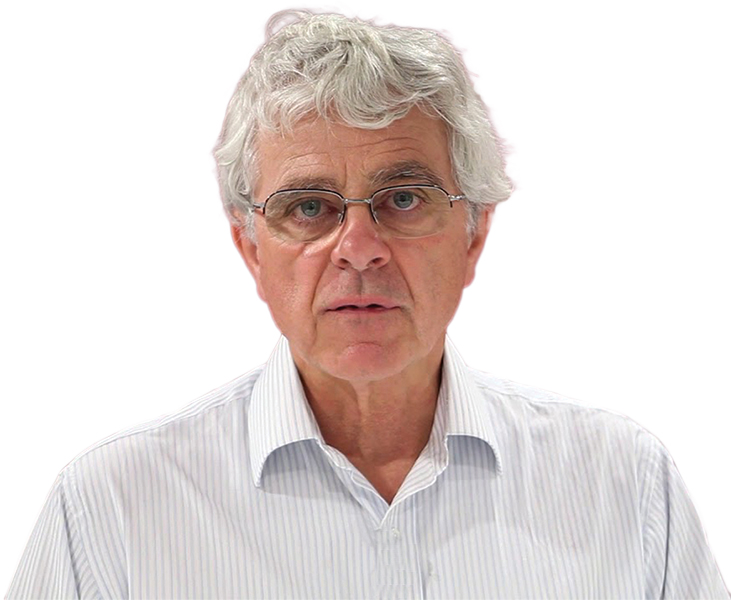
Hugh Selby.

“Sorry” means having the courage to take responsibility. Courage is rare. We all know that.

In daily life “sorry” follows misunderstandings, insensitivity, errors of judgement, mistakes of all sorts – all of which have hurt someone else.

That “someone” may be a family member, a friend, a team mate, a work mate, or someone to whom, because of our position, we owed a duty to take care that we got it right.

In the criminal justice system police, forensic scientists, prosecutors, defence lawyers, and the attorney-general all owe it to victims, survivors, accused, and the public to be competent, thorough, honest and, above all, to respect the actual evidence.

Thankfully, in most cases everyone follows the rules. Then we can all feel safe.

But failures to respect the evidence can lead to big errors, to convictions that are just wrong.

When speculation or worse, invented facts, are added to the mix there is a recipe for long-term cover up.

Once that happens it becomes impossible to say “sorry”. Unpleasant consequences loom large. Keeping the truth hidden becomes the all-consuming objective.

We can call that out as “corruption”. Others might label it as perverting the course of justice.

That has happened in Tasmania. The Apple Isle has become a rotten apple, rotten at its justice core.

From errors to full blown cover up

There were serious errors at the 2010 trial of Sue Neill-Fraser. She was convicted of the murder of her partner on their yacht, Four Winds, on Australia Day 2009. The following are just some of the errors:

  • A witness was tricked into signing a statement that he saw the Four Winds with its dinghy that afternoon. That mistake put Ms Neill-Fraser on the yacht. It is certain that he saw another yacht, another dinghy.
  • A prosecution staffer was told about that error during the trial by a police officer. Neither the prosecutor nor the defence was told so the error went uncorrected. 
  • An “expert” told the jury that she could see that there had been blood in the yacht’s dinghy. The jury was tricked with a false explanation of what could be seen in a photo. She knew that the scientific tests showed that there was no blood.
  • Police claimed that Ms Neill-Fraser used the electric winches on the yacht to get her partner’s body into the dinghy. The winches could not operate as claimed.
  • A small blue towel was found on the yacht deck. As a possible source of evidence to show who was on the yacht it could be important. The police have refused to explain what, if any, testing was done with what results. They have refused to produce the towel. 

These errors have been known for some years, but those with responsibility to act have made the choice to refuse to explain, to refuse to be accountable.

Cover up is the only game in town.

Most recently they have made a mockery of “Right to Information” by using far-fetched excuses to refuse to release documents.

They have even claimed in writing that sharing scientific information obtained from an interstate laboratory would damage relations among the States and so must be kept secret. Go figure! 

Their dirty tricks department has resorted to threats of defamation against publishers to have articles exposing the errors taken down, threats of contempt of court proceedings to keep misconduct under wraps, interference in court processes to delay the handing down of a decision and change the composition of a hearing bench. 

People with nothing to hide don’t play those sorts of games.

Be grateful for science

In late 2025 a paper was tabled in the Legislative Council (authored by Barbara Etter and Hugh Selby). 

Those who like their “true crime” to be true can find it here.

Scientific advances since the trial are set out. These include how long DNA survives on different surfaces under various conditions, and whether a DNA sample came directly from the source, or came via contact with someone else.

The paper also sets out serious shortcomings in the police investigation, not only in 2009 and 2010, but also up to and beyond Ms Neill-Fraser’s 2021 appeal. 

These shortcomings include the failure to carry out some basic investigations into the movements of people who should have been suspects because of their criminal history and associates, coupled with a failure to disclose relevant material to the prosecution.

This in turn meant that Ms Neill-Fraser’s lawyers were short changed on information to which they were entitled.

Worse, important scientific material that pointed to a young woman being on the yacht that Australia Day afternoon was not put before the 2021 appeal judges, despite it being in the papers prepared for that appeal.

Taking together those advances in science, and the now uncovered flaws in the police investigation, mean that the best available explanation (better than the prosecution case at the 2010 trial, or any “improved” explanation they could suggest in 2026) for the Australia Day tragedy on the Four Winds is as follows:

  1. Ms Neill-Fraser left her partner, Bob Chappell, working on the yacht while she went back to shore in the blue and white dinghy. She did not return. With no dinghy the yacht looked to have no one aboard.
  2. Later that day another dinghy (grey in colour) was used by a known young woman and another or others unknown to board the yacht.
  3. The police were well aware of thefts from moored boats at that time.
  4. Something happened on the yacht between Bob and one or more of those present. We know Bob died, but we don’t know how or why. It may have been murder. It may have been an accident.
  5. The known young woman left a large deposit of their DNA in saliva on the metal deck of the yacht. It was not left on the yacht at any later time.
  6. At least one other person present had sufficient boat knowledge to attempt to sink the yacht before they left in the grey dinghy. The attempt failed. 

The known young woman denied being on the yacht at the 2010 trial. Years later she swore to having been on the yacht. 

Following that admission a right thinking police and prosecution service – not committed to sustaining a suss conviction – would have been keen to get the full story from her.

They would, for example, have explored giving her immunity from prosecution in exchange for reliable information. 

Thereafter they would have fully investigated every aspect of that information and ensured that she was properly protected and well able to give evidence in court.

None of that happened. Instead this important but vulnerable informant was ignored, save for attempts to destroy her credibility.

At the 2021 appeal she withdrew that admission. Given the lack of support that was not surprising.

But today’s science backs up her admission.

She was on the yacht that Australia Day. She knows who was there with her and she knows what happened. She must be asked.

Please note that there is no evidence that she was on the yacht with any criminal intent, or that she played any part in what happened.

What must be done

This is a situation that stains Tasmania’s criminal justice system. It can be fixed, but only by the government pushing back on those who keep saying: “Nothing to see here. We got the killer. It’s all just crazy talk”.

The government needs to now fund a fresh application for leave to appeal by Ms Neill-Fraser. When leave is granted they must fund her appeal costs. The errors were made by public servants (police, forensic staff, and lawyers) and the government must pick up the tab to fix it.

Separately, the range and seriousness of the errors and misconduct by police, forensic staff and lawyers is so extensive that a public inquiry must be held to explain how it happened, why it happened, and what must be done to reduce the chances of it happening again.

Reputations will be damaged. Those who have engaged in this cover up will be exposed – as they should be. A woman was convicted on false evidence. She spent many years in prison. Her family has suffered. Her partner’s family, too. Both trial and appellate courts have been duped.

It’s a sad, sad situation, ever more absurd. Those who should, won’t talk it over, because sorry is their never word.
We must be realistic and settle for funding Sue Neill-Fraser to secure a just outcome, along with an inquiry which sets out the awful detail as a lesson to us all. It’s time for the chips to fall where they may.

“CityNews” legal commentator and former barrister Hugh Selby, along with Barbara Etter, wrote the papers tabled in the Tasmanian Legislative Council.

Imagining what Tasmanian justice might try to be

News all day, every day at CityNews.com.au.

Who can be trusted?

In a world of spin and confusion, there’s never been a more important time to support independent journalism in Canberra.

If you trust our work online and want to enforce the power of independent voices, I invite you to make a small contribution.

Every dollar of support is invested back into our journalism to help keep citynews.com.au strong and free.

Become a supporter

Thank you,

Ian Meikle, editor

Hugh Selby

Hugh Selby

Share this

16 Responses to ‘Rotten to its core’: No saying sorry in Tasmanian justice

David says: 4 February 2026 at 4:48 pm

This is terrible but I am surprised Hugh, that given the way the justice system works in Australia, you are so surprised or even outraged.

Imagine you are faced with a situation where a crime is supposed to have been committed where the presumed act would leave ample physical evidence in many places. The alleged perpetrator was easily placed at the scene and also knows that. The actions of the perpetrator were to simply walk away effectively saying, collect whatever evidence you want. This could be construed as, I have nothing to hide. This is then taken a step further when the accuser, given multiple opportunities and encouraged to collect evidence, decides to not only avoid collecting any evidence but actively destroys any evidence they have control over. What conclusion would you draw from these circumstances? Imagine then that a judge then decides on the balance of probabilities, with no physical evidence of the act because of the actions of the accuser, that the accused is guilty.

Physical evidence appears to be a toy to be played with in our legal system, manipulated at the whim of the system and those with the most clout and money.

I wonder if the recent case in one of our southern states occurred because the offender, buoyed on by exposure to recent cases, thought they could get way with it because any evidence was irrelevant and could be tampered with, especially if they had money or political clout on their side. Maybe if we were a bit stricter with how we handled physical evidence and ensured it played a part in legal proceedings, both it’s presence or absence, the offender may have decided not to carry through with their crime.

Reply
Dr Peter Lozo says: 28 March 2026 at 12:26 pm

Mr Selby states:

“Ms Neill-Fraser left her partner, Bob Chappell, working on the yacht while she went back to shore in the blue and white dinghy. She did not return. With no dinghy the yacht looked to have no one aboard. Later that day another dinghy (grey in colour) was used by a known young woman and another or others unknown to board the yacht.”

I would like to clarify what time of day Mr Selby thinks this “grey” dinghy was used by the young woman.

This is important because a grey dinghy was first sighted at the port side of Four Winds at 3:55 pm. However, the young woman he is referring to was approximately 6 km away from Sandy Bay at 3:50 pm. On that basis, it would have been impossible for her to have used that grey dinghy to board Four Winds by 3:55 pm.

This raises a critical question: who was on Four Winds at 3:55 pm?

If Mr Selby doesn’t believe it was Ms Neill-Fraser at Four Winds at 3:55pm is he suggesting that Bob Chappell had other people coming and going from the yacht that afternoon?

Mr Selby also states:

“Police claimed that Ms Neill-Fraser used the electric winches on the yacht to get her partner’s body into the dinghy. The winches could not operate as claimed.”

This is incorrect.

Had Mr Selby read the trial transcript, he would know that police did not claim the use of “electric winches.” In fact, there were no electric winches on Four Winds.

Furthermore, the trial evidence—including Crime Scene Photograph 7—shows that a manually rigged winch on the main mast was identified and discussed at the trial although the police theory was that a winch on the rear mast was used.It appears that police concentrated on a winch that did not have a handle inserted, while overlooking the winch that did have a handle in place.

Regarding the issue of the ‘grey’ dinghy:

A white dinghy with blue stripes—such as Neill-Fraser’s dinghy—can, under certain daylight viewing conditions, appear grey to an observer.

One key condition arises when there is strong sunlight reflected off the water’s surface toward the observer. This glare can significantly mask the true colour of the dinghy. The effect is further intensified if the dinghy is partially in the shadow of a yacht, reducing contrast and colour visibility even more.

Accordingly, before concluding whether the dinghy seen at the port side of Four Winds at 3:55 pm was or was not Neill-Fraser’s, several factors must be considered:

– the orientation of Four Winds at that time,

– the position of the sun, and

– the viewing direction of the eyewitnesses.

I conducted this analysis almost a decade ago. My conclusion was that, at 3:55 pm, the Four Winds was oriented such that its bow was pointing Southeast (as per information in the Trial Transcript) and as such the observers who were looking at its portside would have been looking generally in the direction toward the sun, meaning they would have experienced significant glare from sunlight reflected off the water. Under such conditions, accurately perceiving colour becomes difficult, and a white dinghy could readily appear grey to the observers. Blue stripes on the dinghy would appear darker than the non-blue surfaces of the dinghy. 

It is to be note that some people who definitely were looking a Neill-Fraser’s white dinghy with blue stripes described it in a variety of ways. For example, the young man who assisted Neill-Fraser around 2pm to get her dinghy out of sand described the dinghy as being ‘light grey’. The rowing coach to spotted Neill-Fraser’s dinghy next to the rocks near the rowing shed described it  (in an email) to be “grey”.

Peter Lozo, BSc, PhD
Retired defence scientist
Adelaide, SA

Reply
Hugh Selby says: 28 March 2026 at 5:43 pm

Peter Lozo is correct to the extent that the winches were NOT electric. He is otherwise mistaken. This is probably because he is relying on the trial transcript, his analyses of some years ago (when there was rather less information), and his lack of ‘up close’ inspection. I respectfully suggest that he bring himself up to date by:
1. reviewing the debunking of the police winching evidence at the leave to appeal;
2. acknowledging the appalling travesty of the false identification of traces of blood in the dinghy at the trial. That’s a travesty by the way that the police and ODPP have done nothing to correct. As a scientist I would expect that he would find this wholly unacceptable;
3. reading the 2021 papers tabled in the Legislative Council. There he will find information about what was seen at the yacht, and by whom, on the afternoon of Australia Day, 2009 that was not properly shared with the 2010 jury or the 2021 appeal court; and,
4. reading closely the 2025 papers, also tabled in the Legislative Council, that focus on the persistent lack of required disclosure by police and the ODPP to the courts and the SNF legal team, along with the significant new developments in DNA forensic science.

That done, if new information, new science, new disclosures can change his views, his views will change.

I look forward to his becoming a strong advocate for the conviction to be overturned.

Reply
Dr Peter Lozo says: 29 March 2026 at 2:06 am

The following is my comment on Tasmanian Times; February 10, 2019 at 6:02 pm.
The screenshot of the comment is available on my FB at https://www.facebook.com/photo?fbid=2918357151700998&set=pob.100005802249120

Crime scene Photo 7: evidence that a winch on the main mast was used to remove the body

In the 17 page section “Assessing the Crime Scene” there is a paragraph on page 64 of Mr McLaren’s book that describes evidence related to how Bob Chappell’s body may have been removed from the saloon. The relevant paragraph says this:

“Meanwhile, the issue of the removal of Bob Chappell’s body was central to my crime scene analysis. In my opinion, Bob was beaten to death in the saloon by two or more persons, probably males. The murderer(s) tied rope around his body and pulled him out of the saloon area via the open skylight hatch on the starboard side, which is more than wide enough to execute the task. The rope was part of the rigging of the yacht. A length of rope was found dangling through the skylight hatch from outside roof of the saloon into the saloon itself. The rope is visible in police photographs; its presence teases the astute investigator. This clue is vital to understanding the crime scene and cannot be ignored. But it was.”

I have an issue with Mr McLaren’s assessment of the crime scene evidence, for the very simple reason that he had totally ignored that the rope that was dangling down the skylight hatch was actually coming from a winch on the main mast on which there was a large winch handle that wasn’t there when Sue left the yacht on the afternoon of 26th January. Below I reference several sentences from the Trial Transcript.

According to the Trial Transcript (page 90), Photo 7 is of a winch handle in the winch on the main mast and the rope going from that winch to the saloon hatch. On page 91 it is said that “rope was coming from the winch on the mast into that hatch and hanging down into the saloon.”

Note that the hatch mentioned above is the same skylight hatch that Mr McLaren claims was the exit through which Bob’s body was extracted from below the deck.

On the bottom of page 57 of the Trial Transcript, the DPP mentions what Sue observed with respect to the winch on the main mast. He says “she noticed that ropes appeared to be cut, there’s a winch on the boat and she said that the handle shouldn’t be in the winch it should have been stored separately, but it was in there”

The above indicates that the winch handle wasn’t in that winch when Sue left the yacht on the afternoon of 26th Jan.

The very presence of the winch handle in the very winch that had a rope running to the saloon skyline hatch on the starboard side of the saloon is strongly suggestive of a scenario where Bob’s body was winched from below the deck rather than lifted out as proposed by Mr McLaren.

The fact that Mr McLaren did not mention the presence of a winch handle in the winch on the main mast, coupled with the fact that he didn’t mention that a rope from that winch ran to the skyline hatch, is in my technical opinion indicative of Tunnel Vision. Had Mr McLaren had a valid reason for why that winch wasn’t used to winch out the body via the skyline hatch then I expect that he would have provided an explanation in his book. But as is, his book doesn’t at all mention that winch and the winch handle on the main mast even though it is pictured in Photo 7 of the crime scene.

In conclusion:

I am of a strong technical opinion that Mr McLaren’s assessment of the crime scene, as presented in his book, is an incomplete assessment that failed to consider the evidence shown in the crime scene Photo 7.

It is quite reasonable to propose that Sue (or someone else) winched Bob’s body via the saloon skylite hatch, rather than via the companion way, using the winch on the main mast that is only about two metres from the saloon skylite hatch. In this case the rope from the winch would first need to be routed to a suitable location on the boom and then to the body so that the body can be cleanly pulled up through the hatch towards the boom. The boom can then be used to shift the body (by shifting the boom) over the water to enable the lowering of the body onto the dinghy.

NOTE: The Trial Transcript can be downloaded from the link provided in this TT Article: https://tasmaniantimes.com/2014/09/the-sue-neill-fraser-trial-transcript/⁠�
PS: With the above Comment I have now fully completed my technical review of Mr McLaren’s book on the Susan Neill-Fraser case.

Reply
Dr Peter Lozo says: 29 March 2026 at 2:22 am

I read the Etter & Selby reports (the 2021 version; and the 2025 version).

Mr Selby can check my FB to see my scientific analysis of the scientific literature that he and Barbara Etter claim supports their claim that Vass DNA could have been on Four Winds for 3 or more days.

I actually wrote two emails to the members of the Tasmanian Legislative Council several days ago about the deficiencies in the Etter & Selby report. I gave Mr Michael Gaffin approval to forward my emails to Barbara Etter and Hugh Selby.

A part of my email to MLC’s explains my theory of how a winch on the main mast and the main sail boom can be used to winch out a 65 kg body vertically through the saloon’s skylite hatch. Mr Selby can see my explanation on my Facebook at https://www.facebook.com/photo/?fbid=2918521435017903&set=a.951405448396188

Reply
Dr Peter Lozo says: 29 March 2026 at 2:34 am

It would help this discussion if Mr Selby were to realise that I am more than up to date and that I am not talking about the winch on the rear mast that was the basis of the police theory.

Here is a copy of part of my email to Tasmanian MLC’s:

Winching and Removal of Bob Chappell’s Body

It should be noted that, at trial, the prosecution aimed to prove only two elements beyond reasonable doubt:

(i) that Bob was dead; and

(ii) that Sue killed him.

The prosecution did not need to prove how Bob was killed, what weapon was used, or precisely how his body was removed in order for the jury to convict.

The police proposed a relatively weak theory that Sue used a winch on the rear mast to remove the body via the companionway. However, the physical evidence suggests an alternative scenario.

Specifically, the evidence indicates that Bob’s body was most likely removed from the saloon to the deck via the starboard skylight hatch, as proposed by Colin McLaren. However, unlike McLaren’s theory of manual extraction, the physical evidence indicates that a winch on the main (front) mast was most likely used to winch the body onto the deck.

Crime scene photograph 7 (available online) shows a winch on the main mast with a red winch handle and a rope wound around it. This rope extended to the starboard skylight hatch and was found dangling into the saloon.

This raises an important question: would Sue Neill-Fraser—given her physical limitations—have been capable of configuring such a system and winching out the body, even with familiarity with the yacht’s equipment? In other words, the issue is not whether Sue was physically capable of removing a 65 kg body from the saloon of the Yacht but whether Sue would have had the technical know-how to configure the winches and the ropes (and any other relevant onboard hardware such as a block and tackle, etc) so as to enable her to easily remove the body by taking advantage of the mechanical assistance provided by the winch.

It should also be noted that it may not have been necessary to place the body fully into the dinghy. A physically weaker person could have lowered the body partially over the side of the inflatable dinghy or entirely below the water surface, secured it to the side of the dinghy, towed it a short distance, and then released it.

The attached figure depicts my theory of how Bob’s body was removed.

Reply
Dr Peter Lozo says: 29 March 2026 at 2:41 am

Below is a portion of my email to Tasmanian MLC’s about the degradation of DNA:

The critical question, from a scientific point of view, is:

How long can a biological substance (saliva) remain exposed (and unshielded) to the sun’s ultraviolet (UV) radiation on the walkway of Four Winds during mid-summer, on days when the UV Index was very high (8–10), such that the quality of DNA in that biological substance falls below the observed quality of DNA in Sample 20 that was obtained from location 11 on Four Winds three full days after the night of Australia Day 2009?

This question is important because solar UV radiation has a rapid degradative effect on DNA in exposed biological material. As a result, the quality of DNA declines over time, potentially falling below the quality observed in Sample 20 (Vass DNA), which was obtained from location 11 three full days after the night of Australia Day 2009.

Based on the good quality of the DNA in Sample 20, Maxwell Jones’ expert opinion was that the biological substance had not been on the deck for more than 1–2 days prior to sampling. In other words, the substance was likely deposited on 28 or 29 January. Mr Jones was aware of the DNA quality because he had access to the DNA profile.

It is also important to consider that, had the biological substance (saliva) been present on the starboard walkway on the morning of the 27th, it would likely have been trampled on by first responders who boarded Four Winds and walked along that walkway. This would have reduced the thickness of the deposited material, making it easier for solar UV radiation to degrade the DNA.

I also note that the crew who towed Four Winds from Constitution Dock to Goodwood on the morning of the 28th boarded the vessel, most likely via the starboard boarding gate. The towing crew’s business premises were in Goodwood, and Vass’s then-boyfriend also lived in Goodwood. Therefore, it is reasonably possible that the Vass DNA was deposited via a secondary transfer mechanism on the morning of the 28th by a member of the towing crew when the vessel was boarded at Constitution Dock.

Based on my private study of the relevant scientific literature (including sources cited in the Etter & Selby report), with the assistance of AI tools, it is my understanding that DNA in saliva degrades faster than DNA in blood under identical environmental conditions. DNA decay is not linear; it follows an exponential pattern under sunlight. However, the rate of decay depends on the intensity of solar UV radiation. Thus, degradation occurs more rapidly at midday than in the early morning or late afternoon. Accordingly, the UV Index for the relevant time period must be taken into account.

Based on my research, the UV Index in Hobart for the period 27–29 January 2009 was very high (8–10). Under such exposure, DNA in saliva on the walkway of Four Winds would likely have degraded rapidly—falling below the observed quality of the sampled Vass DNA within approximately one day, assuming clear weather. From various photographs and video footage, I am aware that it was sunny on the 27th. I am not sure about the 28th and 29th. Cloudy days would have slowed the rate of DNA degradation.

Victorian forensic scientist Maxwell Jones provided a report in 2014 to Barbara Etter regarding the quality of the DNA sampled from location 11. Ms Etter later referred to this report in a comment on Tasmanian Times. The reported RFU values were above 1,000 for low molecular weight fragments and above 300 for high molecular weight fragments.

During Sue’s right-to-appeal hearing, Mr Jones stated in court that the DNA was of good quality and had not been present on the walkway for more than a day or two. His opinion was therefore based on DNA quality. This is significant because the Etter & Selby report focuses on DNA quantity (45 nanograms) rather than DNA quality. However, it is the DNA quality – as determined from the profile shape (i.e., RFU peak distribution across fragment sizes: high vs low molecular weight)—that provides more reliable information about the duration of environmental exposure.

It should be stressed that the sample was collected three full days after the night of Australia Day.

Regarding the scientific literature cited in the Etter & Selby report: I have read the published articles. It is not entirely clear to me whether any of the experiments are directly relevant to the conditions to which the biological substance at location 11 on the walkway of Four Winds was exposed to. Location 11 was not under cover, nor was it shielded by glass; it was exposed on days when the UV Index was very high.

It should also be noted that scientifically naïve readers of the Etter & Selby report may not realise that DNA in a biological substance exposed to sunlight but protected by glass (e.g., window glass) can survive significantly longer than DNA exposed directly to sunlight (as in the case of Sample 20 at location 11 on the walkway of Four Winds) because glass significantly attenuates the transmitted solar UV radiation.

Based on my reading of the scientific literature, I do not agree with Etter & Selby’s claim that the latest scientific evidence establishes that Vass DNA could have been on the deck of Four Winds for three or more days.

Reply
Dr Peter Lozo says: 29 March 2026 at 3:19 am

Mr Selby states

“acknowledging the appalling travesty of the false identification of traces of blood in the dinghy at the trial. That’s a travesty by the way that the police and ODPP have done nothing to correct. As a scientist I would expect that he would find this wholly unacceptable”

I wonder why Mr Selby assumes that I would agree with his interpretation.

My Selby can read my comments about the ‘blood in the dinghy’ on Andrew Urban’s blog at https://wrongfulconvictionsreport.org/2019/03/13/sue-neill-fraser-and-the-self-contradicting-dpp/

I posted under name ‘Peter’. That was 6 years ago! Mr Selby can check what the defence forensic expert said about the ‘blood in the dinghy’ issue during Neill-Fraser’s right-to-appeal hearing.

Suffice it to say, no-one said at Neill-Fraser’s trial that there was blood in the dinghy!

Mr Selby is free to copy and paste relevant parts of the Trial Transcript where he thinks that either the Prosecutor or the forensic scientist said that there was blood in the dinghy.

Reply
Dr Peter Lozo says: 29 March 2026 at 4:40 am

Regarding the ‘blood in the dinghy’ issue raised by Mr Selby:

Since I am not a lawyer nor do I wish to engage in a debate with Mr Selby about legal matters related to the Neill-Fraser case, such as the issue of whether the jury was told that there was blood in the dinghy, I refer interested  readers of this blog to the following portion of a legal decision about that particular matter:

Etter v Legal Profession Board of Tasmania [2022] TASSC 11 (1 March 2022)

Last Updated: 2 March 2022

https://www.austlii.edu.au/cgi-bin/viewdoc/au/cases/tas/TASSC/2022/11.html

“Ms Etter was shown participating in an interview during which she said that at Ms Neill-Fraser’s trial the jury was shown; a ‘highly prejudicial photograph’ of a dinghy with a luminol reaction and ‘being told there was blood, Bob Chappell’s blood, in that dinghy’. A substantial part of the programme was devoted to the allegation that the jury was so told, wrongly, and that doing so made the conviction a miscarriage of justice. The legitimacy of the allegation that the jury were so told depended on Ms Etter’s word that it was, no transcript was cited.

In fact this is not the first time Ms Etter has raised this issue. On the blog on her firm’s website, in an entry dated 13 June 2014, Ms Etter stated (see annexure ‘B’):

‘It should be of great public concern that 30 years on from Chamberlain where presumptive testing was wrongly used to identify so-called blood spray under the family car dashboard, similar inappropriate reliance has been placed on presumptive testing of the Four Winds’ dinghy in Sue’s case. A highly prejudicial photo of the dinghy glowing blue in sections to treatment was presented to the. jury. The impression was created of Bob Chappell’s blood having been found in the dinghy (which it was argued was used to dump his body in the deeper depths of the Derwent). Independent expert opinion establishes that there was no confirmed blood from Bob Chappell in the dinghy.’

In fact, the jury was not told Bob Chappell’ s blood was found in the dinghy nor that its presence accounted for the luminol reaction. The evidence was that luminol was a screening test for blood but that testing had failed to demonstrate that human blood had caused the reaction. The jury was given an exhibit sheet summarising the forensic test results. Some exhibits were shown to have tested positively to luminol and were also shown to be blood, and some, like the dinghy, were shown to have only tested positively to luminol. At no point did either the prosecutor or the trial judge claim. that testing had demonstrated the presence of the blood of the victim, Bob Chappell, in the dinghy.

I enclose Mr Ellis SC’s opening address in respect of the matters (annexure ‘C’) and the evidence of Ms McHoul, the forensic scientist (annexure ‘D’). In her evidence she repeatedly stated that luminol is a screening test for blood and it can react with other substances. She stated she could not confirm the presence of blood in the dinghy. (See, for example, pp 639, 640, 653, 657-8, 663, 668-9, 673). Clearly her evidence was that luminol was a screening test for blood but there could be other possibilities. A forensic report was tendered which clearly showed when luminol results were subsequently confirmed to be blood (annexure ‘E’).

In his closing address, Mr Ellis SC, the Crown prosecutor, did not mention luminol or the possibility of there being blood in the dinghy. Mr Gunson SC, counsel for the accused, mentioned it extensively saying the evidence did not confirm that blood was present (annexure ‘F’).

In his summing up, His Honour did not mention luminol in respect to the dinghy but did mention luminol in another context, when he stated (annexure ‘G’):

‘In other words, luminol which reacts positively to blood but also gives false positive results did produce a positive reaction in area 11. So maybe there was blood there, maybe luminol was reacting to something else.

Clearly the jury were left in no doubt that whilst luminol is used as a screening test for blood, it only indicates the possibility that blood is present and it can react with other substances.”

Reply
Dr Peter Lozo says: 29 March 2026 at 5:57 am

Portion of my email to Tasmanian MLC’s:

Statements of Meaghan Vass vs Crime Scene (and other evidence)

I think it useful to briefly review Meaghan Vass’ statements and cross-check them with the crime scene evidence. Below is my understanding that I emailed to Michael Gaffney yesterday.

(i) On 60 Minutes she mentioned vomiting.

 But here was no evidence of vomit at location 11. None of the first responders reported seeing any vomit even though many of them boarded via that very location on the morning of 27th (a police boat was tethered to that particular starboard boarding gate). None of the photographs taken on 27th show any sign of a visible stain at location 11. The forensic scientist didn’t report any sign of vomit at location 11 when she worked at that location.

(ii). On 60 minutes she said that she was standing on the deck and saw the fight down stairs and saw a ‘lot of blood”.

But there was very little blood at the crime scene. Anyone standing on the deck and looking down the companionway would not be able to see that small amount of blood unless that person stepped in the cabin for a few minutes so as to allow their eyes to accommodate to lower level of light.

(iii). During the 2021 appeal, before recanting, she said that the boat they boarded was the first boat they came across, and that the boat was only 20 metres from the beach.

But, Four Winds was approximately 300 metres from the beach and most certainly wouldn’t have been the first boat that one would come across when departing from the beach in a dinghy.

(iv) Note that in the Trial Transcript there is information that Vass left Mara House at 3:50 pm. Mara House is approximately 6 km from the Marietviille Esplanada at Sandy Bay. It would thus have been physically impossible for Vass to have travelled from Mara House to Sandy Bay and then to hop onto a dinghy to then board Four Winds by 3:55 pm when eyewitnesses saw a ‘grey dinghy’ at portside of Four Winds. Who then was at Four Winds at that time (and at 5pm) if not Neill-Fraser. Additional evidence (about the ‘weather-beaten man’), suggests that Neill-Fraser was on Four Winds until about 8pm and got home about the time it was starting to get dark. Vass said that they boarded the boat in the late afternoon but still daylight.

Based on my analysis, hardly anything that Vass said on 60 Minutes and then in the Court in 2021 (prior to recanting) matches the crime scene and its geographic location, and the timing issues. I conclude that she wasn’t talking from the memory of being on Four Winds but was making things up. This suggests that she was pressured to provide a false affidavit in order to assist Neill-Fraser.

Reply
Hugh Selby says: 29 March 2026 at 10:17 am

I reply to Peter’s outpourings for one reason only: that one or more persons may in future find this article and be misled by his narrative into a false belief that Sue Neill-Fraser’s conviction is OK.

He appears to have no understanding of what are the legal tests to reach a conviction and, thereafter, to overturn it.

Critically, if there is a reasonable, credible hypothesis as to the accused’s innocence then an acquittal must follow.

The available scientific evidence that Ms Vass was on the yacht on Australia Day is now stronger than the evidence that she was not. ( So she got there on a grey dinghy with no outboard. Sue and Bob’s dinghy was white and blue and had a dinghy.)

The police and the ODPP have been determined to release NONE of the material going back to a 2019 (sic) report of one of their own scientists about that DNA. If any of that evidence supported their claims that she was not there on Australia Day there would have been a detailed media release to that effect.

At the 2021 appeal the DPP failed to tender a later report from another of the police scientists that admitted the possibility of Ms Vass being on the yacht on Australia Day. That was a breach of duty to the court.

As a result of extensive Freedom of Information requests and close examination of documents there is no doubt as to the significant shortcomings in the police inquiries, not only in 2009/2010 but thereafter. Those shortcomings included a police failure to disclose to the ODPP in 2010 ( who then could not disclose to the defence).

If Peter read closely the 2021 and 2025 Tabled papers then much of this must be known to him. His series of comments above show that he has failed to read closely enough. That is to be regretted.

I recommend any interested readers look closely at the 2021 and 2025 tabled papers in the Legislative Council. Read the 2025 paper first because it explains the legal position, along with the science.

Thank you for your interest. It is appreciated.

Reply
Dr Peter Loxo says: 29 March 2026 at 1:40 pm

The SNF support group is probably wondering why Mr Gaffney deferred the debate.

Enjoy your day, Hugh.

Regards,
Peter

Reply
Dr Peter Lozo says: 30 March 2026 at 2:23 pm

Regarding the small blue towel, Mr Selby states:

“A small blue towel was found on the yacht deck. As a possible source of evidence to show who was on the yacht, it could be important. The police have refused to explain what, if any, testing was done and with what results. They have refused to produce the towel.”

I question whether Mr Selby is thoroughly familiar with the Etter & Selby (2025) report that he co-authored.

The following is an extract from one of my emails to members of the Tasmanian Legislative Council:

———

“The blue towel was DNA-tested in early 2019 following Vass’s interview on 60 Minutes. The test revealed DNA belonging to a first responder. This information is documented on page 68 of the Etter & Selby report.

A reasonable conclusion is that the towel was brought onto the deck on the morning of 27 January by a first responder, used during onboard activity, and then left behind. It may subsequently have been blown around the deck and walkway.

Even if testing had detected trace amounts of Vass’s DNA on the towel, this would not necessarily be significant. It could simply indicate brief physical contact with location 11, resulting in the transfer of a small amount of DNA onto the towel.”

————-

I am surprised by the number of errors and misconceptions in Mr Selby’s writings regarding the evidence in the Neill-Fraser case. Given that he authored two lengthy reports (in 2021 and 2025), one would expect his understanding to be accurate and up to date.

As for Mr Selby’s statement, “So she got there on a grey dinghy with no outboard,” I will explain in the near future why that scenario is highly unlikely.

For now, I note that such a proposition appears improbable given:

– the distance from the shoreline to the yacht Four Winds, and

– the prevailing conditions at the time.

All witnesses who gave evidence at Neill-Fraser’s trial (or provided written statements) described the water conditions as choppy—indeed, very choppy—on that afternoon. For example, one eyewitness, observing the river and nearby yachts from a jetty at approximately 5 pm, stated:

“Very choppy, yes, and the wind was sufficiently strong to make it interesting out on the water in terms of whitecaps.”

Reply
Hugh Selby says: 30 March 2026 at 4:00 pm

I had mistakenly assumed that Peter’s misguided enthusiasm was put to bed after his short reply to my previous response ( see above).

This will be my last comment on that enthusiasm.

He seems to be obsessed with justifying the conviction at the 2010 trial. He mistakenly believes that by trawling though transcript and then making various assumptions etc. he can shore up that conviction.

That, Peter, is NOT what those of us criticising the conviction are about.

We are about showing that the police investigation and the prosecution were so flawed that the conviction is unsafe.

We have established that the current DNA science (as at March 2026), plus the past and present non-disclosure by police and the ODPP as to that science, and investigative shortcomings around thefts from moored yachts around the time of Bob’s disappearance, show that there is a reasonable, credible, evidence based hypothesis that is so strong that the conviction cannot stand.

By way of contrast the police/ODPP explanation for how and when Ms Vass’s DNA came to be deposited on the yacht deck has never had any evidence to support it. It is wholly speculative.

Given Peter’s commitment, come what may, to Ms Neill-Fraser being guilty, I need to remind him, and any readers, that there is a parallel in science to the criminal law requirement to look at alternative hypotheses.

No doubt he remembers it from his basic science training: the necessity to explore the null hypothesis. He has overlooked this fundamental. He needs to return to it.

Quite by chance I am reading an informative, entertaining, and valuable book by English forensic scientist, Professor Angela Gallop. it’s called “When the dogs don’t bark. A forensic scientist’s search for the truth” published by Hodder and Stoughton in 2019. ISBN 978-1-473-67885-9. Ebook and audiobook are available. She repeatedly demonstrates the need to look at a case not from one standpoint but all those that might be proposed. I recommend her book, not just to Peter, but to all with an interest.

Reply
Dr Peter Lozo says: 30 March 2026 at 5:15 pm

Regarding Mr Selby’s statement about my motivation:

“He seems to be obsessed with justifying the conviction at the 2010 trial. He mistakenly believes that by trawling though transcript and then making various assumptions etc. he can shore up that conviction.”

Mr Selby doesn’t seem to recognise that a scientist, such as me, is focused on analysing evidence, facts, propositions, theories, etc. I don’t care whether Neill-Fraser is guilty or innocent. Below is an extract from my very first email to the members of the Tasmanian Legislative Council:

———–

Dear All,

I have researched and commented on the Susan Neill-Fraser case since April 2015 & have posted close to 1,000 comments on various Tasmanian Times articles; most of my comments were based on my analysis of the evidence.

Below, I offer my opinion on four significant issues. I am not a forensic scientist. My scientific background is primarily in physics and computational neuroscience (related to object recognition and visual perception). I am a retired defence scientist. During my spare time since 2012, I researched (to considerable depth) and commented on a total of 6 cases (Henry Keogh, SA; Susan Neill-Fraser, Tas; Gordon Wood, NSW; Bradley Murdoch, NT; Steven Avery &  Brendan Dassey, USA). This experience had provided me with substantial knowledge in the field of forensic science, and about the law as it relates to circumstantial cases in a number of different jurisdictions.

The purpose of this email is to assist you in asking well-informed questions during your forthcoming debate regarding the Neill-Fraser case, particularly about the issues related to Vass DNA; the blue towel; the removal of the body from the yacht;  and the colour of the dinghy sighted on the port side of Four Winds at 3:55 pm and 5:00 pm Australia Day 2009.

It is not my intention to bias you in any way. By reading Andrew Urban’s Wrongful Convictions Report website I became aware that at least two of Neill-Fraser’s supporters (including Mr Urban) had submitted email to you. Since one of the people who commented on Urban’s website provided a link to your email addresses I decided to take time and also write you an email.

———-

Mr Selby is well aware that if Neill-Fraser is to have a re-trial or if a Commission of Inquiry is established to look into her cases that the original trial evidence will be included with whatever new evidence came out since her trial.

It seems to be that Mr Selby doesn’t want people to challenge his (in my opinion) a biased and poorly understood circumstantial case of Neill-Fraser.

Reply
Dr Peter Lozo says: 1 April 2026 at 3:11 pm

Dear Editor,

As I was reviewing some of the comments in preparation to address several other issues,  I noticed couple of errors in one of my comments. I wish to alter the last paragraph of my comment dated: 28 March 2026 at 12:26 pm

From the following version:

—-
It is to be note that some people who definitely were looking a Neill-Fraser’s white dinghy with blue stripes described it in a variety of ways. For example, the young man who assisted Neill-Fraser around 2pm to get her dinghy out of sand described the dinghy as being ‘light grey’. The rowing coach to spotted Neill-Fraser’s dinghy next to the rocks near the rowing shed described it  (in an email) to be “grey”.

—-

To the following version

—-
It is to be noted that some people who definitely were looking a Neill-Fraser’s white dinghy with blue stripes described it in a variety of ways. For example, the young man who assisted Neill-Fraser around 2pm to get her dinghy out of sand described the dinghy as being “white-light grey”. The rowing coach to spotted Neill-Fraser’s dinghy next to the rocks near the rowing shed described it  (in an email) to be “grey with dark blue trim”.

—-

Thank you.

Regards, Peter

Reply

Leave a Reply

Your email address will not be published. Required fields are marked *

*

*

Related Posts

Follow us on Instagram @canberracitynews