Quality-of-life rating only gets us so far as a city
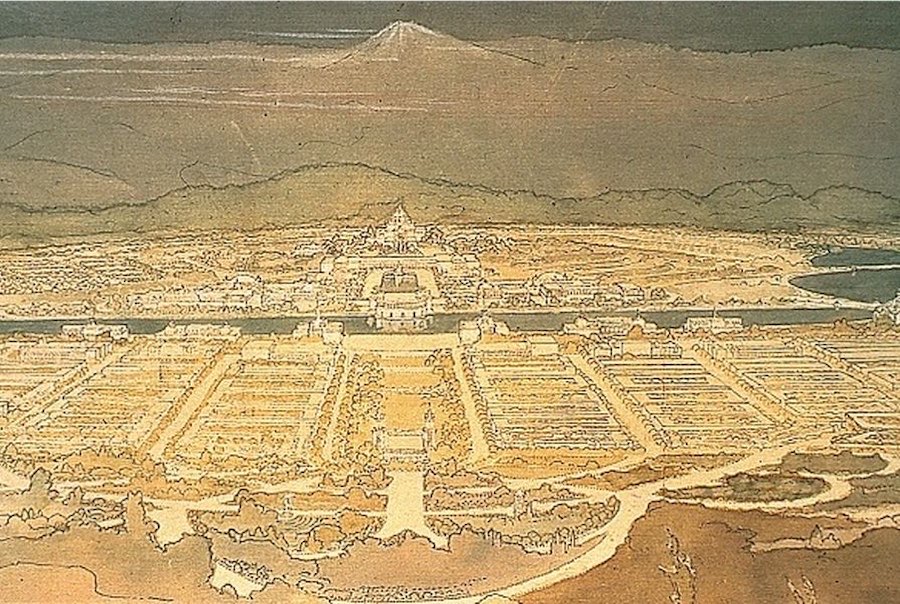
Griffin’s “ideal” plan for Canberra emphasised the landscape and drew on Garden City principles and elements of the City Beautiful movement. Drawing: Marion Mahony Griffin’s vision of Canberra from Mount Ainslie.
“For Canberra to become an ‘ideal’ city, it must address unmet community needs in health, housing, transport and education. Priorities need to be based on detailed analysis rather than superficial rhetoric,” says planning columnist MIKE QUIRK.
Canberra has been rated the world’s best city for quality of life – but only 45th overall.
Mike Quirk.
The 2026 Oxford Economics Global Cities Index assessed 1000 cities on economics, human capital, quality of life, environment and governance. Canberra topped the quality-of-life category, with strengths in income equality, life expectancy, housing and wages, and access to parks and open space.
Such rankings are useful for city branding and attracting students, tourists, migrants and investment.
But Canberra’s overall ranking points to areas for improvement. Sydney ranked 13th, Melbourne 16th, Brisbane 36th and Perth 44th. New York, London and Paris topped the global rankings.
Another measure is Visual Capitalist’s Quality of Life and Cost Matrix, which ranks 100 cities using Numbeo data. It considers purchasing power, pollution, house-price-to-income ratios, cost of living, safety, health care, commute times and climate. Cities are divided into four groups: high quality/low cost, high quality/high cost, high cost/low value and low value/uncomfortable.
Canberra and other Australian cities were placed in the high-cost/high-value group. Eighteen cities in the high-quality/low-cost group were in Europe, including Porto, Split and Valencia. Major US cities in the high-cost/low-value group included New York, Los Angeles, Chicago, San Francisco and Las Vegas.
As with any ranking, the findings are open to debate. For example, the climate index rated Canberra below Melbourne and Hobart.
The Economist Intelligence Unit’s Global Liveability Index also attracts considerable attention. Primarily designed to inform executives about corporate placements, it assesses 173 cities on stability, health care, culture and environment, education and infrastructure.
In 2026, it ranked Melbourne as Australia’s most liveable city and third in the world. Canberra was not ranked because it is not a major centre for corporate relocations, expatriate employment and business activity.
The index has been criticised for overlooking local challenges such as car dependency, traffic congestion, cost-of-living pressures and housing availability and affordability.
Its use of averages can also hide inequalities. A city, for example, could rank well on housing costs while some residents face severe housing stress.
These indexes attempt to identify the best city according to specified, weighted criteria.
However, the search for the ideal city is hardly new.
The ideal city of medieval Europe featured massive fortresses, defensive walls, market squares and cathedrals. In the 18th and 19th centuries, as public health became more important, the ideal shifted towards underground sewerage, clean water and wide streets allowing sunlight and air circulation.
In the early 1900s, Ebenezer Howard’s Garden City movement advocated self-contained communities surrounded by greenbelts, combining the advantages of city and country life.
Griffin’s “ideal” plan for Canberra emphasised the landscape and drew on Garden City principles and elements of the City Beautiful movement, with its focus on grandeur, civic pride, improved sanitation and traffic circulation, stately boulevards, parks and public spaces.
In the 20th-century car age, designers such as Le Corbusier envisaged skyscrapers surrounded by extensive parks and connected by high-speed highways.
Canberra’s Y Plan sought to protect the city’s landscape while creating a multi-centred city to reduce overall travel, accommodating preferences for low-density living and the mobility provided by the car.
What constitutes an ideal city will inevitably be influenced by a person’s background, family and cultural connections. Canberra would never be the ideal city for someone who loves daily ocean swimming or is averse to frost.
For many, it would mean adequate housing for all; diverse employment opportunities; excellent health and education services; attractive centres; a high-quality natural environment; convenient and frequent public transport; good cycling and pedestrian networks; uncongested roads; and perhaps a large, multi-purpose covered stadium surrounded by lively activities — all funded with taxes as low as possible.
Planning must also respond to intensifying challenges including climate change, housing and income inequality, technological change, employment location and transport.
For Canberra to be an “ideal” city or the best city it can be, governments have to effectively respond to these challenges and address unmet community needs in health, housing, transport and education. Priorities need to be based on detailed analysis rather than superficial rhetoric.
In my view, prioritising light rail over improving bus services and constructing social housing has been a poor use of limited funds. Improved governance is required.
Is the Assembly up to the challenge?
Mike Quirk is a former NCDC and ACT government planner.
"The Greens are really feeling the loss of the innovative Shane Rattenbury… from the time he arrived in the Assembly in 2008 the Greens committed to a guarantee on confidence and supply," writes political columnist MICHAEL MOORE.
"The PM has used his power to alter staffing numbers based purely on political objectives. It is one of the more concerning uses of executive power in modern times because of the impact it has on our democracy," writes ANDREW HUGHES.
Anthony Albanese has been warning of the need for AI guardrails – now a rogue agent breaching a government firewall has made his case for him, writes political columnist MICHELLE GRATTAN.



Leave a Reply