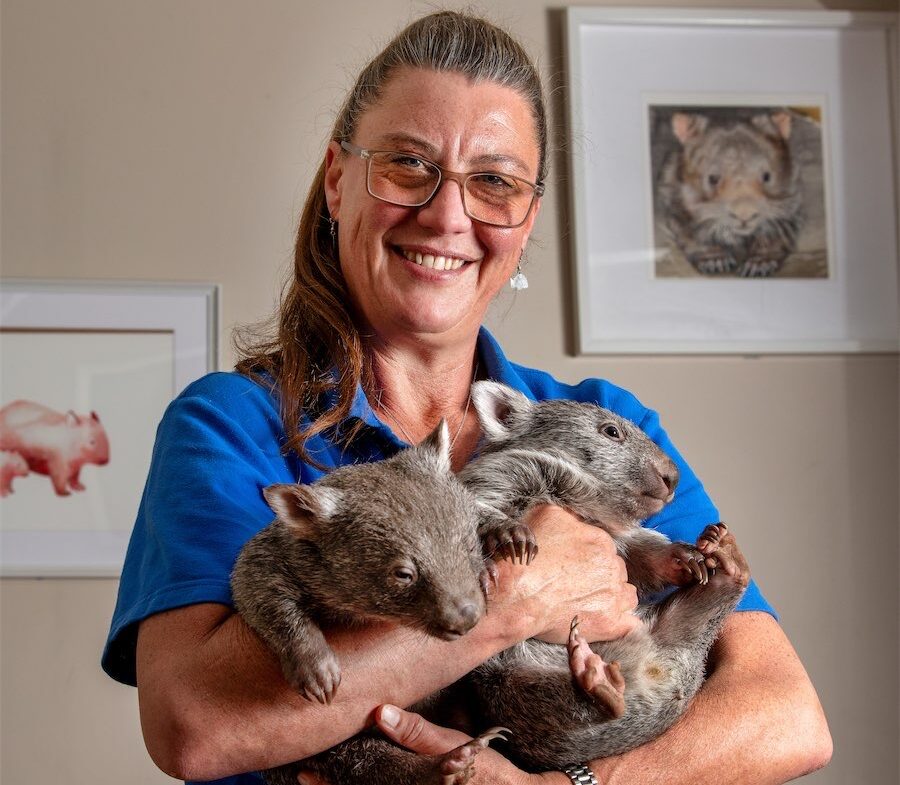
Yolandi Vermaak is into wombats. Yes, she finds them cute and cuddly, but it’s much more than that. DAVID TURNBULL continues his series of stories of remarkable Canberrans.
Protecting wombats has become Yolandi Vermaak’s life.
As the driving force behind an ACT community group called Wombat Rescue, Yolandi Vermaak has assembled an army of about 80 volunteers who rescue wombats that have been injured on our roads or are suffering from mange – a painful skin disease in animals caused by tiny parasitic mites.
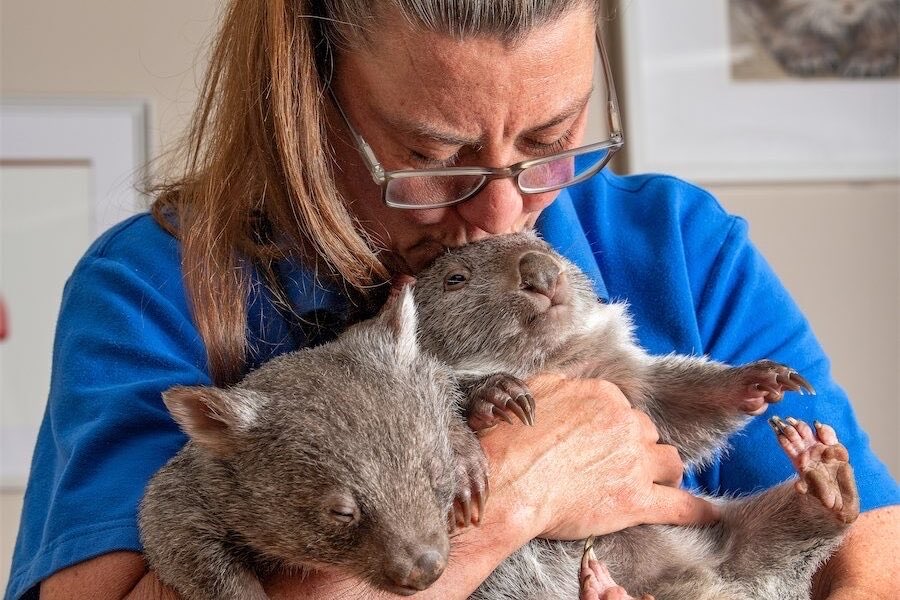
At any given time, she may have half a dozen “orphans” – baby wombats rescued from the pouches of dead mothers – in care at her home, and every Sunday her troops mobilise around the ACT to administer medication to combat mange.
“It’s all voluntary,” Yolandi says. “The government simply doesn’t have the resources to care for sick animals in our nature reserves.
“We fill the void and it’s appreciated.”
Yolandi lived on the outskirts of Pretoria, in South Africa and, like many migrants, came to Australia to give her children a better environment to grow up in.
She migrated to Australia in 2013 with her husband, a son 10, and a daughter 11, under a skilled migration program that placed her in Canberra.
“Apartheid ended way back in 1992, but there was still a lot of anger,” she says. “There was violence in the air.”
But the transition was not easy
“In South Africa we had our own home. In Australia, though, we could only afford to rent.
“It’s expensive to uproot and move to another country, and the assets you have may not translate equally in the new environment.”
Worse.
Soon after arriving in Australia, Yolandi’s husband was diagnosed with leukemia.
Tragically, it was 12 months from diagnosis to his passing, and Yolandi found herself as a single mum in a strange country battling to provide for her children.
So how did she find time to care for wombats? And how did that connection come about?
“When we first arrived, we went to a zoo in Batemans Bay, and I was allowed to hold a young wombat,” she says.
“I just fell in love with the furry little thing. As a child I used to rescue birds that had fallen from nests, and when I started seeing wombats dead on the side of the road my heart went out to them.”
Back then, of course, Yolandi didn’t have any spare time to care for wombats.
Slowly, as her children grew, though, “the wombat thing” kept coming back.
One weekend, she just jumped in her car and drove along the King’s Highway, the Monaro, and the old Cooma road looking for injured wombats.
“People don’t stop, they just leave them, and I’d come along and mop up the carnage”
Yolandi would take injured adults off the road, often to a vet for them to be euthanised and rescued baby wombats from a dead mother’s pouch.
“I remember thinking at the time: ‘they will help me survive’.
“It was just doing something I loved – caring for animals.”
Every wombat presented a new challenge, of course, and Yolandi slowly became expert in how to treat injured wombats.
Then, one day, she came across something totally new.
Mange.
It’s surprising Yolandi didn’t encounter it sooner because the parasite that causes mange probably came ashore on dogs or cattle with the First Fleet.
The parasites are like ticks: they attach to the coat and then lead to a skin disease that strips the animal of its fur, leaving a painful rash.
Mange thrives in cold, dark places, and rough estimates suggest 80 per cent of the wombat population along the Great Dividing Range and into Tasmania is suffering from it.
Obviously, even in the ACT that presented a massive challenge, and luckily by late 2018 word about “the wombat woman” had spread, and a steady stream of volunteers had begun approaching Yolandi to get involved.
Working with the government vet and the manufacturer of the medicine Cydectin, Yolandi developed a mange control program.
Essentially, they use a pour-on cattle drench that kills the mites.
Ingeniously, they’ve even improved upon a trip mechanism called a burrow flap that the wombats triggers as it exits its hole at night.
But one dose is not enough.
And with hundreds of wombats requiring follow-up doses there’s a mountain of work.
And that’s where the “Wombat rescue” army comes in.
Every Sunday about 40 or 50 volunteers gather to repair any trip mechanisms wombats have damaged and ensure they are all fully charged with medicine.
There are other volunteers to handle road rescues, and a call-out centre.
What started as one woman’s solitary passion has become a 24/7 job – all consuming.
“There’s so much involved now,” she says.
“Even to care for wildlife you need a licence; someone must lodge that paperwork. There’s a lot of work in the background no-one sees.
“I can only manage part-time work to keep the lights at home on,” Yolandi admits.
“Luckily the organisation has grown slowly as my children have grown up and they are both independent now.”
Like all community-based organisations, Wombat Rescue operates off goodwill. There’s never enough money to go round. They have received grants along the way, but with so many groups seeking help, the ACT Government can only do so much.
Donations are welcomed, but small.
So Yolandi is exploring the possibility of turning Wombat Rescue into a charity – gaining Deductible Gift Recipient tax status – so larger organisations can make donations.
“I don’t want Wombat Rescue to become too big. I love the way that people get involved because they want to help.
“Wombats are so vulnerable… they were shot almost to extinction.
“Rural landholders think they are just pests that cause erosion, but it is no coincidence that the land is always healthier and lusher around burrows.
“Wombats play an important role as the ‘bush engineers’ in Australia’s ecosystem.
“They are much more than just a bump on the road.”
Donate via the button on wombatrescue.com.au
News all day, every day at CityNews.com.au.
Who can be trusted?
In a world of spin and confusion, there’s never been a more important time to support independent journalism in Canberra.
If you trust our work online and want to enforce the power of independent voices, I invite you to make a small contribution.
Every dollar of support is invested back into our journalism to help keep citynews.com.au strong and free.
Thank you,
Ian Meikle, editor




Leave a Reply