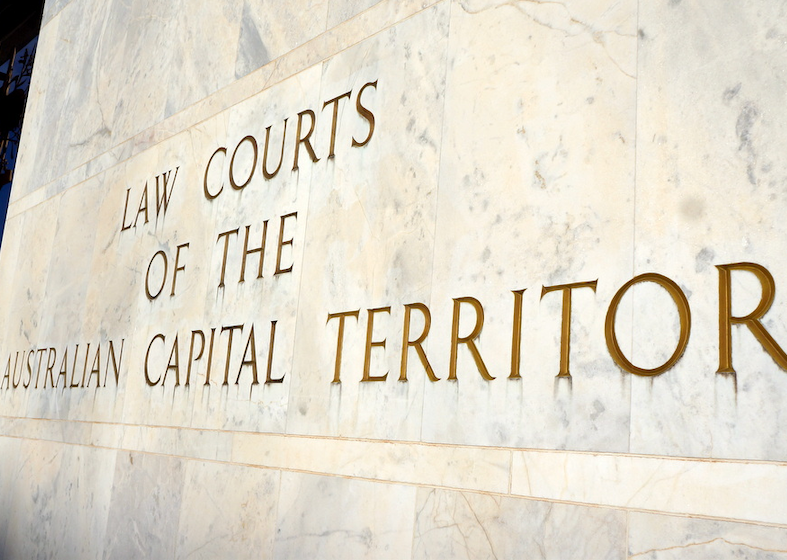
Legal columnist HUGH SELBY sees a slice of real life served with unexpected seasonings in a day in the life of the ACT Magistrates Court.
RESEMBLING a theatre’s call to the world outside, the courts building in Civic has a big entrance and there are wide staircases on the left and right to the upstairs courts.
Unlike a theatre, but like an airport, we must first clear security: leave at home anything that might be used as a weapon.
As community members we are all welcome into the courtrooms, except when there are requirements, such as the protection of children, that lead the magistrate to keep us out. While we are welcome, we can’t take photos or make a sound recording of what is being said. If you wish to take notes it’s a good idea to pass a note to the person who assists the magistrate saying who you are and that you’d like to take notes. That courtesy is likely to receive courtesy in return.
As a likely hangover from the covid era, some courts still have a sign on the public door that tells parties to stay outside until their case is called and then to leave the building when it’s finished.
The magistrates don’t see those notices because they enter and leave their courts by other doors; however, it is time that these notices were removed as they impede public witnessing of our justice system.
Visitors can sample a range of cases, people, advocacy and magistrate styles in a few hours.
Let’s start with the catwalker. It was his first time in court and he knew how attractive he was from head to toes. He strolled from door to the table, hands in pockets, as though he was cruising in a well-lit nightclub.
Someone must have told him to take his hands out because he did, barely in time. Once told to come back on a later date he sauntered out. No ego deficit there.
Next up was a tradie who’d had enough beer on no lunch to go just over the alcohol limit. The magistrate asked him what he had to say.
He explained in few words what had happened but no more. The magistrate did a perfect follow up to see how his personal circumstances affected the case: no prior criminal history, nature of his work and need for a driver’s licence, family responsibilities.
Taking all factors into account the magistrate found the offence proved but did not record a conviction. He reminded the defendant of the dangers of drinking and driving and told him that he could not expect such a lenient outcome if he did it again.
This case showed why a magistrate who understands both the law and people can make us rightly proud of the capacity of our legal system to deliver fair outcomes.
It’s only a few weeks since a paramedic was killed on the job in NSW. Most of us never have to deal with the threatening, sometimes dangerous, conduct of people who have lost control of a situation, their lives and self-restraint.
For police and paramedics it’s part of the job to do their best to contain the dangers to the lost souls, to themselves as front liners, and we, the community.
How grateful we should all be that the police wear body cameras and keep recordings of phone calls to police.
Both were important pieces of evidence in a contested hearing where the defendant faced assault charges that arose from his “ex” turning up at his apartment.
His TV was smashed. He had recorded her threats to him and kept the exchanges of text messages.
Both parties called the police. This meant that some police went to his apartment and talked to his “ex”, while others found him within walking distance. He and she were noisily upset with each other and what had happened. The “f” word figured a lot. He was arrested and charged, an outcome that he thought most unfair.
These cases are a reminder that magistrates do not work in a place of milk and kindness. It is their lot to examine, after the event, sad and dismal expressions of human error. It helps them to have competent advocates putting both sides of the case.
In this case both advocates were working alone. One was clearly more experienced than the other. The less experienced extracted the evidence from the “ex” and police officers, but it was done without sharing with them or the magistrate the story sequence or what was important and what was not. That skill will come. The better experienced was short and effective in cross-examination.
Both made well-prepared, helpful closing argument, but one was rather better at taking from, and giving cues to the magistrate. The issues were witness believability and self-defence. It’s always nice to see a judicial face light up. It shows engagement. The result? Not yet known because this magistrate likes to reflect and then give a decision. That’s wisdom.
News all day, every day at CityNews.com.au.
Who can be trusted?
In a world of spin and confusion, there’s never been a more important time to support independent journalism in Canberra.
If you trust our work online and want to enforce the power of independent voices, I invite you to make a small contribution.
Every dollar of support is invested back into our journalism to help keep citynews.com.au strong and free.
Thank you,
Ian Meikle, editor




Leave a Reply