“Disappointingly, the latest data reveals, again, that the ACT is not a high-performing jurisdiction when it comes to closing the gap,” writes indigenous advocate JULIE TONGS.
Yet again, though not unsurprisingly, the recently 2026 Productivity Commission Closing the Gap report reveals progress in meeting the agreed national targets designed to reduce Aboriginal and Torres Strait Islander disadvantage is either slow or non-existent.

And disappointingly, the latest data reveals, again, that the ACT is not a high-performing jurisdiction when it comes to closing the gap. Rather, it presents a mixed and concerning picture for the ACT.
Currently, for 10 of the 18 targets for which the ACT had data that can be used to assess progress, six are improving, four are worsening and the remaining eight can’t be assessed.
The six targets showing improvement are: preschool enrolment, Year 12 attainment, tertiary qualifications, youth engagement, employment and out-of-home care.
The four nationally agreed targets that are continuing to worsen in the ACT are incarceration rates for adults, children assessed as developmentally on track, youth detention and appropriate housing.
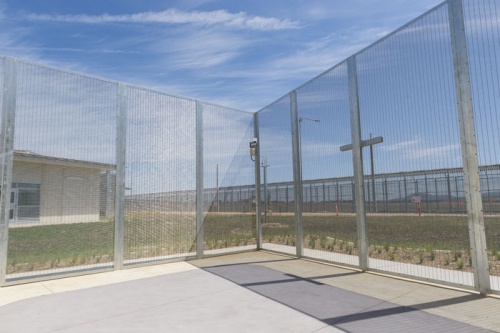
One area the Productivity Commission has again highlighted, in which the ACT Government is only second to Queensland, is the rate at which it locks up Aboriginal men and boys.
Another striking feature of the Closing the Gap report, is the high number of core health outcomes targets that cannot, for the want of relevant data, even be reliably assessed in the ACT.
These include life expectancy, healthy birthweight, family violence and the rate of suicide in the Aboriginal community. Regrettably, the available data does not allow, as is not the case in other jurisdictions, a reliable ACT-specific assessment of progress in any of these areas.
In addition, nor can the relevant targets relating to languages, digital inclusion, essential and land rights/interest services be assessed.
While the 2026 report notes that small Aboriginal populations can render relevant data volatile and lead to suppression, limiting place-based evaluation, more investment in methods that allow for an appropriate estimation to be made for a jurisdiction with small First Nations population should be explored.
While the ACT has shown some reductions in out-of-home care rates to 52.7/1000 in 2025, First Nations children remain almost 12 times as likely as non-indigenous children in the ACT to be in out-of-home care. Indeed, significant and disturbing disparities continue to exist across almost all targets in the ACT.
The ACT presents a troubling contradiction: it is one of Australia’s most affluent and progressive jurisdictions, yet First Nations people continue to experience deeply unequal outcomes.
Progress on socioeconomic measures for the First Nations population in the ACT, has not translated into comparable improvements for First Nations’ children, nor has it prevented their severe over-representation in detention and incarceration
In view of the relatively small First Nations population in the ACT, there is arguably far greater scope for the ACT Government to target investment and co-ordinated service delivery, creating a real opportunity to close persistent gaps in outcomes for the Aboriginal community in Canberra
A government genuinely committed to ensuring equality to the Aboriginal members of this community should ensure that the four priority reforms are fully adopted.
1: Formal partnerships and shared decision making: governments must work in genuine partnership with Aboriginal and Torres Strait Islander people, with Aboriginal people having real authority in decisions
2: Building the community-controlled sector
Governments must strengthen Aboriginal and Torres Strait Islander community-controlled organisations (ACCOs) so communities increasingly have services designed and delivered by organisations controlled by their own communities.
3: Transforming government organisations: Governments change the way they operate addressing institutional racism, improving cultural safety, accountability and responsiveness.
4: Shared Access to Data and information: Aboriginal organisations have access to the same relevant data governments use to make decisions.
Julie Tongs is CEO of the Winnunga Nimmityjah Aboriginal Health and Community Services.
News all day, every day at CityNews.com.au.
Who can be trusted?
In a world of spin and confusion, there’s never been a more important time to support independent journalism in Canberra.
If you trust our work online and want to enforce the power of independent voices, I invite you to make a small contribution.
Every dollar of support is invested back into our journalism to help keep citynews.com.au strong and free.
Thank you,
Ian Meikle, editor





Leave a Reply