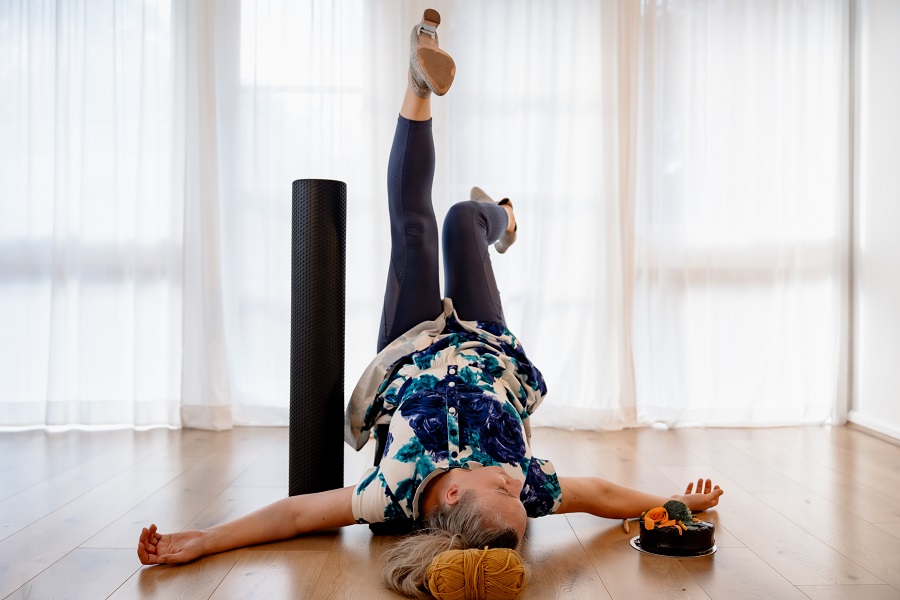
Dance / The Whole Cake by Vivienne Rogis. At Hall Pavilion, Hall, September 27. Reviewed by MICHELLE POTTER
It would be hard to envisage a more unusual dance performance than The Whole Cake.
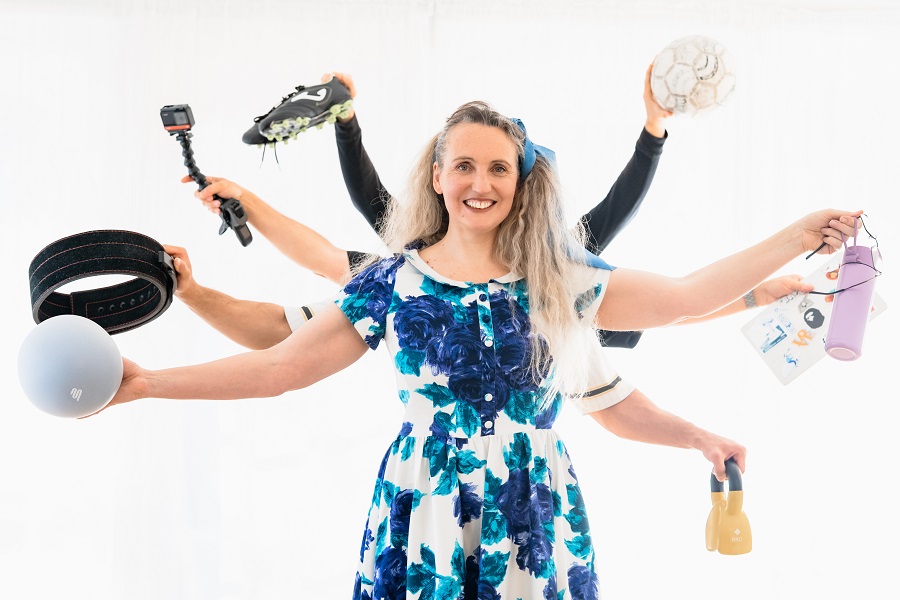
Created and choreographed by Vivienne Rogis, it sets out to examine her experiences as a woman engaging with life over several decades.
There is dance of course, but the whole consists of six episodes that also give a verbal outline of specific periods in Rogis’ life (and by extension periods in female life in general). Then, at the end of each section Rogis cuts six separate cakes and distributes slices to the audience.
Rogis defines the six episodes as expressing “the difficulties and joys of managing diverse roles within family, work, community, and friendship, while maintaining a sense of individuality.” Each of the six episodes follows a similar framework: a danced section, a verbal discussion with personal references to Rogis’ own experiences, and the cutting and serving of slices of the relevant cake.
The outstanding overall feature of the work is the manner in which Rogis shows the different emotional and physical aspects of each of her difficulties and/or joys. In dance terms an early section shows a balletic movement focus, which moves on to a more contemporary style, showing the growth of Rogis’ personal dance practice. A little later there is a kind of personal freedom and joy in the movement we encounter. Rogis’ life grows and develops.
Then towards the end there is movement that is more bent over and slow with the apparent intervention of ageing and the need to manage life as a mother, partner and housekeeper. At the very end the movement contains shapes that are uplifting suggesting that Rogis has conquered her problems.
But beyond the physicality of the body itself, Rogis also uses facial and verbal expression to add highlights to what the body expresses. It is perhaps most noticeable towards the end when Rogis is struggling to overcome her anger at the situation in which she finds herself. Her voice becomes sharper, her face shows annoyance and she cuts the relevant cake swiftly and sharply without consideration for what the slice might look like. Even the way she serves the slices to audience members lacks a certain calm.
As for the cakes, made by Sweet Bones Bakery and Cafe in the suburb of Scullin, there is universal agreement that they are delicious. But they too follow the changing patterns Rogis examines. They include, for example, The Cake of Love and Life containing a delicious chocolate mousse and The Cake of Motherhood consisting of a selection of cupcakes. All the cakes have appropriate connections to the narrative.
The Whole Cake is, to a certain extent, a solo performance. Rogis is the star and is an expert performer whether dancing, speaking, dramatising situations, or serving cake. But there is a definite role for the audience as well and the work is beyond doubt an immersive and engaging experience.
There are just two more performances of The Whole Cake which will take place in Fisher at the Badimara Scout Hall on October 4.
News all day, every day at CityNews.com.au.
Who can be trusted?
In a world of spin and confusion, there’s never been a more important time to support independent journalism in Canberra.
If you trust our work online and want to enforce the power of independent voices, I invite you to make a small contribution.
Every dollar of support is invested back into our journalism to help keep citynews.com.au strong and free.
Thank you,
Ian Meikle, editor


Leave a Reply