
ANNA CREER reviews two new novels of historical fiction, one set in present and medieval times, the other in World War I.
The debut novel of award-winning poet Rebecca Perry, set in both the past and the present, won Waterstone’s Debut Fiction Prize and was long listed for this year’s Booker Prize.
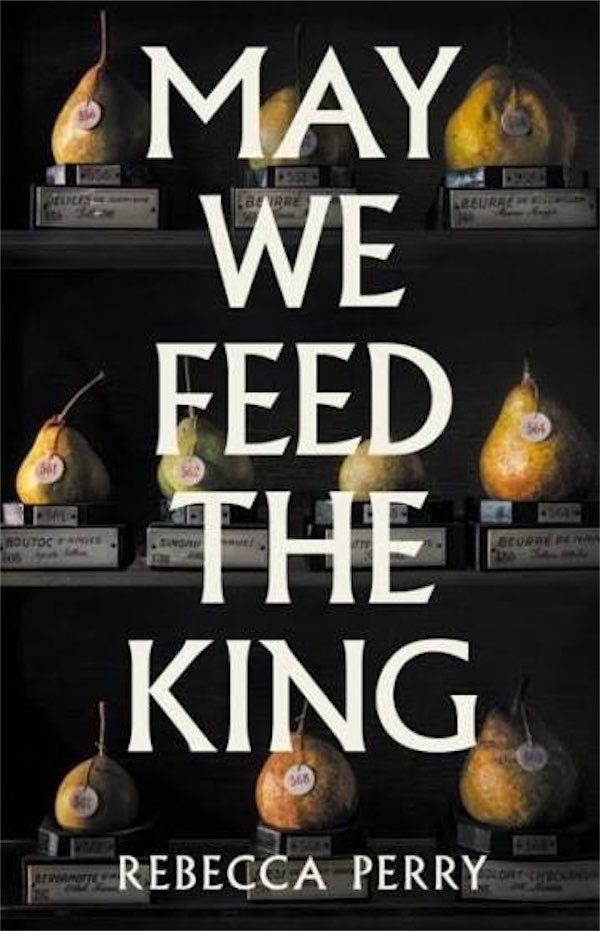
In May we Feed the King (Granta), a woman who has been curating scenes in medieval history for 22 years, is commissioned to create an installation to commemorate the 750th anniversary of a former palace, now an historic house open to the public.
She is told to focus on six areas: the King’s chambers, the Queen’s parlour, an attendant’s quarters, the room of a physician and a feast scene in the Great Hall.
She has only “one guiding rule” in creating scenes. “It must appear as if the person or persons have just left the room. The viewer must feel as if the air is alive with their energy, that they only just missed them, that they will be back at any moment. If this isn’t the case, the scene is no more than an arrangement of objects.The scene is dead.”
To achieve this she must understand the King and Queen whose lives she is recreating. Fortunately the palace archive of “detailed ledgers of the Kings and Queens… and accounts of the habits and customs of the court” is housed on site.
However, her research uncovers the unexpected – a reluctant King who had only inherited the crown after the deaths of his two older brothers. A King described as “odd”.
At this point, the narrative shifts to the past and the court of the king who “moves through the first days of his rule in wild turns – he is stunned, horrified, disbelieving, resigned, aghast, furious”.
He resents his advisers who try to persuade him to hunt; to go to war against rebels in a distant island; to eat like a King; to provide his kingdom with an heir. But this is a King who accepts that his wife has a lover.
The Booker Prize judges praised a novel “laced with desire and longing. May We Feed the King is a playful, stirring meditation on history and storytelling: on what makes a King ‘Great’, and a life meaningful”.
It is also a fascinating exploration of the nature of history, who creates it and why. It challenges the accepted norms with a story of a past with as many unanswered as answered questions about the nature of kingship. It is a triumph.
PIP Williams discovered the inspiration for her latest novelThe German Ward (Affirm Press) in the archives of the Australian War Memorial.
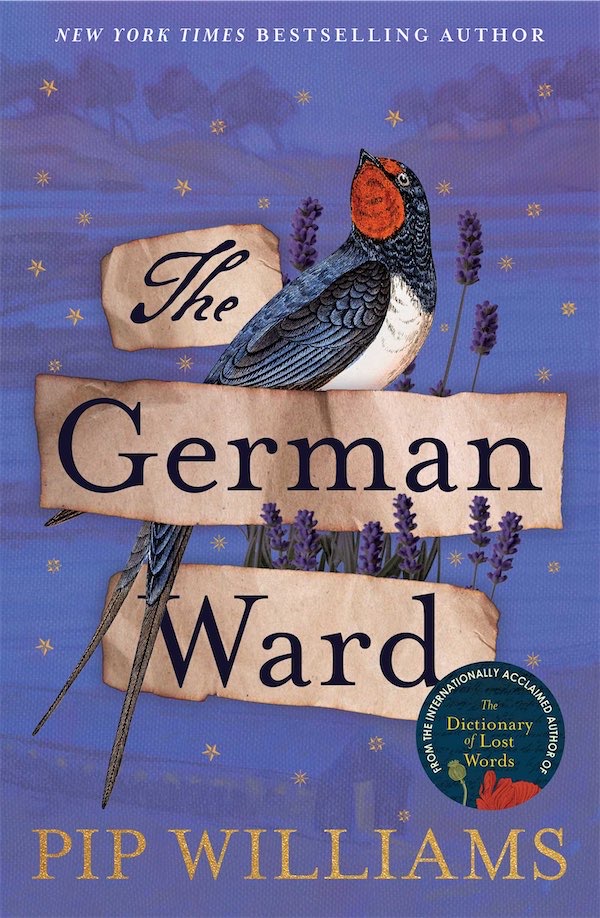
She was looking at the art of Iso Rae for information on the army base at Etaples during World War I because her drawings, to Williams, were “perfect for this purpose – detailed, precise and usefully annotated”.
On the back of a drawing of men suffering from trauma and shell shock, Williams found a drawing of a woman. Although there was no description of time and place, her dress placed her in the war and, says Williams, “that is where the fiction started.”
The novel imagines Rae capturing images at the Red Cross hospital near Etaples in 1916 and adds a fictional friend, Tilda.
Tilda Taylor, an actress and a suffragette, has already appeared in both of Williams previous award-winning novels, The Dictionary of Lost Words (2020) and The Bookbinder of Jericho (2023).
Tilda has been selected for the German Ward at the hospital because she is older than most of the VADs and because her disdain for rules has meant she’s been moved around various wards.
Tilda therefore has “a breadth of experience uncommon for a VAD” and as a consequence is considered a “good fit” for the German Ward, which takes “all-comers”.
There she meets and falls in love with a German doctor, a POW, something forbidden and eventually disastrous.
In the present Eva, an historical researcher discovers Iso Rae’s drawings of the German Ward and discovers evidence of a growing intimacy between a nurse and a doctor. She wants to solve the puzzle of who they were and what became of them.
At the same time Williams is challenging the traditional male dominance of history by telling a story of war from the perspective of three very different women: the nurse, the artist and the researcher.
Like Perry, Williams challenges the reader to question how the past is recorded, for whom and for what purpose.
The German Ward will be available in bookshops on September 29.
News all day, every day at CityNews.com.au.
Who can be trusted?
In a world of spin and confusion, there’s never been a more important time to support independent journalism in Canberra.
If you trust our work online and want to enforce the power of independent voices, I invite you to make a small contribution.
Every dollar of support is invested back into our journalism to help keep citynews.com.au strong and free.
Thank you,
Ian Meikle, editor




Leave a Reply