Follow the paths or take a rest at the She-oak Nook, Kurrajong Rock Rest or one of the other quiet spots.
Forest 20 at the National Arboretum offers a colourful showcase of Southern Tablelands plants, wildlife and landscapes, writes BILL HANDKE.
For a colourful display of native plants from the region, Forest 20 at the National Arboretum is well worth a visit.
STEP, the Southern Tablelands Ecosystem Park, is a treasure within a treasure and during the next few months will be at its springtime peak.
Walk down the path into STEP and the first welcome is a bright yellow display of wattles, followed by the “wow” factor of the Parade of Peas planted in front of the main information sign.
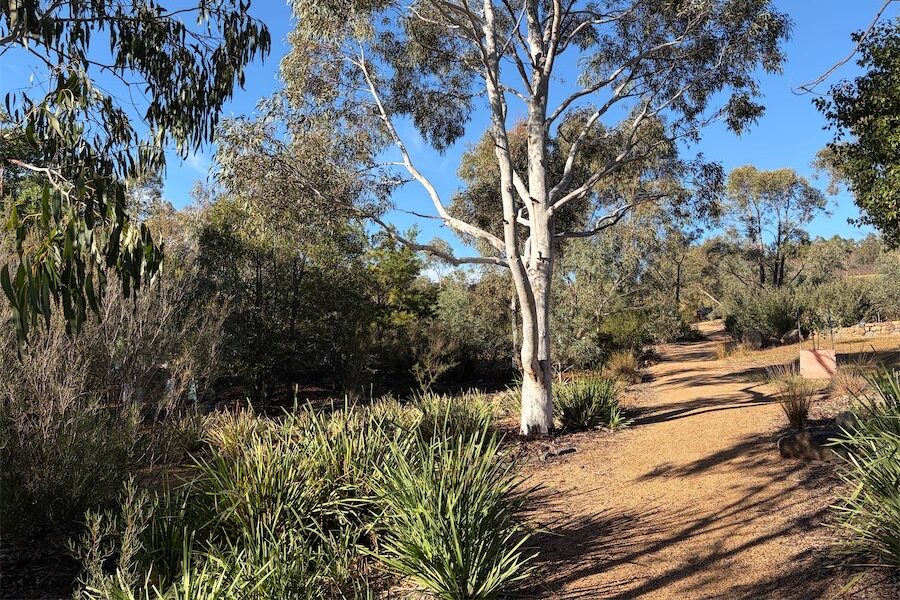
Follow the paths or take a rest at the She-oak Nook, Kurrajong Rock Rest or one of the other quiet spots. Along the way there may be kangaroos, birds, small lizards and frogs that have made STEP their home.
Created and managed by volunteers, STEP reflects the diverse plants found across the Southern Tablelands of NSW and the ACT, effectively creating a regional botanic garden.
Among the dozens of public botanic gardens in Australia, STEP is unusual because it contains only plants from its region.
While the Arboretum displays trees of the world and the Australian National Botanic Garden collects and displays plants from across Australia, there was no clear focus on the plants of the region in which we live.
STEP was formed 25 years ago by two prominent local community groups, the Australian Native Plants Society Canberra Region and Friends of Grasslands. Their principal aim was to promote knowledge about the plants and ecosystems of the local region, many of which are uncommon or threatened with extinction.
The first trees were planted in Forest 20 in March 2009 at the inaugural National Arboretum Canberra’s Festival of the Forests. Those taking part included then chief minister Jon Stanhope, then commissioner for the environment Dr Maxine Cooper, members of the Legislative Assembly Planning Committee, teachers and children from Evatt Primary School, plus enthusiastic community members.
While grasses may look much the same at first glance, the different species have distinct flowers and seed heads.
Forest 20 is quite different from the Arboretum’s other forests because it contains a large diversity of trees, shrubs, herbs and grasses.
At the foundation of STEP are 16 eucalypt species planted in bands across the site to reflect their natural place in the landscape. A Central Garden, bordered by easy-access gravel paths, runs through the bands of trees and features understorey plants associated with nearby eucalypts.
Plantings also reflect the topography of the local landscape, including dry forest, dry woodland, wet forest, grassland and wetland communities.
There are plenty of special features to explore. The Wattle Walk represents nearly all species of Southern Tablelands wattles, with some flowering at any time of the year. The Clearing provides an outdoor gathering and teaching site, while the Bush Tucker Garden contains many plants used by First Nations people for food, fibre and tools.
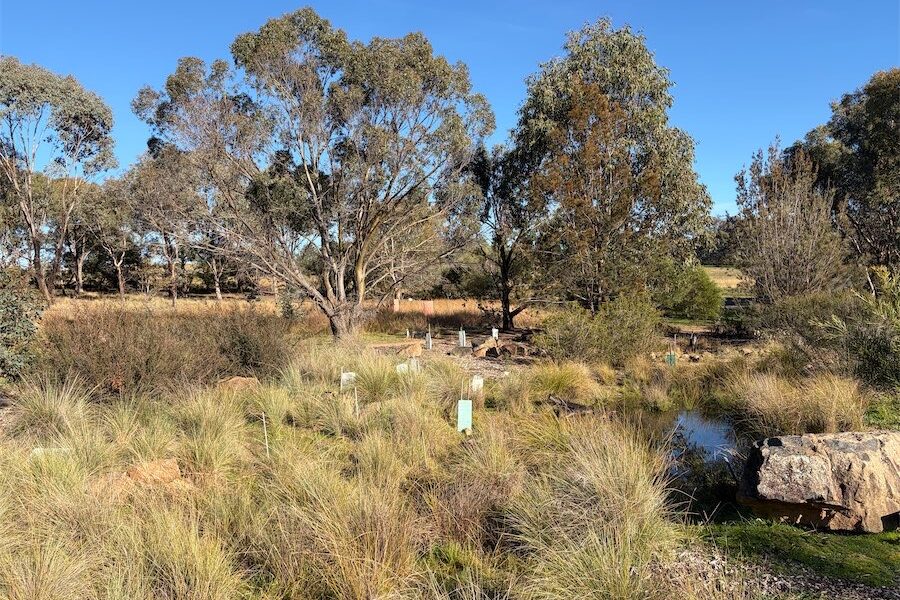
The Ephemeral Wetland comes and goes as rainfall permits but provides a permanent habitat for several species of frog. There is also the She-oak Nook, a quiet place featuring most of the regional she-oaks, along with the Kurrajong Rock Rest, Gallery of Grasses and Parade of Peas.
The Gallery of Grasses is particularly worth visiting in late spring and summer. While grasses may look much the same at first glance, the different species have distinct flowers and seed heads.
The Parade of Peas is another special sight during spring and summer. Native peas, some known as “egg and bacon” plants, provide a huge variety of shapes, sizes and colourful flowers in reds, whites, yellows, oranges, pinks, purples and blue.
STEP is more than a beautiful place for a quiet walk. People and local organisations also visit to help with their own planting programs by seeing how particular native plants from the region grow in the Canberra district.
The volunteers who maintain the garden meet for regular Thursday working bees, with the on-site morning teas helping to create a strong community network.
For beauty, tranquillity and an insight into native plants of the ACT region, STEP offers plenty to discover. Volunteers meet on Thursdays from 8am to 10am, adjacent to the lower carpark at the National Arboretum Canberra. Contact [email protected].
Pickles, baking and knitting are attracting a new generation of Country Women's Association members and bringing the spirit of the bush to the city, reports STEPHANIE GARDINER.
Warmer soils mean it's time to feed, water and care for lawns to keep them lush, green and healthy through summer, says gardening columnist JACKIE WARBURTON.




Leave a Reply