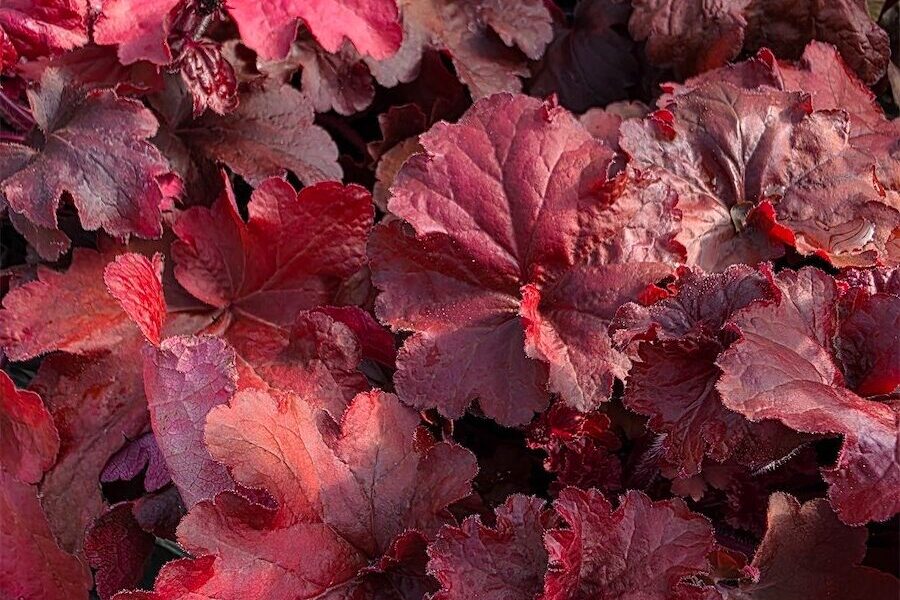
The Red Lightning variety of Coral Bells… they will brighten any corner. Photo: Jackie Warburton
Warmer soils mean it’s time to feed, water and care for lawns to keep them lush, green and healthy through summer, says gardening columnist JACKIE WARBURTON.
Now the soils have warmed, it’s time to fertilise lawns. They can be cored or thatched if needed, while regular watering should be maintained.
Jackie Warburton.
Manually remove bindis, cape weed or dandelions to keep the lawn looking good and help prevent prickles in summer.
Keep as much growth on the lawn as possible and don’t mow too low. The longer the grass, the better it will retain moisture in the soil and help prevent weeds becoming established.
After rain, a sprinkle of high-nitrogen fertiliser or urea can be applied, but use it sparingly. Urea is a concentrated fertiliser that can burn plants if too much is used.
However, it’s particularly useful where clover is taking over, as the extra nitrogen will encourage stronger lawn growth and diminish the clover. Within a few weeks, the lawn should be looking lush and green.
FOR a little colour in the garden, one of my old favourites is Coral Bells (Heuchera sanguinea). Many years ago they were used as a green groundcover under trees, but there are now new varieties on the market with vibrant foliage colours.
With names such as Red Lightning, Lime Marmalade and Wild Berry, there is plenty of variety. Mass planted in pots or in the garden, they will brighten any corner and, once established, they require little or no care.
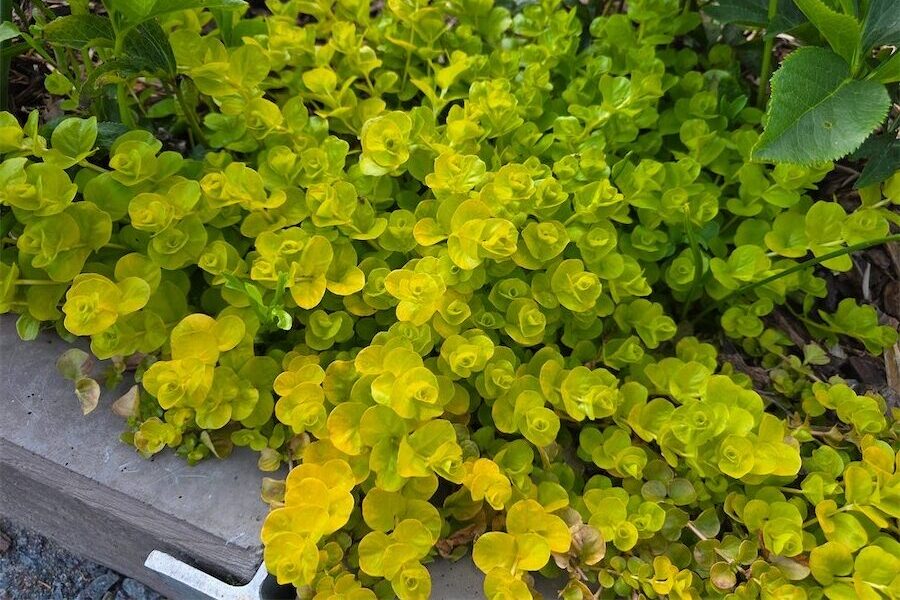
Creeping Jenny… in summer its bright golden foliage is very decorative. Photo: Jackie Warburton
ANOTHER plant that’s survived winter in my garden is Creeping Jenny (Lysimachia aurea). In summer its bright golden foliage is very decorative. It can cascade over a wall, grow between pavers or be planted in hanging baskets. As a bonus, it can also be used as a pond plant, where it is ideal for shallow-water edges and provides cover for fish.
In the garden it will create a dense mat over time. The foliage can sometimes be burnt during winter, but a light trim at the beginning of spring will bring it back into shape. The golden form, aurea, grows much more slowly, is less vigorous and is not considered an invasive weed, unlike its cousin Lysimachia nummularia.
DAHLIAS can go into the ground now and can be planted any time up until Christmas. Their tubers should be planted on a mound with the necks proud of the soil. They like good drainage and rich compost.
Where dahlias are to grow, sprinkle a little lime sulphur in the soil to help prevent fungal problems in summer, then stake them at planting time. New growth will shoot from the eyes of the tuber. Trimming this growth will ultimately produce a bushier plant with many more flowers.
Once there are four sets of leaves, the centre of the dahlia plant can be pinched out and propagated. Reduce the leaves on these tips, then place the cuttings in a shallow dish with a little horticultural sand or in a shallow glass of water on a windowsill. Once roots have formed, pot them up gently and you should get a small plant with flowers this season.
SUMMER colour can also be planted now to have the garden looking good for the festive season and into autumn. Growing annuals from seed at home is an economical way to produce an abundance of colour and plants at little to no cost.
Annuals can also be used in the vegetable patch and herb garden. Simply sprinkle seeds onto a little soil and keep them moist to germinate. Seeds to try include zinnias, cosmos and sweet alyssum.
Jottings
Plant tomatoes outdoors with protection.
Plant root vegetables such as corn, carrots and potatoes.
"Tasmanian conditions allow grapevines a long, generally cool growing season. So, the grapes can ripen slowly without losing acidity," writes wine columnist RICHARD CALVER.
Climate change isn't the only reason some Australian forests burn so fiercely. Researchers reveal how colonisation transformed once-open woodland into fuel-heavy forests primed for catastrophic fire.






Leave a Reply