By Lloyd Jones
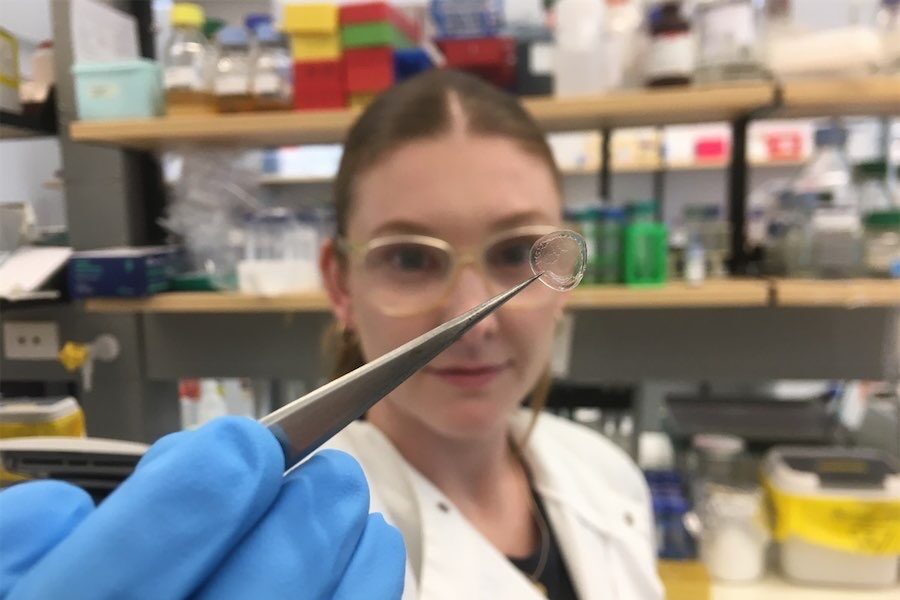
Australian scientists are looking to turn synthetic honeybee silk into “smart” dressings to prevent and combat wound infections.
Researchers from the CSIRO and Adelaide University have found that the silk is safe, well tolerated and biodegradable during wound healing in mice.
That opens the door to bioengineer the synthetic silk in the lab to modify the protein sequence and potentially introduce new features into the materials, such as infection-sensing or targeted drug release.
The researchers found that much of the synthetic honeybee-silk films they tested gradually broke down in the wound, potentially reducing the need to remove a dressing and disturb delicate new tissue as a wound heals.
Previous CSIRO studies have shown the material is strong, flexible, biodegradable and safe to use in biological applications.
Bee silk is a naturally occurring protein material used by larvae to build protective structures in the hive, and it can be synthesised in the lab.
Following promising results, the research team has been awarded a Medical Research Future Fund grant to develop and test “smart” dressings that might help prevent infections in slow-to-heal wounds.
Infections can delay healing, increase the risk of hospitalisation and amputation, and often require repeated clinical intervention.
Lead researcher Caitlin Johnston of the CSIRO said specific instructions could be built into the silk so a dressing could respond to the conditions in a wound rather than act as a passive barrier.
“Now we know the material doesn’t impact the overall healing process, we’re excited to move to the next stage and start building materials that help prevent infections,” Dr Johnston told AAP.
“We are hoping in coming years to develop this into a smart material and our current work is using it to detect infections in wounds.”
Anna Antipov, a researcher at Adelaide University, said people living in remote communities could be among the beneficiaries of the new material, reducing the need to travel for wound inspections and dressing changes.
“The big hope would be, in addition to detecting infection, that we could establish a material that helps to improve the wound-healing process,” Dr Antipov said.
That could include allowing the wound to heal quicker or with less scarring.
Australia’s chronic wound burden affects an estimated 450,000 people each year and costs the health system more than $6 billion annually.
News all day, every day at CityNews.com.au.
Who can be trusted?
In a world of spin and confusion, there’s never been a more important time to support independent journalism in Canberra.
If you trust our work online and want to enforce the power of independent voices, I invite you to make a small contribution.
Every dollar of support is invested back into our journalism to help keep citynews.com.au strong and free.
Thank you,
Ian Meikle, editor




Leave a Reply