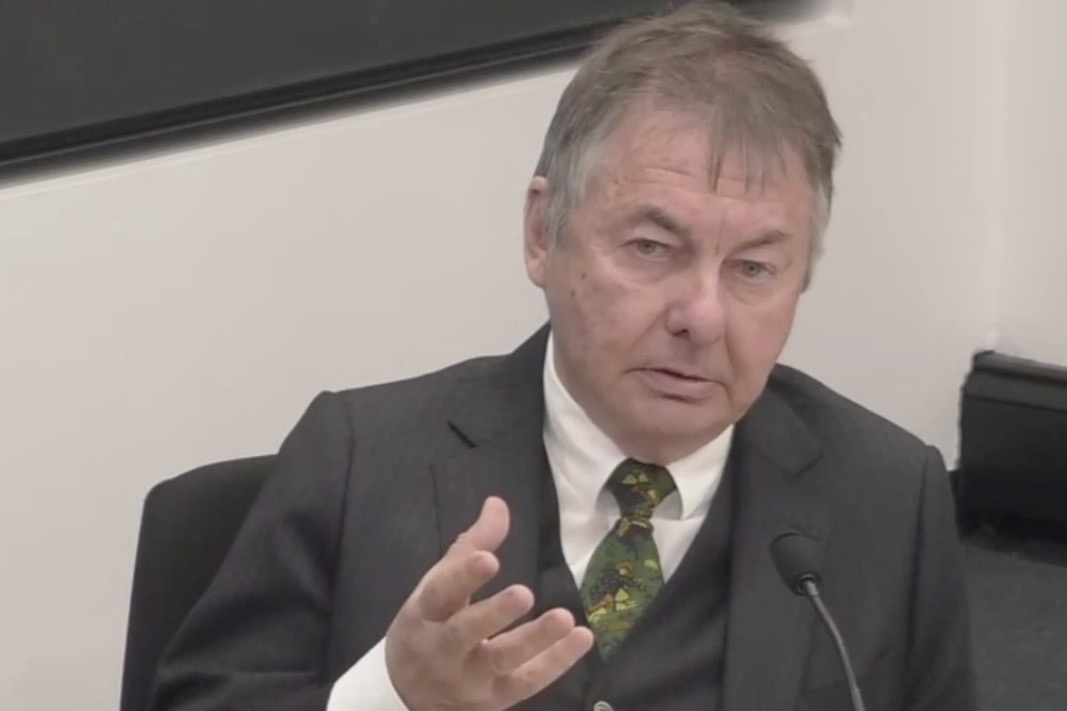

For weeks, “CityNews” legal commentator and former barrister HUGH SELBY has been writing daily commentary on the advocacy and witness performances before the Sofronoff Inquiry’s public hearings into how ACT police, prosecutors and a victim-support service handled allegations made by Brittany Higgins against her former colleague Bruce Lehrmann. The “CityNews” coverage of the inquiry, including his daily reviews, is here. The public hearings have now ended and the commissioner will report by the end of July.
IT’S not just mind-altering drugs that can bring on a heady, glorious intoxication. Being a standard bearer for the movement of the times induces the same heady atmosphere.
Behind those standard bearers are the massed supporters who both push the leaders forward and are pulled by them. That “push and pull” duality is to be seen in the media’s reporting, too.
It took some years, but our criminal justice system was pushed and pulled by the movement’s followers until some core values were forgotten.
The “wake up” call was not, as it should have been, a senior prosecutor and a talented victims’ support person being seen to be too closely identified with a complainant and her cause. Nor was it the raucous baying of the media hounds.
The wake up call was the extraordinary allegations and the call for an inquiry made in the early November letter to our chief police officer from our director of public prosecutions.
He got his inquiry. We got full disclosure of how close we had come to casually discarding tried and true principles of criminal law practice.
There is a simple test, reasonable prospects of a conviction, that informs the decision to take a matter to trial. But words can be stretched and compressed to fit with our preconceptions, to promote a cause above the needs of individual complainants.
Sen-Const Emma Frizzell pulled the safety rope with her account of seeing the devastation wrought upon complainants when the trial leads to “not guilty”.
It’s an enduring oddity of our legal system that we prioritise the criminal trial, the highest possible burden for a complainant, as the “best” option to follow.
There are certainly cases, such as serial rapists, pack rapes, and extreme violence, where the criminal path must be followed. But such cases are few.
The path of a civil claim, where the standard of proof is the much lower “balance of probabilities”, is so self-evidently an easier, more productive path for the majority of those who have experienced unwanted sex.
The successful plaintiff has vindication certainly, and some hopes of compensation – be that Criminal Injuries Compensation, money from the defendant or both.
Just how effective this civil path might be was starkly revealed this past week with the results of Ben Roberts-Smith’s ill-fated defamation claims.
He has not been prosecuted in the criminal courts, and that may never happen, but his misconduct has been fully exposed “on the balance of probabilities”.
The office of the Victims of Crime Commissioner can offer the claimant full support when the claimant becomes a plaintiff in a civil case. Because there is no jury, its staff can be seen, doing their job, with the plaintiff at the courts.
Whether that civil litigation path becomes more trodden or not, the inquiry has revealed that our prosecutions office lost its way, so much that it wallowed in a mire of ineptitude.
Examples, drawn from the public hearings, include: failing to take instructions from the police “client” before taking court action; interfering with defence access to witnesses; seeking to claim “non-disclosure” over documents that the police “client” was willing to give to the defence; calling the police “boofheads”; asserting – without proper foundation – that the police were “undercharging”; wrongly alleging improprieties among politicians, police and the defence; asserting that the police were too closely aligned with the defence; and, failing to tell Victims of Crime Commissioner Heidi Yates that she should not be seen accompanying complainant Brittany Higgins into court, nor next to her when she made a public statement
Let us all remember that the task of prosecuting is to evaluate the strength of evidence gathered by police, and then – when it passes the tests – to put that evidence before a court where the fact finder, be that jurors or a judge sitting alone, will determine guilty or not guilty. It is not to seek a conviction.
Let us all also remember – because our ACT Legal Aid, our attorney-general and our lawyers’ professional associations have chosen not to publicly re-assert the importance of this core value – that it is the job of defence advocates to test the prosecution case, to do so competently, thoroughly, incisively, and without fear or favour.
Commissioner Walter Sofronoff KC and his team will put us right on the test for police to charge and the test for a prosecution to go to trial. They will tidy up the twists and turns in our Victim Support law: the difference between “believable” complainants and “proven” victims will be made clear.
Our police will continue to refine their investigative procedures, to train their investigators, and to do their best to serve.
The last words are properly those allegedly spoken by officer Marcus Boorman: “If the jury convicts, I’ll quit”.
Unlike some, I admire that commitment – a clear view about justice, one that is well grounded in traditional, well-tested principles.
Hugh Selby’s free podcasts on “Witness Essentials” and “Advocacy in court: preparation and performance” can be heard on the best known podcast sites.
News all day, every day at CityNews.com.au.
Who can be trusted?
In a world of spin and confusion, there’s never been a more important time to support independent journalism in Canberra.
If you trust our work online and want to enforce the power of independent voices, I invite you to make a small contribution.
Every dollar of support is invested back into our journalism to help keep citynews.com.au strong and free.
Thank you,
Ian Meikle, editor





Leave a Reply