News location:

Friday, October 9, 2026 | Digital Edition | Crossword & Sudoku

Many young Aussies agree with violence to back causes

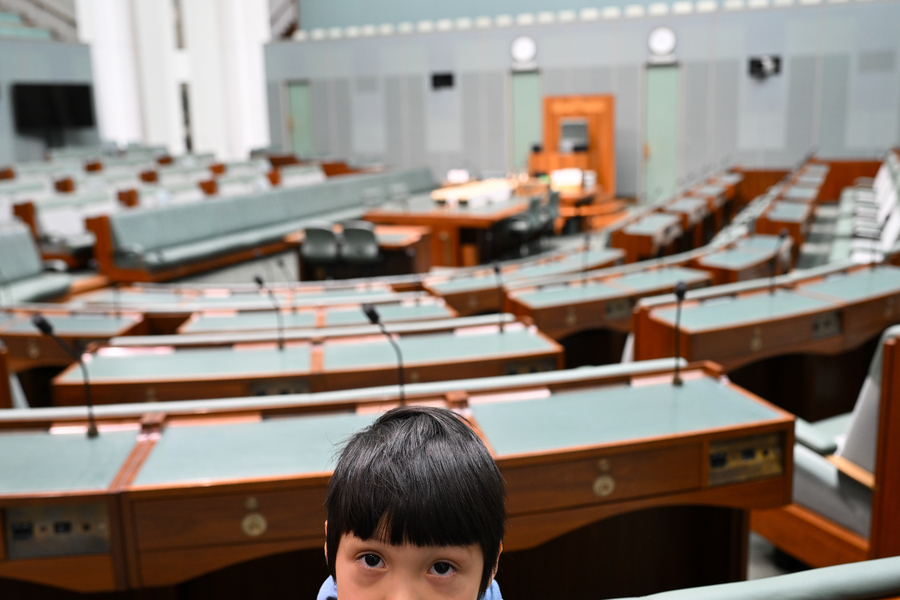
Young Australia are prepared to commit violence or threaten MPs for a cause they care about. (Steven Saphore/AAP PHOTOS)

By Holly Hales

One-third of young Australians say they are willing to commit violence, send threatening messages to MPs or vandalise government offices in support of a cause they care about. 

A new survey by the Susan McKinnon Foundation quizzed 3000 voters across Australia on their attitudes to political polarisation and social cohesion.

The majority, 55 per cent, said Australia has become more divided compared to five years ago, with 27 per cent saying they feel the country is extremely or very divided.

Generational differences about how to deal with views on social justice were stark, with between two to four per cent of people over the age of 55 backing similar responses to their young counterparts.

One in three Gen Z voters and a quarter of Millennial voters said they were prepared to support actions including encouraging or using violence, sending threatening or intimidating messages to members of Parliament, damaging property, vandalising government offices and lying to advance a cause they cared about.

Program lead at the Susan McKinnon Foundation McKinnon Poll Matt Crocker said the survey reflected “some emerging areas of concern”.

“While young people have always been passionate for social change, younger people appear more willing to support some practices that can undermine safety and circumvent our democracy,” he said.

“The high level of support for some of these practices is surprising and concerning.”

A bare majority of Australians believe both extreme left views (51 per cent) and extreme right views (53 per cent) are a serious threat to the country.

However, the research also found that those with stronger political views were more likely to blame the other side.

Seventy-six per cent of those on the left were much more likely to think extreme right views were a problem, while those on the right (71 per cent) were much more likely to think extreme left views were a problem.

Social cohesion holds despite inflation, high migration

News all day, every day at CityNews.com.au.

Who can be trusted?

In a world of spin and confusion, there’s never been a more important time to support independent journalism in Canberra.

If you trust our work online and want to enforce the power of independent voices, I invite you to make a small contribution.

Every dollar of support is invested back into our journalism to help keep citynews.com.au strong and free.

Become a supporter

Thank you,

Ian Meikle, editor

Australian Associated Press

Australian Associated Press

Share this

6 Responses to Many young Aussies agree with violence to back causes

GlenM says: 20 November 2024 at 10:40 am

To be frank I think most people are sheep ; that includes politicians. The so called left and right has lost meaning with few understanding what ” fascism” means. Poor education system with a low intellect medial doesn’t help.

Reply
cbrapsycho says: 20 November 2024 at 11:29 am

Not in the least surprised by this finding. The percentage who consider violent action will only increase as long as the views, values and needs of young people continue to be dismissed or ignored.

Reply
Curious Canberran says: 20 November 2024 at 1:23 pm

Thanks for the article Holly, however would you like to provide a link to the survey itself so we can read the questions asked? I would be interested to know when the survey was taken, where it was taken (what state or states), what age groups? How it was conducted, etc.. I don’t doubt some of the findings you present – but I also question it without the source material available that it may be ‘cherry-picking’ findings with a limited or skewered scope.

Reply
cbrapsycho says: 21 November 2024 at 4:26 am

Agree with Curious Canberran. I would love this level of information for every survey quoted in the media, so we could properly assess its value. What we currently get is a preferred interpretation of the results, not the results themselves, which would include full information on survey design and method.

We need to know the method of sampling (preferably random, but usually convenience instead), the number of people sampled, the demographics and the questions asked, as survey design strongly influences the answers. Even the ordering of questions influences the way to which people respond to each one as what people remember from the previous questions influences their interpretation of the next ones.

So many surveys are badly designed and their cited results invalidated as the interpretation doesn’t properly take into account how the survey design influences outcomes. This even occurs with scientific and medical research, with the poor design of the research leading to completely incorrect conclusions.

The most obvious example is medical research into HRT where millions of women were taken off it by doctors who mistakenly believed the conclusions reached by the researchers because they were not aware that the study design was faulty, with the nature of the particular drugs used ignored as well as the age of the participants, both factors that limited what conclusions were valid and the ability to generalise to a wider population. Millions of women’s health was harmed for the rest of their lives because doctors believed that the conclusions of this research meant HRT was unsafe.

We really need the details of all research to know whether or not to believe the conclusions reached.

Reply

Leave a Reply

Your email address will not be published. Required fields are marked *

*

*

Related Posts

Follow us on Instagram @canberracitynews