
“The unbroken string of planned and actual deficits, as well as their magnitude as a proportion of the budget, puts Mr Barr in a unique position – that is, the worst financial manager in Australia.” JON STANHOPE & KHALID AHMED invoke the wisdom of the Micawber Principle.
“Annual income twenty pounds, annual expenditure nineteen and six, result happiness. Annual income twenty pounds, annual expenditure twenty pounds ought and six, result misery.”
This simple calculation of happiness or misery comes from Wilkins Micawber, a memorable character in Charles Dickens’ David Copperfield. Mr Micawber’s wisdom illustrates the fine line between contentment and distress when it comes to managing one’s finances.

Micawber’s outlook was possibly a reflection on Dickens’ father, who was apparently often in financial difficulty. It is also the genesis of the Micawber Principle, which highlights the importance of living within one’s means and the impact that the careful management of one’s finances – or lack thereof – can have on one’s well-being.
We were reminded of the Micawber Principle when, following the announcement of the Legislative Assembly’s inquiry into the fiscal sustainability of the ACT, Chief Minister Andrew Barr advised us all that “there are no silver bullets out there”. No indeed! All the more reason for the ACT government to adhere to the Micawber Principle.
It is extraordinary, is it not, that a day after the inquiry was established, Mr Barr was busy undermining it, and any potential solutions that the committee might identify, by invoking the imagery of the supernatural – vampires and werewolves – that can, of course, only be killed by silver bullets?
His Treasurer, Chris Steel, was not far behind, invoking the spirit of Tony Abbott, reportedly saying that the terms of reference of the inquiry were eerily similar to the commission of audit ordered by the former Liberal prime minister.
Interestingly, Mr Barr advised some years ago that he had a debt management strategy that would ensure that the economy would grow faster than debt, thereby reducing the value of debt. Looking for silver bullets is therefore, quite a step.
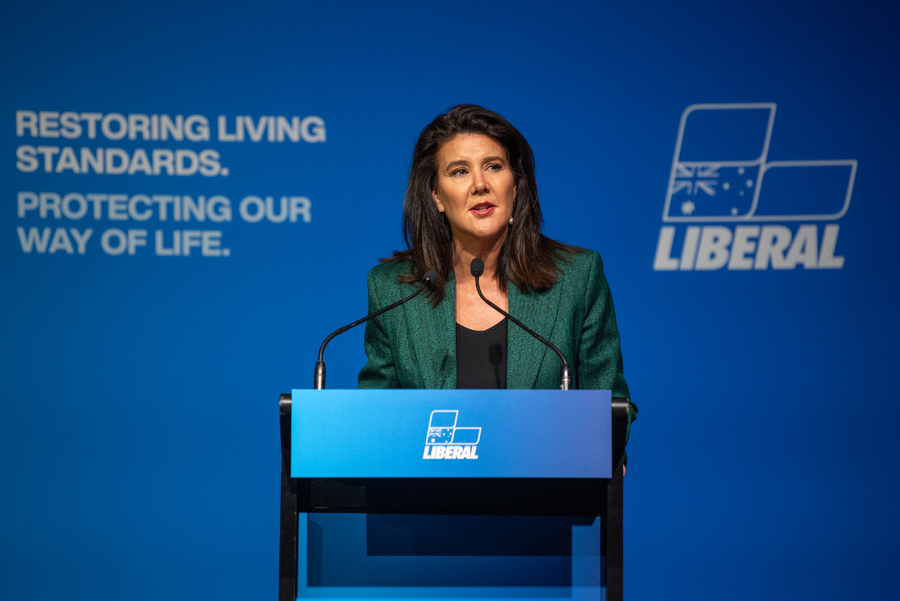
Opposition Leader Mark Parton touched on the root cause of the problem when he said: “This government does not just spend; it also overspends, under-delivers and leaves families to pick up the bill”.
To that we add that the government not just overspends against the budget, but it also plans to overspend against the available resources. It has, in fact, done so since Mr Barr became treasurer over a decade ago.
To put this into context, over the last 13 years, expenditure blowouts (ie, over-expenditure against the spending originally approved by the Legislative Assembly) was $1.85 billion.
Over this same period, the government budgeted – ie, planned for, a deficit in each of the years, totalling $6.9 billion but ended up delivering actual deficits totalling $7.5 billion.
Add to those borrowings for, say, routine capital works to maintain infrastructure, borrowings for unviable and unnecessary projects, and borrowings to pay the interest on those borrowings, and we have a debt spiral.
The unbroken string of planned and actual deficits, as well as their magnitude as a proportion of the budget, puts Mr Barr in a unique position – that is, the worst financial manager in Australia.
It is a fact that Mr Barr has repeatedly promised to return the budget to surplus in three years’ time, only to defer that promise, again and again – in fact, 12 times!
Those records hardly provide confidence in Mr Barr’s ability to come up with a pathway out of the financial hole that he has dug, or more importantly, his readiness to accept one, if it was delivered by the impending inquiry.
Does the Micawber Principle apply to public finances? In our view, it does and in fact more strongly as unlike another of Dickens’ characters, subnational governments when unable to beg, borrow or steal, cannot marry into money. And when they end up in a borrowing trap, the consequences are severe for both the vulnerable and future generations – in other words, stealing from the unborn.
We expect some opposition to this view. Broadly, such objections invoke governments’ ability to print money, to tax and/or to borrow without being bankrupted – options that are not available to a household.
With respect, such arguments stem from fringe economics, conveniently utilised to serve a convergence of political expedience and vested interests that feed off public spending on public projects. We note such interests rarely advocate for increased spending on health or disability services or mental health care.
In fact, while the supposed “runaway costs” of such services are a matter of concern for such interests, they seem unconcerned about billions of dollars being spent on vanity projects without a cost-benefit analysis.
Space considerations limit us from a detailed discussion of the flawed economic concepts being invoked to promulgate unchecked public spending.
As a rule of thumb, however, they are generally recognisable by being too good to be true or plainly silly. Facile claims that the debt and deficit problem will self-correct, or “borrow, baby, borrow for debt is cheap” are some of the examples that we have previously discussed.
Greens Leader Shane Rattenbury, who co-sponsored the motion for the inquiry, reportedly said that moving to fiscal responsibility does not mean slashing services. We agree that it should not; in fact, priority services should be both preserved and enhanced.
However, it is stunning that just the opposite appears to have occurred in recent years when The Greens were in government under a power-sharing arrangement with the Labor Party. For example:
- More than a thousand public housing units were sold with the proceeds directed to a tram fund, and according to the latest Productivity Commission report, public housing stock is still lower than when the tram project began, despite the significant increase in population;
- Planned hospital investment was delayed repeatedly with capital funds redirected to the capital contribution for the tram project, and rather than expanding the bed capacity in hospitals, beds were closed – again concurrent with the commencement of the tram project;
- Commensurate with hospital bed closures, recurrent funding for health was cut in real terms with the clear consequence of patient wait times dropping from better than average to the worst in the country;
- Aboriginal incarceration rates skyrocketed while Mr Rattenbury was the attorney-general, and the Territory reached the highest level of Aboriginal incarceration not just in Australia, but possibly in the world;
- The government called-in a loan and withdrew the finance facility for Community Housing Canberra, stripped it of its assets, and cancelled its MOU for access to land supply, while, can you believe it, a Greens minister held the housing services portfolio; and
- With the slashing of public and community housing over the period of the coalition government, the ACT has become the rental stress capital of Australia as well as the homelessness capital.
Recent comments from Labor and the Greens failed to acknowledge the proverbial elephant that has not only chewed away the sustenance of key social services, but also led to the complete abandonment of due diligence in public spending and an apparent breach of procurement processes.
Should we expect the government to accept any solutions from the inquiry into fiscal responsibility, if any are proposed by it, noting that both the Greens and Labor are still committed to inflicting the next stages of their obsessive rail project on Canberrans?
The financial mess in which the ACT is wallowing – undeniably of Mr Barr and Mr Rattenbury’s making – could and should have been avoided by simply adhering to the seemingly simple but brutal and profound Micawber Principle and will only be addressed by returning to that principle.
Jon Stanhope is a former chief minister of the ACT and Dr Khalid Ahmed a former senior ACT Treasury official.
News all day, every day at CityNews.com.au.
Who can be trusted?
In a world of spin and confusion, there’s never been a more important time to support independent journalism in Canberra.
If you trust our work online and want to enforce the power of independent voices, I invite you to make a small contribution.
Every dollar of support is invested back into our journalism to help keep citynews.com.au strong and free.
Thank you,
Ian Meikle, editor



Leave a Reply