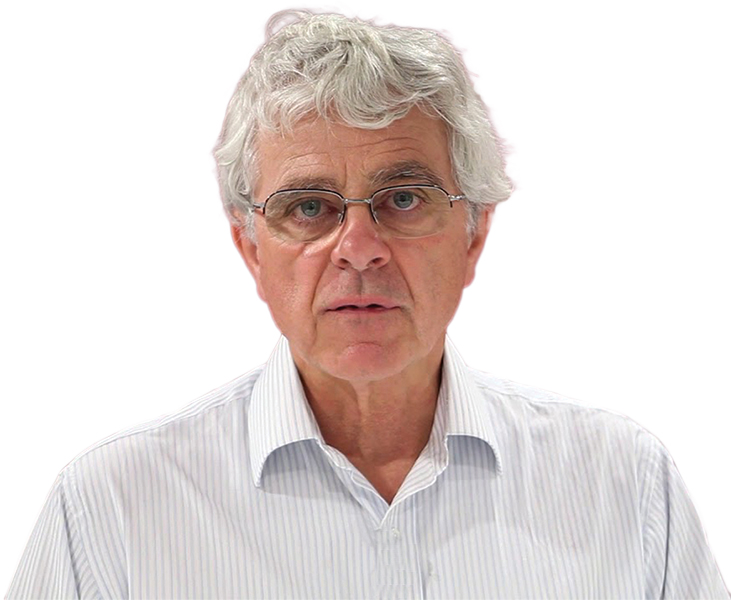
Beyond the daily news coverage, “CityNews” legal commentator and former barrister HUGH SELBY is commentating regularly on the Sofronoff Inquiry’s public hearings, focusing upon the advocacy and witness performances.
The Board of Inquiry, led by Commissioner Walter Sofronoff KC, a former president of the Queensland Court of Appeal, was established by the ACT government in December to examine how police, prosecutors and a victim support service handled allegations made by Brittany Higgins against her former colleague Bruce Lehrmann.
Unanswered questions to keep us glued
“The high visibility of the Victims of Crime Commissioner giving close, daily support to the complainant, carried with it the less than subtle message of ‘We believe you’. Could jurors avoid that message?” HUGH SELBY reviews and previews the Sofronoff Inquiry.
TODAY, Tuesday, was shorter than other hearing days. However, it raised issues worth sharing. But before doing that, let’s look to next week and what it might bring.
There are some interesting, as yet unanswered, questions to keep us glued to the public hearings.
One of these questions relates to the lead up to the police charging of Bruce Lehrmann. There has been plenty of evidence of investigator disquiet both with the strength of the evidence they had gathered and with possible issues going to credibility that would likely be explored during cross-examination of prosecution witnesses.
Today Commissioner Walter Sofronoff asked all advocates and his counsel assisting whether any of them would submit later that the Director of Public Prosecutions, Shane Drumgold, was wrong to present the indictment (that is, take the matter to court for trial), continue with it or decide to go to retrial. Silence followed, indicating there would be no such submission.
The DPP doesn’t need the police to lay a charge. He has the power to bypass them and proceed off his own bat. This is called an “ex officio” indictment. Mr Drumgold told the inquiry last week that he had never used this power for that purpose, but he knew he had it.
He didn’t need to use it because the police charged Mr Lehrmann. What happened to resolve the disquiet among investigators, that is, to bring them to the position silently expressed by all the lawyers today that charging and trial was proper?
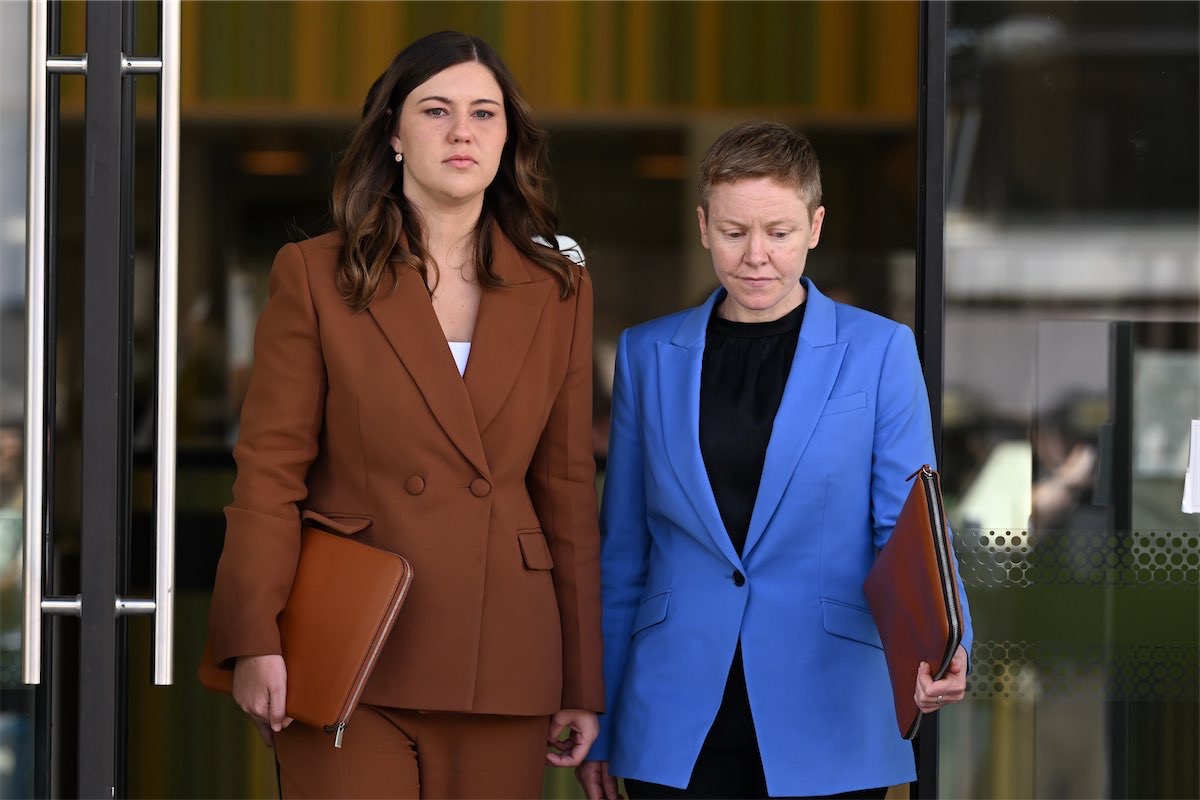
Another question is the extent, if any, to which the Victims of Crime Commissioner, Heidi Yates, unacceptably intruded into the public space of the trial.
In his first day of evidence Steven Whybrow SC, defence advocate, expressed his concerns about the very public support that Ms Yates gave Ms Higgins throughout the trial.
To see for yourself just how extensive that support was, search the web for “Heidi Yates and Brittany Higgins” and enjoy the many photos of them together.
Commissioner Sofronoff remarked early last week that he would be looking at the statutory framework within which Ms Yates does her job. The Victims of Crime Act states that a “victim” is a person who suffers harm because of an offence (section 6); the Victims of Crime Commissioner is entitled to be present at the hearing of a proceeding in a court in respect of an offence, unless the court directs otherwise (section 13).
The above definition of “victim” does not restrict or widen “offence” by either inserting “proven” or “alleged” before “offence”. It follows that Ms Yates is entitled, absent appellate court interpretation, to treat complainants as putative victims.
However, an entitlement to “be present at a hearing” does not encompass active, court-precinct support for a complainant. That is very different to being seen but not heard in the public gallery of a courtroom. Moreover, if Ms Yates is seen at the trial, a request might be made to the trial judge to tell the jurors that she is there in her role of support for any complainant and that her presence is not to be taken as in any way suggesting a view about the truthfulness of the allegations.
There is no impediment to her and her staff giving support to complainants who may, or may not, be able to prove their victimhood.
The problem, and it was raised by Mr Whybrow on Monday, is the manner of support at and during a trial.
It is now a commonplace for complainants to have a support person with them as they give evidence. In some jurisdictions there is even a “witness champion” who will intrude into the questioning of a complainant to ensure that the questions are clear. This can be very useful with child complainants who are unlikely to grasp the meaning of a question such as, “I want to suggest to you that the evidence you have given in these proceedings is a confabulation from start to finish. Is that correct?”
In fairness to the child I don’t understand the question either, but that’s a separate issue.
As an aside, the use of “I suggest to you” or “I want to suggest to you” has been often used by various counsel during this hearing. I am at a loss to equate a suggestion to a question. They have quite different meanings.
Returning to support people, they are not photographed entering and leaving the court. Moreover, there are ways to ensure that key people in a court case can enter and leave a courthouse avoiding a media scrum. The high visibility and reporting of Ms Yates, as Victims of Crime Commissioner, giving close, daily support to the complainant, carried with it the less than subtle message of “We believe you”. Could jurors avoid that message?
It’s up to Ms Yates whether she believes or doesn’t believe any complainant who comes to her office, note “comes to her office”. It’s not up to Ms Yates to go out into the public byways and take daily action that interferes with the presumption of Mr Lehrmann’s innocence. She was not a witness at the trial. She had no relevant evidence going to what, if anything, happened at Parliament House on a 2019 night.
What she has to say in evidence to the inquiry, and how other advocates question her, will be interesting and instructive to anyone concerned with how to strike the right balance between the competing, indeed antagonistic, interests of complainant and accused at a trial.
Whybrow says police not hostile to DPP
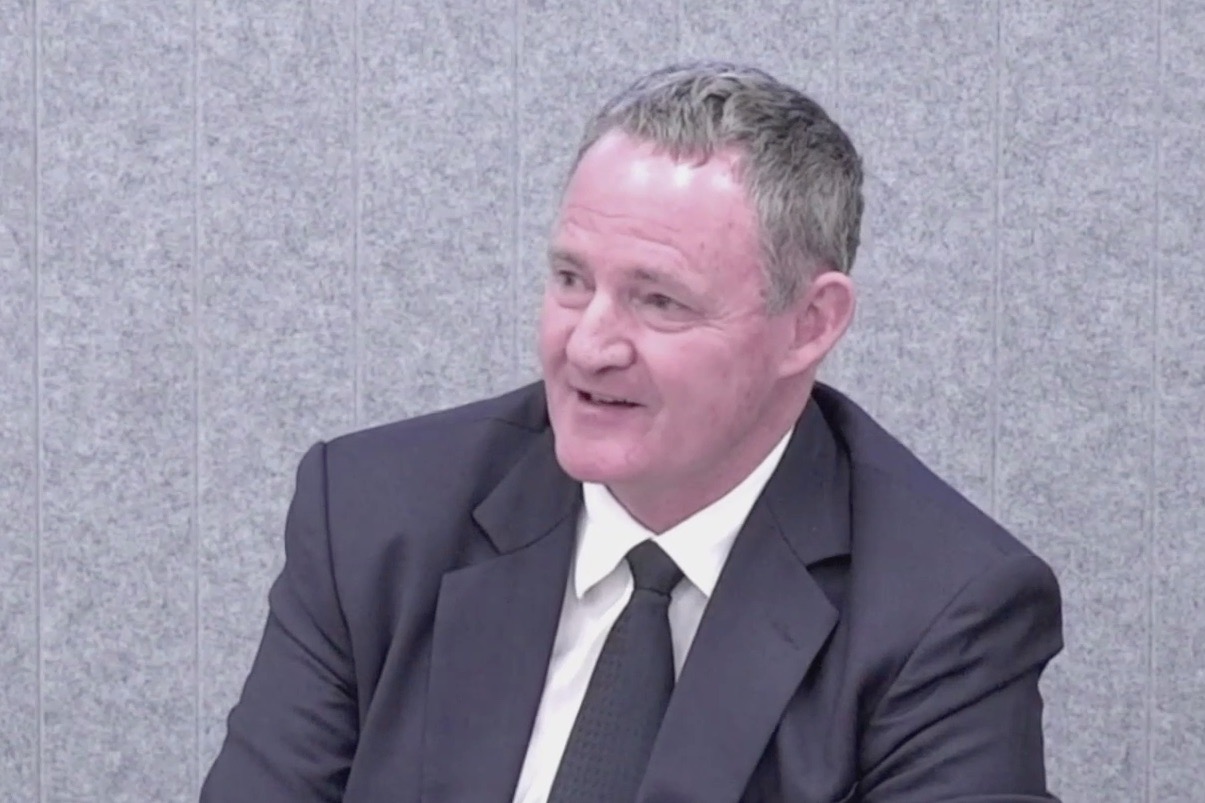
Now turning to today’s events, Mr Whybrow was cross examined by Mr Drumgold’s advocate Mark Tedeschi KC. Mr Whybrow’s impression was that the police with whom he dealt on this case were not hostile to the DPP, but that the DPP was hostile towards the police. Nor did any police indicate to him that if they had their way they would not have charged the accused.
There was discussion about Mr Whybrow suggesting that someone other than the DPP should make the decision whether there would be a retrial. He agreed that he would prefer someone other than Mr Drumgold to make the decision.
Readers need to know that there is no review of a decision by the DPP to go to trial or not. That is well established by court decisions. The practical effect is that there is no enforceable way to require a DPP to have someone else make the decision about going to trial or not. Moreover, one cannot require the DPP to give detailed reasons for their decision. The lack of transparency and lack of accountability in making this decision is remarkable: judges have no such right to keep their reasoning under wraps.
A part of the cross-examination of Mr Whybrow was in a session closed to the public. This was because Mr Tedeschi wished to take Mr Whybrow to blacked out (redacted) parts of documents held by the inquiry. So we don’t know what was asked, how it was answered and what the effect will be upon the inquiry outcomes.
As to what was asked when the open session restarted the questions trawled over ground already well covered. Asking this question: “Did the cross examination improve the position of Mr Drumgold?” there was nothing where I thought, “Well done. That changes things”. Perhaps I missed something. What I heard was Mr Whybrow repeating succinctly and clearly his answers that we had heard earlier. Sometimes what he had to say strengthened the effect of what he had said earlier.
I wrote on Monday that Mr Whybrow was unruffled. He was unruffled today, too. Still, I enjoyed his answer to a question that was suggesting a particular purpose by a witness in asking him for something.
He said: “If you’ve got a very suspicious, one-track mind, then absolutely, yes”. I enjoyed it because his equanimity must have been stretched to the limit by the cross-examination and his “break out” was clever, apt and cathartic.
We, the interested public can now take a rest until next Monday morning.
All the “CityNews” coverage of the Sofronoff Inquiry, including Hugh Selby’s daily reviews, are here.
Author’s notes on his inquiry commentary
A well-run public inquiry is like an iceberg: what you see at the public hearing is just the tip of a much larger “work in progress”.
For some months the inquiry staff have been interviewing people and collecting records. All that information is then available to the inquiry advocates (counsel assisting), ammunition to fire or soothing lotion to apply when asking a witness questions.
Woe betide the witness who, waiting for the questions, sees only the counsel assisting. This is not a one-on-one contest: counsel assisting is just the public face of concerted team work.
In recent public inquiries into, for example, the suicide of our Defence Forces’ veterans, or victims of institutionally based sexual predators, the “soothing” element has been a focus with those witnesses who were victims or victim’s relatives.
But among those witnesses who might have strayed and who might be publicly exposed, “hope” springs eternal until it’s too late even to save some dignity. Even when they know what is in the advocate’s gun they hope for a misfire. One must first deceive oneself before deceiving others.
For any witness there is the added problem that the commissioner can ask as many questions as they like. This does not happen in court proceedings where the judge is seen but little heard.
At any moment the commissioner may intervene in the to and fro between witness and advocate. Here one can see how the public interest is served by appointing as commissioner someone who was a skilled advocate earlier in their career.
My bad dream, even in retirement, is being a witness at a public inquiry who is being led gently or pushed ruthlessly by counsel assisting, and then suddenly being engaged by a commissioner who knows how to cross-examine.
Cross-examination is an art, reflecting at least two of the following: innate temperament, experience, and good mentoring. Above all else it is manipulative. It suggests the inevitable conclusion to the listener without stating it. The listener takes themself to the finish line. As a witness, to fight on two fronts against well provisioned, skilled opponents is a nightmare.
All that being noted we must keep in mind that the commissioner opened the public hearings with this significant comment: Nobody should be harmed unnecessarily.
–HUGH SELBY
News all day, every day at CityNews.com.au.
Who can be trusted?
In a world of spin and confusion, there’s never been a more important time to support independent journalism in Canberra.
If you trust our work online and want to enforce the power of independent voices, I invite you to make a small contribution.
Every dollar of support is invested back into our journalism to help keep citynews.com.au strong and free.
Thank you,
Ian Meikle, editor





Leave a Reply