By William Ton
FIFTY-one whales stranded on a WA beach have died as wildlife experts desperately try to save the remaining 46.
“Rescue efforts for live whales continue,” the Parks and Wildlife Service said on Wednesday.
A large, huddled pod of long-finned pilot whales was spotted swimming perilously close to Cheynes Beach, 60km east of Albany, on Tuesday morning.
Department of Biodiversity, Conservation and Attractions officers became concerned as it began drifting closer to the beach.
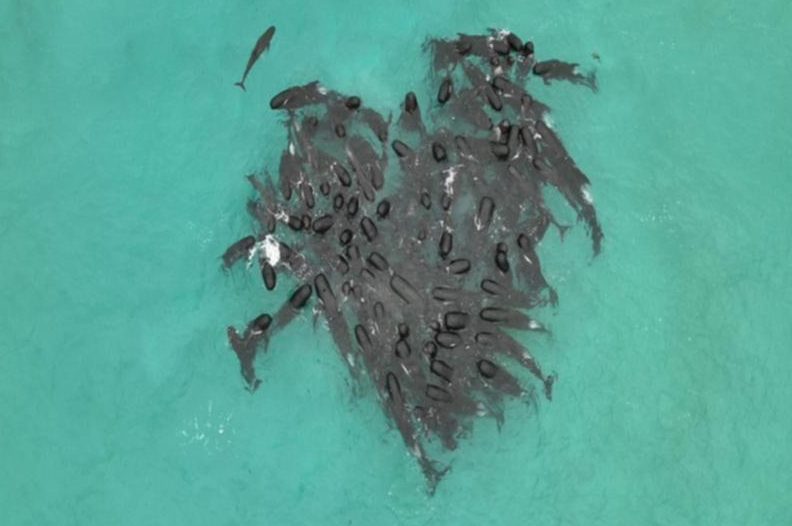
Moments before the stranding, crews were surprised to see the pod form a loose heart shape, which was captured by a drone camera.
By 4pm a large stretch of the shoreline was covered in floundering mammals.
DBCA Parks and Wildlife Service staff, including Perth Zoo veterinarians and marine fauna experts, on Wednesday began grouping stranded whales before refloating them together to give them a better chance of survival.
Officials initially estimated the number of whales involved at 70 before the tally was lifted on Wednesday to 97.
Crews have been inundated by hundreds of offers to help, with Parks and Wildlife staff asking the public to stay away.
There are a number of hazards in the area, including large, distressed and potentially sick whales, sharks, waves, heavy machinery and vessels.
Wildlife experts have speculated the unusual behaviour of the whales could be an indicator of stress or illness within the pod.
Macquarie University wildlife scientist Vanessa Pirotta said why whales stranded themselves remained a mystery.
“The fact they were in one area very huddled and doing really interesting behaviours and looking around at times suggests something else is going on that we just don’t know,” she told AAP.
What set the event apart from previous strandings was the availability of footage showing the animals before they stranded, she said.
Analysing the clip, Dr Pirotta said a whale may have been sick or the pod might have become disorientated but it was unlikely they were trying to avoid predators.
Griffith University whale researcher Dr Olaf Meynecke said of all whales, dolphins and porpoises, pilot whales were most prone to mass strandings.
The whales were highly social animals and maintained complex familial relationships with their pods from birth.
Dr Meynecke described a kind of ripple effect that can occur when some individuals get stressed.
“The stress seems to build up. They are so closely bonded it’s almost like they are stressing each other out and they are so bound together they will just go in as a bubble.
“It kind of makes sense given their strong emotional bonding to their peers.”
Dr Pirotta saids the whales had a “follow-the-leader type mentality” that could be the reason behind mass strandings.
News all day, every day at CityNews.com.au.
Who can be trusted?
In a world of spin and confusion, there’s never been a more important time to support independent journalism in Canberra.
If you trust our work online and want to enforce the power of independent voices, I invite you to make a small contribution.
Every dollar of support is invested back into our journalism to help keep citynews.com.au strong and free.
Thank you,
Ian Meikle, editor





Leave a Reply