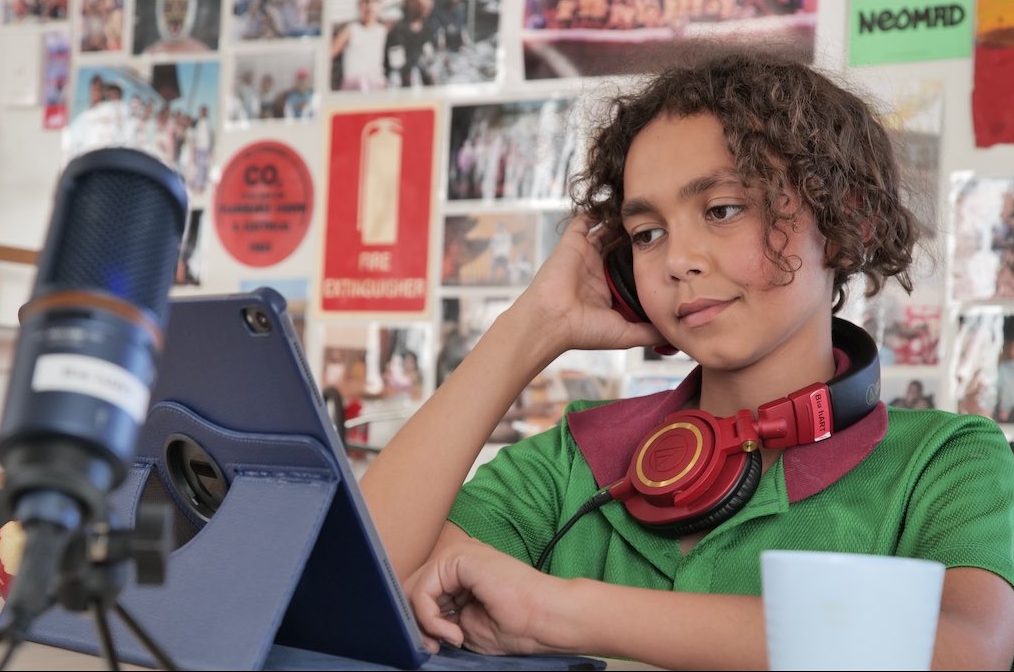
A revolutionary new program for Australian children has just been launched online by arts and social justice company Big hART, and it’s turning the old education pyramid upside down.
One of Australia’s best known theatre companies, famous for productions such as “Ngapartji Ngapartji”, “Namatjira”, “Hipbone Sticking Out” and “Ghosts in the Scheme”, the company was founded by Scott Rankin and John Bakes in Burnie during the ’90s and enjoyed a long association with the Canberra Theatre, where some of its work was developed.
But these days, Big hART’s attention is focused on delivering art, education and equity to young people throughout the country through its online program, “NEO Learning”.
Indigenous communities like that of Ieramagadu (Roebourne) in the Pilbara, WA, have long been accustomed to paternalistic models of education but “NEO Learning” changes all that.
In a captivating video of cheeky Roebourne kids explaining the process to the uninitiated, one kid says: “We the teachers and they the students”.
Not only are children teaching adults new ways of understanding, but indigenous children are sharing with children of all communities some of their deep knowledge.
NEO-Learning, which turns country into a living science, music, art or geography lab, was initially inspired by Big hART’s sci-fi comic “NEOMAD”, created by more than 40 kids in Roebourne and which has been showcased as far afield as Los Angeles and Korea.
Accessible from any home, classroom or school across the country, the new digital platform is for all Australian primary schools, providing teachers with smartboard-ready resources, virtual experiences, on-demand lessons and original films and podcasts that have already been tested by more than 1000 children in a pilot program that involved Canberra Hospital School.
The National Curriculum Authority requires all teachers in Australia to include Aboriginal and Torres Strait Islander culture and history, but only one per cent of Australian teachers come from First Nations backgrounds, Big hART noted.
So, after being invited into the community by senior women elders in 2010, they embarked on trying ways of introducing young people to digital skills, new vocational pathways and leadership opportunities, supported by the Telstra Foundation.
I caught up with Big hART’s resident producer in Roebourne, Aimee Kepa, to talk about the new way of learning.
Kepa has been living in Roebourne with her musician-photographer partner and colleague, Patrick, for the past two and a half years after returning from Beirut, where she worked with “Maqamat”, a dance company established by choreographer Omar Rajeh.
It’s her first time there, although she had worked in native title for about six years before moving to Lebanon.
Kepa describes Big hART as “super lucky to have had 10 years plus in Roebourne working alongside these young people” as the skills these kids have, their strong connection to culture and family have come to bear.
The program, she says, has the dual purpose of highlighting to young people what they can learn together and also covering the required educational content in history, culture, art, geography, science, music, numeracy and proficiency in the local Ngarluma and Yindjibarndi languages as well as the English medium necessary to make “NEO Learning” accessible to non-indigenous people and indigenous kids across Australia.
The platform provides opportunities to make them “digitally savvy” through its initial emphasis on storytelling through film, animation, digital drawing and music-making.
According to Kepa, the kids have proved extraordinarily adaptable as they familiarised themselves with their tablets to explore ideas – “such a flexible medium,” she says.
But lest it be thought that the confident young kids seen on the video have lost their respect for elders, nothing could be further from the truth.
“We have elders overseeing the work, but now the living culture and future focused knowledge is being passed down through digital skills so that it’s become a point of pride.”
“It’s changed the narrative around how culture can be articulated through the perceptions of young people,” Kepa says.
But change doesn’t happen overnight. Some of the kids who started out with “NEOMAD” are now 18, 19 and 20 and work on the delivery to younger people.
Education can often be a turn-off for very young children, but the work in Roebourne and its focus on digital art provides a way around that and with parents and grandparents involved, there is little cultural “shame” in participating.
“Big hART is in Roebourne for the long haul, after 10 years of hard work, it is paying off,” Kepa says.
More information on “NEO Learning” here.
News all day, every day at CityNews.com.au.
Who can be trusted?
In a world of spin and confusion, there’s never been a more important time to support independent journalism in Canberra.
If you trust our work online and want to enforce the power of independent voices, I invite you to make a small contribution.
Every dollar of support is invested back into our journalism to help keep citynews.com.au strong and free.
Thank you,
Ian Meikle, editor


Leave a Reply