
Russell lupins, foxgloves and hollyhocks bring height, colour and old-fashioned cottage-garden impact to Canberra in spring, says gardening columnist JACKIE WARBURTON.
Now the weather has warmed, there are blooms everywhere. My favourites for floral impact in a spring Canberra garden are Russell lupins, foxgloves and hollyhocks.

All three are biennial growers, meaning they develop roots and foliage in the first year, then flower and set seed in the second.
Russell lupins are legumes that add nitrogen to the soil where they grow. They die down in summer, reappearing when the weather cools. Flower colours range from blues and whites to pinks and reds.
The flower spikes form large spires that can grow at least a metre tall. Given the right growing conditions, with protection from winds, they can grow even taller.
Russell lupins can self-seed, but the resulting flowers are ordinary, so it is worthwhile replacing plants every two years and cutting off the flowers before they go to seed.
Foxgloves sit well in a cottage garden, flowering right through spring. They give a dramatic look to any garden, providing height in a small space. Interplanting them with hollyhocks creates the full picture of a cottage garden. They may be a little old-fashioned, but when gardens are on the dry side, they stand up well.
All three can be raised from seed. They take a long time to sow, germinate and grow, but the effort is worthwhile for the cost savings.
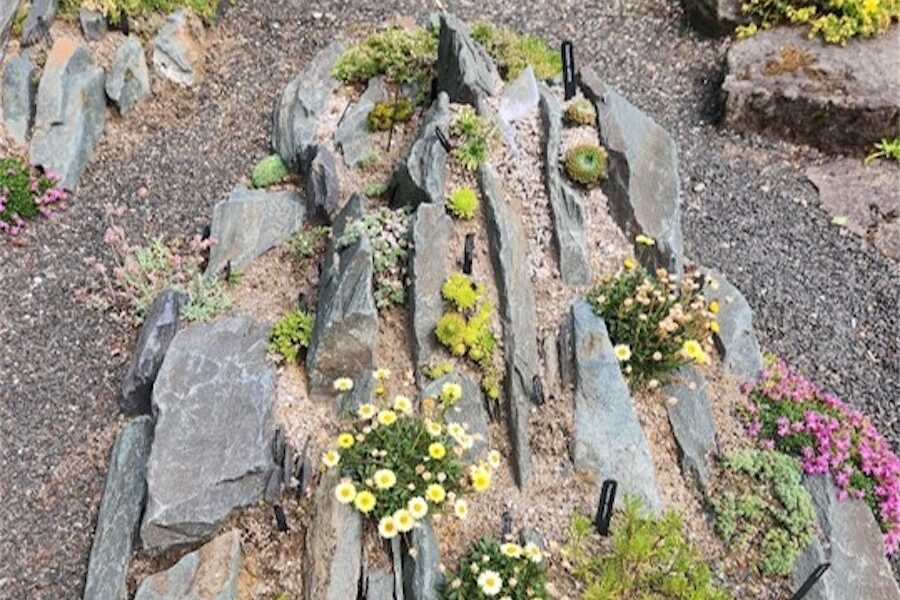
AN experiment I am doing this year is a small crevice garden. This style of garden is formed by placing rocks horizontally, creating crevices where plants can successfully grow. It is not a rockery, but is instead built with 50 per cent or more parallel rocks and stone slabs placed well into the soil.
This rock formation protects plant roots from extreme temperatures while encouraging their root systems to grow deep into the soil. Most plants suitable for these landscapes are alpines, including many species that grow well from 600 to 900 metres above sea level. Many succulents and small alpine plants also flourish in these conditions.
This deliberate horticultural technique originated in the 1970s. It has proved successful and is now on display in many botanic gardens around the world.
If you do not have space for a crevice garden, a good-sized pot will be fine. Use more potting soil than you think you need, creating a mound in some way. Place thin stone slabs or recycled concrete into the soil, then add plants. Remember to keep the size of the materials consistent, along with the spaces available for plants to grow.
With a little research, a crevice garden can be low maintenance. Many Australian natives are suitable for crevice and gravel gardens. Among the easiest to grow are Kunzeas, Myoporum and one of my favourites, Chrysocephalum apiculatum, commonly known as yellow buttons. Native alpines will also flourish.
AS the leaves of spring bulbs are dying down, they are storing energy for next year’s flowering, so fertilise now for next season’s flowers.
The soils are warm, allowing plants to take up nutrients. Using a general organic fertiliser on the garden will encourage good, steady growth right through to summer.
Pelletised fertiliser dissolves quickly, providing a burst of growth, making it good for vegetables, salads and herbs. A slow-release fertiliser on mature plantings will provide steady growth over a longer period.
When adding anything to the soil, water it in to prevent burning the roots, and read the instructions on the back of the packaging.
Keep cutting asparagus while the shoots are small. Note the small, thin, inedible female shoots, then dig them out in winter. Once the asparagus has been harvested, add a little garden lime to sweeten the soil before covering it with mulch.
Asparagus can take up to three years to yield. Do not plant it next to the onion family, as they are bad neighbours.
Jottings
- Plant potatoes.
- Tidy maple trees.
- Prune camillas that have finished flowering.
- Kill sticky weed and flick weed before they set seed.
News all day, every day at CityNews.com.au.
Who can be trusted?
In a world of spin and confusion, there’s never been a more important time to support independent journalism in Canberra.
If you trust our work online and want to enforce the power of independent voices, I invite you to make a small contribution.
Every dollar of support is invested back into our journalism to help keep citynews.com.au strong and free.
Thank you,
Ian Meikle, editor




Leave a Reply