By Lucinda Garbutt-Young and Jacob Shteyman in Canberra
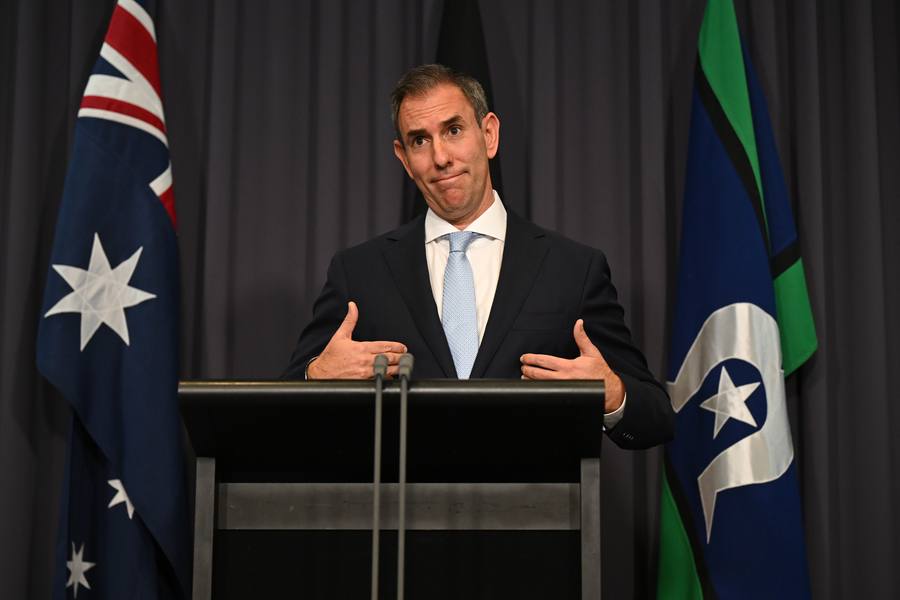
Jim Chalmers has a new line.
“That’s not an opinion, that’s a fact,” he repeatedly told news breakfast programs on Tuesday morning, referring to the war in the Middle East driving up inflation and cost-of-living pressures.The treasurer is known for using succinct comments on loop to explain complex economic problems, and he’s got one unfolding.
The Reserve Bank is widely tipped to hike interest rates for a fourth time in 2026 when it wraps up its two-day board meeting on Tuesday.
A 25-basis-point increase would take the cash rate to a 15-year high of 4.6 per cent.
That was because of out-of-control government spending, Nationals Leader Matt Canavan said.
The coalition has said it would cut spending on the National Disability Insurance Scheme, aged care and childcare to help quell inflation.
“The problem clearly is too much government spending, too much heat in the economy,” he told News24.
A final budget update for the year, released on Monday, showed forecast tax receipts as a percentage of GDP jumped from May’s forecast of 23.6 to 24.1, showing growth.
But Dr Chalmers was steadfast that government expenditure – now more than 26 per cent of GDP – was not the main reason for the looming rate rise, instead citing global issues.
“We’ve got an inflation challenge in our economy, which is made much worse by the war in the Middle East. That’s not an opinion. That’s a fact,” he told Seven’s Sunrise.
“We’ve been able to manage our public debt to levels which are much, much lower than other countries. But we know that there’s always more work to do.”
The budget bottom line was $6 billion better off on Monday than it was projected in May, largely thanks to a $4.6 billion boost to income tax collections.
Whatever the reason, mortgage holders are set to shoulder the expenses of an additional rate rise.
A 25-basis point increase in the cash rate would add $91 a month on a typical $600,000 mortgage, said Sally Tindall, data insights director at financial comparison site Canstar.
“The true pain is in the cumulative impact,” she said.
“Across what is likely to be at least four rate rises for the year, this borrower has to fork out an extra $364 a month compared to what they were paying at the start of the year.”
The cash rate is set to be the highest experienced by a generation of borrowers.
That will lift the average owner-occupier variable rate to 6.49 per cent, assuming the increase is fully passed on by lenders, which they usually are.
The difference since October 2011 – the last time rates were that high – is that soaring house prices have resulted in home loan debt rising from $1.05 trillion to $2.51 trillion over the same period, Ms Tindall said.
News all day, every day at CityNews.com.au.
Who can be trusted?
In a world of spin and confusion, there’s never been a more important time to support independent journalism in Canberra.
If you trust our work online and want to enforce the power of independent voices, I invite you to make a small contribution.
Every dollar of support is invested back into our journalism to help keep citynews.com.au strong and free.
Thank you,
Ian Meikle, editor




Leave a Reply